

 by
by “Buy one, get one free” usually sounds like a good deal. But in one small theatre in London, the offer comes with a twist: the free item is a burial shroud. The audience laughs, then hesitates, then laughs again.
This uneasy laughter is not accidental. It is exactly the reaction Palestinian writer Ahmed Masoud seeks to provoke, and it reflects a broader phenomenon that researchers are only beginning to take seriously: the role of humor in the Global South.
A gap in humor studies
In 2024, the European Journal of Humor Research dedicated a special issue to this topic, featuring contributions from scholars across Asia, Africa, and South America. The issue highlights a striking gap: despite its cultural significance, humor in the Global South remains largely underrepresented in academic research.
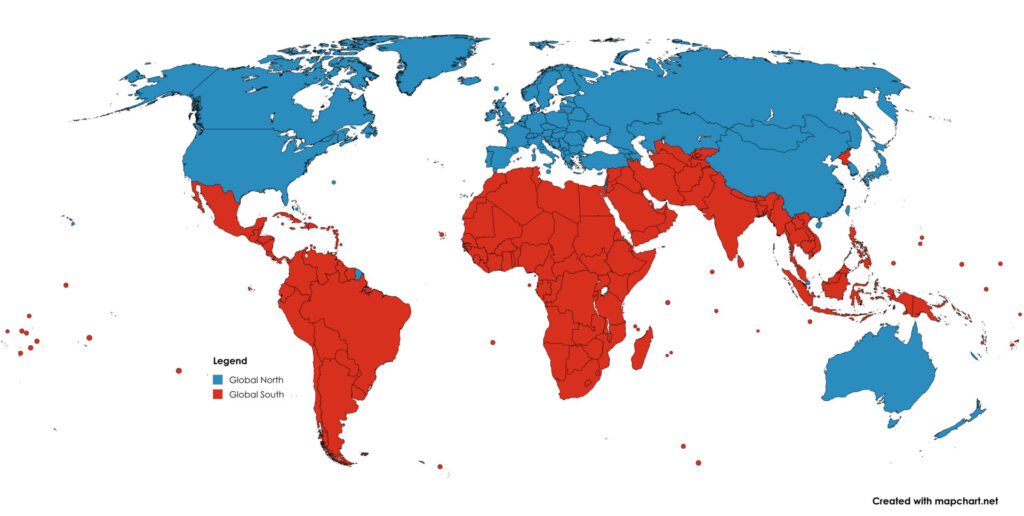
Although the term “Global South” is often understood geographically, the editorial “Humor and Conflict in the Global South” offers a broader definition. Authors Diego Hoefel, João Paulo Capelotti, and Rujuta Date argue that it refers not simply to location, but to communities that are politically, economically, or culturally marginalized due to histories of colonialism and global inequality.
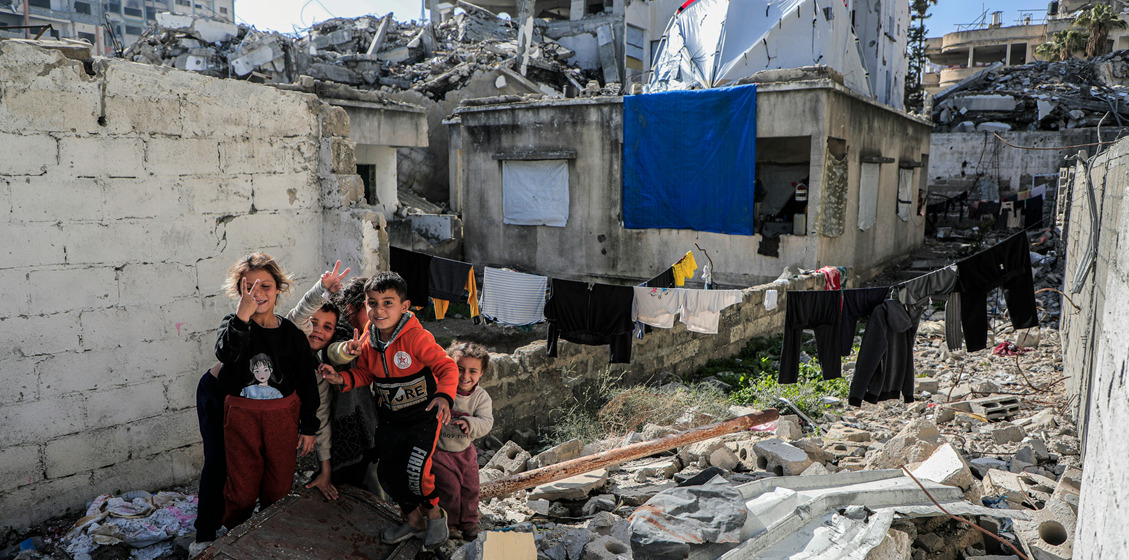
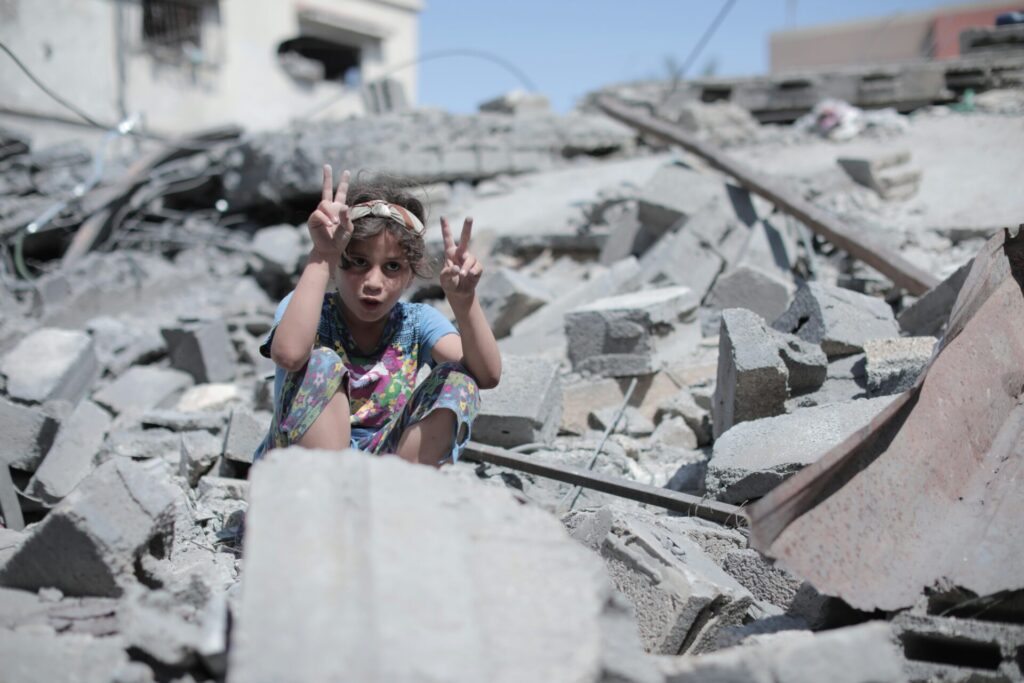
These are precisely the contexts in which humor takes on heightened significance. The contributors to the special issue highlight its many roles: as satire used to challenge authoritarian politics in Zimbabwe, as dark comedy emerging from life under siege in Palestine, and even as a political tool in right-wing meme culture among supporters of Brazil’s former president Jair Bolsonaro. Taken together, these examples paint a clear picture: humor in the Global South is not peripheral; it is pervasive, political, and deeply embedded in everyday life.
Humor as cultural resistance in Palestine
One particularly striking example of this comes from the work of Natasha W. Vashisht, who examines how black comedy operates as a form of cultural resistance in Palestinian writer Ahmed Masoud’s play The Shroud Maker.
In her analysis, Vashisht argues that humor in the play does more than just entertain. Through Hajja Souad’s cynical voice, she argues that Masoud “confronts the desensitisation of violence against Palestinians,” reclaims control of the narrative, and invites “the audience to consider the harsh reality of Palestinian life in a more digestible way.”
This balance between humor and tragedy is central to the play. Hajja Souad, an elderly shroud maker living in Gaza, uses black comedy to make sense of a life shaped by loss and conflict. Her jokes are unsettling and often inappropriate, but they are deeply intentional. At one point, she remarks that the war is “good for business,” a line that is both shocking and darkly comic.
The joke lands because of its absurdity, but once the laughter fades, it leaves behind a sense of discomfort. Rather than diminishing the tragedy, Masoud’s use of dark humor draws the audience closer to it. It forces them to sit with the violence and pain faced by Palestinians, rather than turning away from it. Dr. Vashisht contends, “laughing in the face of adversity is invaluable in coping with trauma and making life more livable.”
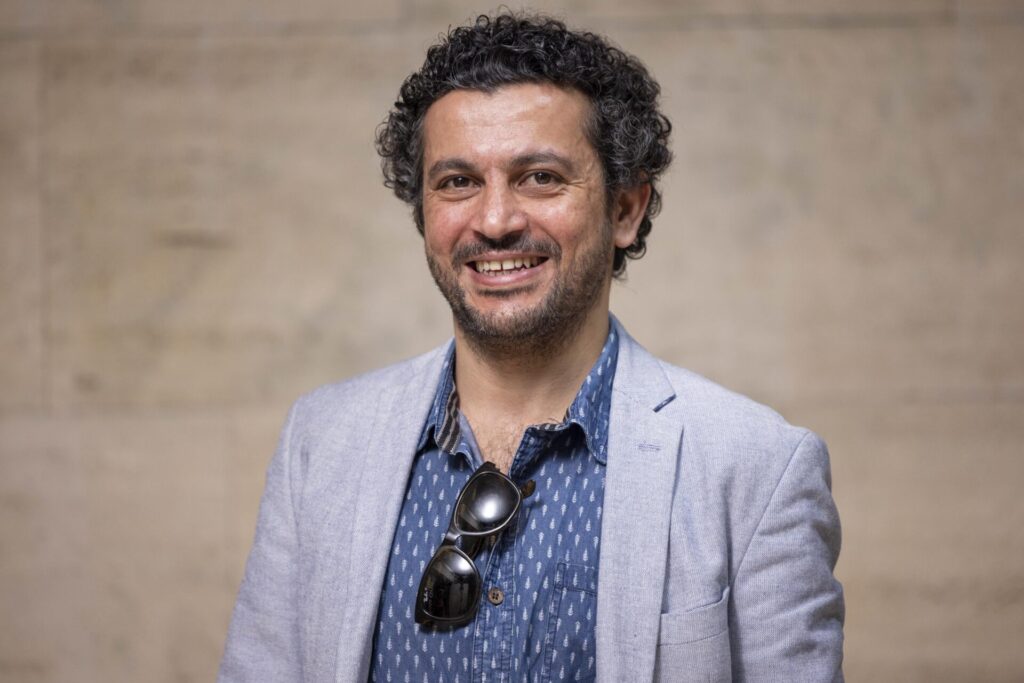
Writer Ahmed Masoud shares this perspective. For him, humor is rooted in everyday life. “Humor is very, very important in our lives,” he explains. “It’s a way to console yourself… and to bring back your humanity.” Growing up under siege in Gaza, he describes humor as something that persists even in the most difficult circumstances. Rather than diminishing suffering, it allows people to endure it. In this sense, humor becomes both a coping mechanism and a form of resilience, insisting on humanity in situations that often strip it away.
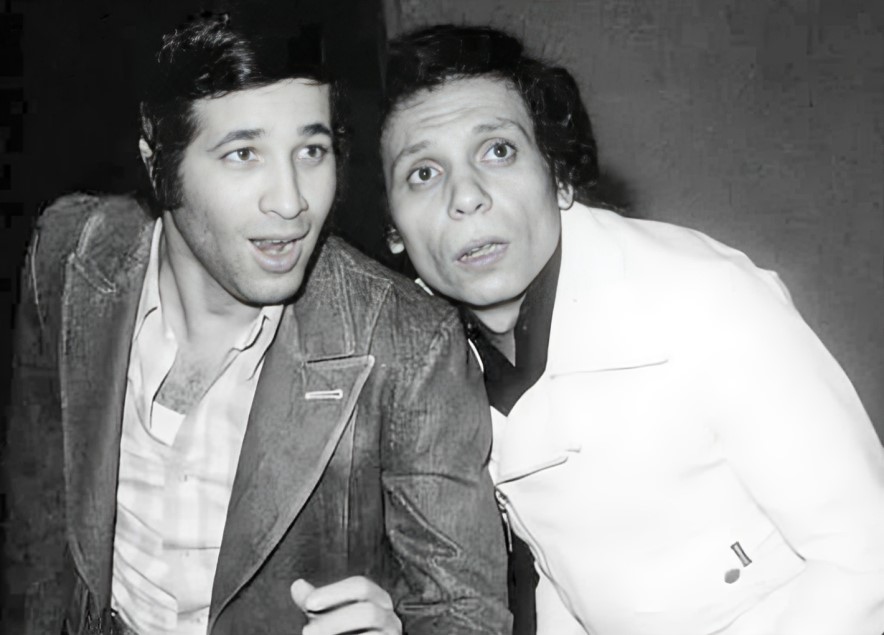
He also notes that this sense of humor is shaped by the region. Being geographically and culturally close to Egypt, where comedy has long been central to film and theatre, meant growing up surrounded by it. Even if the style of humor varies, it becomes part of everyday life and something shared across households and generations. It’s a dynamic I found familiar myself, having grown up in a Moroccan household where Egyptian comedies, especially those of Adel Emam, were often playing in the background.
But for Masoud, humor is not only cultural. It is also deeply personal. In recent years, he has lost many family members, including his brother. Writing, he says, has become a way of processing that grief. And while his poetry leans toward raw emotion, humor remains central to his work in theatre, where it allows him to reach audiences differently. As Vashisht’s work shows, this is precisely what allows Masoud to offer “an alternative way of discussing violence and war beyond the dominant Western narrative that marginalises the Palestinian voice.”
In bringing Souad’s character to life, Masoud does something deliberate. He humanises Palestinians in a way that many narratives often fail to do. Hajja Souad is not simply a symbol of suffering. She is sharp, irreverent, flawed, and funny. “Telling the story… is resisting erasure,” he says, describing his work as a way of pushing back against narratives that reduce Palestinians to either victims or stereotypes. Instead, he presents them as complex individuals, shaped by trauma but not defined solely by it.
Beyond resistance: Humour, power, and the politics of representation
Masoud’s work is just one example of what is often overlooked in broader discussions of humor. As the editorial “Humor and Conflict in the Global South” clarifies, the issue is not a lack of humor but a lack of attention to it. Part of this may lie in the discomfort it creates because much of this humor forces audiences, particularly in the Global North, to confront realities they are often distanced from, whether geographically or politically.
Another part of this imbalance lies in the structures that shape whose voices are heard in the first place. As the editorial notes, humor studies remain heavily dominated by work from and about the Global North, leaving many perspectives from the Global South underrepresented. This reflects longer histories of colonialism and inequality that still shape how knowledge is produced today.
At the same time, humor in the Global South cannot be reduced to a single function. While it often operates as a form of resistance or coping, it can also take on more complex and, at times, troubling forms. As the special issue shows, humor is also present in right-wing meme culture, including among supporters of Jair Bolsonaro, who served as Brazil’s president from 2019 to 2023.
In his paper on political humor in Brazil, Viktor Chagas examines how memes circulated among Bolsonaro supporters function within this landscape. A former army captain and long-time congressman, Bolsonaro rose to power on a populist, anti-establishment platform and has been associated with strong nationalist and conservative positions. Over the course of his political career, he has drawn criticism for a number of public statements about women, LGBTQ+ individuals, and minority communities, as well as for his praise of Brazil’s former military dictatorship. His presidency was marked by significant political polarisation, controversies surrounding his handling of the COVID-19 pandemic, and international concern over rising deforestation in the Amazon.
Within this context, humor also becomes a powerful political tool. Circulating widely on platforms like WhatsApp and social media, memes supporting Bolsonaro often frame political debates in simplified, emotionally charged ways, turning complex issues into easily shareable jokes that reinforce “us versus them” narratives. In doing so, they do not just reflect political divisions but actively contribute to them.
Together, these examples show that humor in the Global South is not secondary or niche; it is part of everyday life. It can help people cope, challenge power, or, in some cases, reinforce it.
And yet, as this special issue of the European Journal of Humor Research makes clear, it remains underrepresented in the very fields that seek to study it. In this contribution, what the authors hope for is a global shift in perspective, one that takes seriously the voices, histories, and lived experiences that shape humor outside of the Global North.
Masoud’s work also shows what is at stake. Through humor, he tells stories that might otherwise be overlooked, and does so on his own terms. Taking that work seriously, alongside the many other forms of humor emerging across the Global South, can help close the gap between what is studied and what is lived.
Manar Sadkou is a Bachelor student in Globalization, Governance, and Law at Karlshochschule International University, and a DDRN Intern.



List of references