 by
by Climate change is usually discussed as an environmental or economic problem. For some countries, however, it represents a far more fundamental challenge: a threat to their continued existence as states. Rising sea levels, coastal erosion and environmental degradation are already affecting several low-lying island countries, particularly in the Pacific and Indian Oceans.
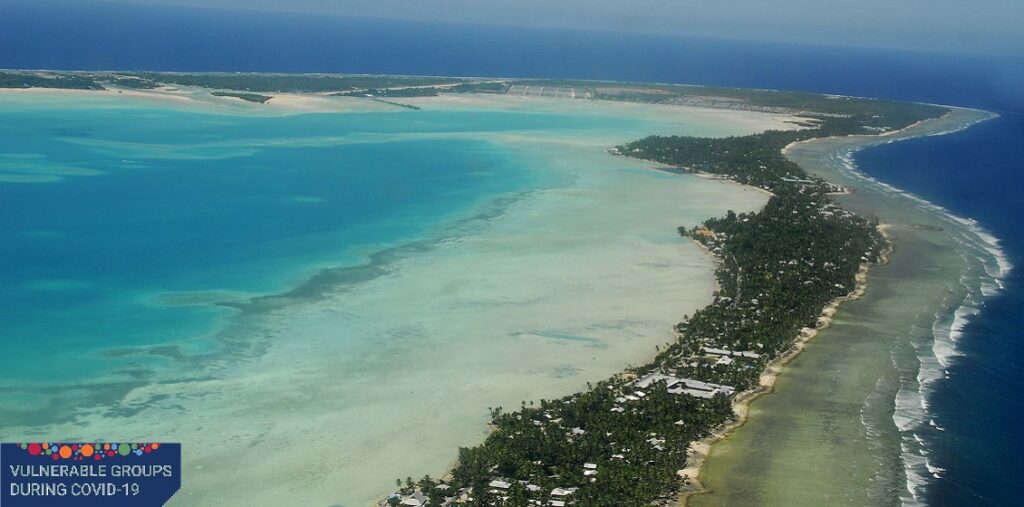
For states such as the Maldives, Tuvalu and Kiribati, climate change is not a distant scenario but a present reality. If sea levels continue to rise during the twenty-first century, parts of their territory may become uninhabitable or even disappear entirely. This possibility raises a primary legal question: what happens to a state if it loses its territory?
The Crisis of Traditional Statehood
International law has traditionally assumed that states are stable territorial entities. Under traditional international law, a state is defined by the criteria established in the 1933 Montevideo Convention: a permanent population, a defined territory, a government, and the capacity to enter into relations with other states. Modern legal theory further emphasizes independence and the effective exercise of authority over a specific geographic area.
The climate crisis challenges this assumption. International law has historically dealt with the disappearance or transformation of states in political contexts such as war, annexation or state succession. The idea that a state might disappear due to environmental change is largely absent from existing legal frameworks. If a state were to lose its entire territory, it is unclear whether it could continue to exist as a subject of international law.
Small Island Developing States at Risk
The states most exposed to this risk belong largely to the group of Small Island Developing States (SIDS), a coalition of island and coastal countries that face structural vulnerabilities due to their small land area, geographic isolation and strong dependence on coastal ecosystems. According to the United Nations Office of the High Representative for Least Developed Countries, Landlocked Developing Countries and Small Island Developing States, these states are among the most vulnerable to climate change despite contributing minimally to global greenhouse gas emissions.
Many SIDS consist of coral atolls or low-lying islands where the highest elevation is only a few meters above sea level. As a result, even relatively modest sea-level rise can lead to coastal erosion, saltwater intrusion into freshwater supplies and the loss of habitable land. These pressures are already affecting communities in the Pacific and Indian Oceans and are expected to intensify throughout the century.
Because their territory is so limited, SIDS often have few options for internal relocation. This makes them particularly vulnerable not only to environmental degradation but also to the legal uncertainties that may arise if territorial loss accelerates.
Survival Strategies for Vulnerable States
In response to these risks, governments and scholars have begun exploring a range of potential strategies aimed at ensuring the survival of states threatened by climate change. These strategies generally fall into three broad categories: territorial adaptation, population relocation and legal innovation.
Territorial Adaptation
One approach focuses on preserving habitable territory through large-scale adaptation projects. These measures include coastal defenses, land reclamation and the construction of artificial islands designed to withstand rising sea levels.
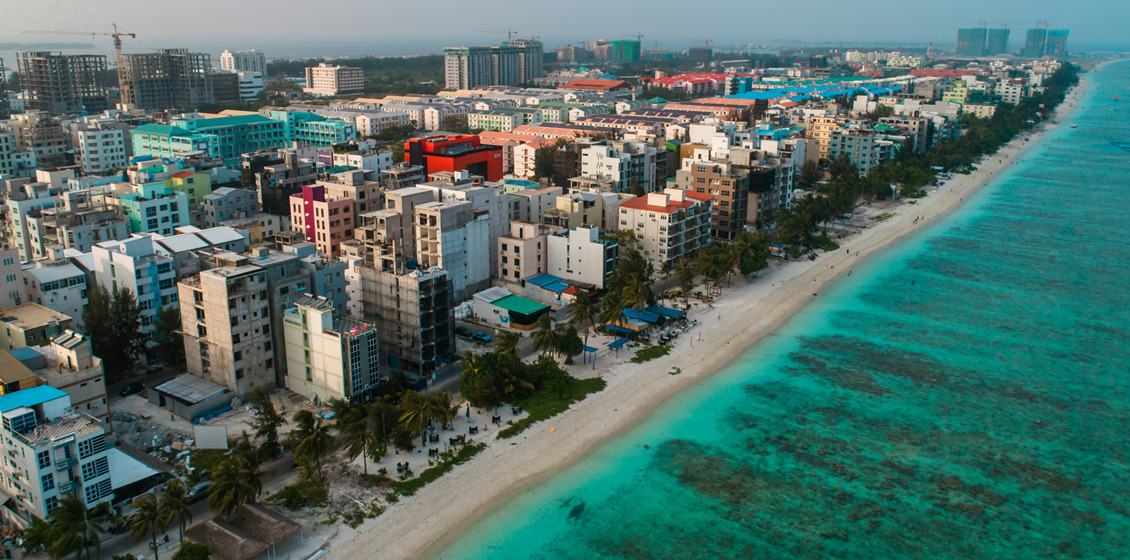
Some island governments have already invested heavily in such initiatives. In the Maldives, for example, extensive land reclamation has been used to expand and elevate artificial islands such as Hulhumalé, a reclaimed island developed as a climate-resilient urban hub and built roughly two meters above sea level to reduce flooding risks. Experimental floating infrastructure projects have also been proposed as potential long-term solutions.
While these engineering solutions may help maintain habitable land and delay environmental pressures, they require significant financial resources and technical capacity. For many vulnerable states, implementing such large-scale projects remains a major challenge.
Planned Relocation and Mobility
A second strategy focuses on the relocation of populations as environmental conditions gradually deteriorate. Relocation may take place within national territory where possible, but in some cases it may involve migration to other states through bilateral agreements.
Some governments have already begun exploring long-term relocation options. Kiribati, for instance, has pursued policies aimed at preparing its population for international mobility through education and labor migration programs, often described as a strategy of “migration with dignity.” These initiatives aim to ensure that mobility occurs gradually and voluntarily rather than as a sudden humanitarian crisis.
Although relocation strategies can help protect affected populations, they raise complex questions about citizenship, political identity and the continued functioning of state institutions.
Even when relocation is carefully planned, it exposes a critical gap in International Law: individuals forced to leave their homes due to climate-induced territorial loss currently lack clear legal protections, because they do not meet the criteria set by the 1951 Geneva Convention Relating to the Status of Refugees. The Convention requires a “well-founded fear of being persecuted” on grounds such as race, religion, nationality, membership of a particular social group, or political opinion, a standard that neither environmental disasters nor rising sea levels satisfy. This is why the term “climate refugee” has no formal status in international law.
As a result, individuals displaced by the physical disappearance of their home states are denied the same legal protections or rights to asylum as political refugees, leaving their fate subject to the discretionary policies of host nations. This legal invisibility reflects a broader “crisis of identity” in the field: while the physical reality of displacement is undeniable, formal legal structures remain rooted in a pre-climate era, failing to provide a collective security framework for populations whose sovereign bond to their land has been severed by nature rather than politics.
Legal Continuity Without Territory
A third strategy involves the development of legal frameworks that would allow states to maintain their international legal personality even if their territory becomes uninhabitable.
Recent diplomatic initiatives suggest that such ideas are beginning to enter international practice. In 2023, Tuvalu signed the Falepili Union Treaty with Australia, which includes provisions recognizing the continuing statehood and sovereignty of Tuvalu despite the long-term risks posed by sea-level rise.
In parallel, scholars have proposed additional legal approaches, such as preserving existing maritime boundaries even if coastlines retreat. These discussions are closely linked to the interpretation of maritime rights under the United Nations Convention on the Law of the Sea, which governs the establishment of maritime zones.
Such proposals seek to ensure that vulnerable states retain control over their maritime resources and maintain their status within the international community even under changing environmental conditions.
Rethinking Statehood in the Age of Climate Change
None of these strategies alone provides a complete solution. Territorial adaptation may only delay environmental pressures, relocation raises difficult political and social questions, and legal innovations still require broader international recognition.
What the experience of vulnerable island states demonstrates is that climate change challenges some of the most basic assumptions on which the international legal system has historically been built. The traditional link between territory, population and sovereignty may no longer be as stable as previously assumed.
For this reason, the growing risk of climate-induced state extinction is not only a concern for a small group of island states. It represents a broader challenge for international law and the international community as a whole.
As sea levels continue to rise, the central question may not simply be whether certain territories will disappear, but whether international law can evolve quickly enough to ensure that the states and populations affected by these changes are not erased from the global order.
Sofia Kiryttopoulou is studying for a Bachelor’s Degree in Balkan, Slavic and Oriental Studies. Specialization: Politics and Law, at University of Macedonia | Thessaloniki, Greece.