 by
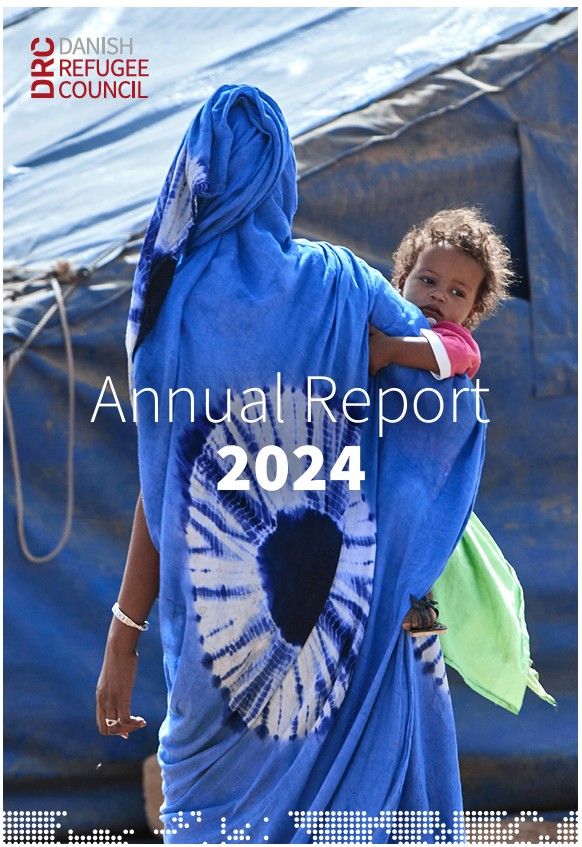
by Humanitarian and development aid, provided and funded by wealthy countries such as Denmark, are central elements of the process of development. Denmark is a champion in per capita expenditure dedicated to official development assistance (ODA), ranking 4th worldwide with 0.71% of its Gross National Income (GNI) spent on ODA. At the same time, globally, humanitarian space is shrinking, and organisations active within the field are facing increasingly more precarious conditions, with direct impacts on their staff located in countries receiving aid. 2024 became the deadliest year on record for humanitarian aid workers, and 2025 is set to top this record once statistics are concluded. The biggest Danish NGO Danish Refugee Council alone has mourned the loss of 4 partners and 2 staff members in Gaza and Ukraine last year.
We often hear that the humanitarian space is shrinking, but we rarely directly link this to the loss of lives in the contexts of provision of humanitarian aid. There are mechanisms in place to ensure safety of humanitarian workers, however, they only have limited efficiency. The humanitarian principles of independence, impartiality, neutrality and humanity, that a large number of international NGOs subscribe to, are in place to ensure not only efficiency and morality of humanitarian work, but also to increase the safety of aid workers in precarious contexts. The humanitarian principles are not simply a moral compass guiding humanitarian action, they are powerful enablers of provision of humanitarian aid; neutrality in conflict areas ensures access to affected populations, and independence from political and other agendas helps ensure trust with all parties. According to the ICRC, they are pragmatic tools more than anything.
Research from 2012 confirms that if humanitarian organisations are perceived as neutral and impartial, the risk of attacks or kidnappings of their staff decreases. The topics of neutrality and impartiality, and consequently of safety and security in the aid sector thus remain essential. Guth and Messerschmidt, authors of 2025 Thesis on Managing Risk and Security: How Humanitarian Organisations adapt in conflict zones, published at Lund University recently sat down with DDRN for an interview.
In their thesis, based on interviews with workers in the humanitarian sector, they identified two overarching themes related to safety: understanding of contextual factors, and politicisation of aid. Neutrality is one of core humanitarian principles, and apart from ensuring efficiency, it also extends to support safety for humanitarian workers from being targeted. Guth remarks that when it comes to neutrality, it is much more about perception, than reality: “I feel that it really depends on how people perceive you. Even if your actions are neutral, the context in which you operate might not see them that way. For example, if you treat civilians and military personnel equally, some may still perceive your organisation as political because you are engaging with both sides. I think it comes down to a question of definition. MSF, for instance, says we are neutral because every human being is equal in our eyes and everyone can receive help. Others might argue, however, that this is not neutrality, because you are still, in a way, choosing a side. This framing is very challenging for organizations, because it shows that, in practice, it is extremely difficult to act truly neutral.” This is an extremely important notion, as neutrality is not an inherent attribute, but rather a fragile, negotiated perception that has to be advocated for, and maintained, in order to achieve acceptance through neutrality.
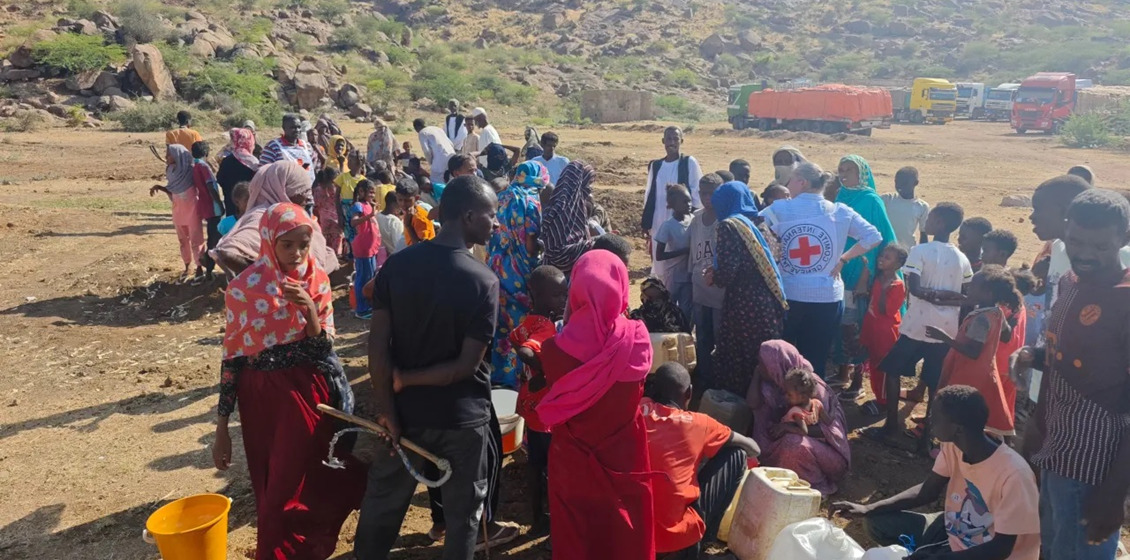
For organisations not to be targeted during a conflict, an important, though context-dependent, element is visibility. Many aid agencies choose to mark their vehicles and facilities to signal their role as aid providers, or notify conflicting parties about their planned movements, hoping that clear identification will be respected. Such measures can enhance safety when armed actors comply with international humanitarian law (IHL), but in some cases, visibility can also exacerbate the risks. Under IHL, all parties to an armed conflict must distinguish between civilians, including humanitarian personnel, and combatants, and must not intentionally target humanitarian workers. Attacks on such personnel can constitute serious violations of IHL. Yet acceptance and visibility are only one part of the equation; Respect for the law is the other. In today’s conflict environments, adherence to IHL is inconsistent, and organisations cannot rely on their protected status. Although risks are inherent, recently, we have seen increasing instances of both state and non-state actors targeting aid workers.
According to Messerschmidt, the question of whether to increase or reduce visibility “is really context and conflict dependent.” She notes that organisations first assess “what this kind of conflict is about and where the risk is coming from.” In Ukraine, for instance one organisation chose not to mark its vehicles at all because “it’s more safe” in a context where threats come directly from state actors. Guth similarly stresses that visibility is not inherently protective: at times it is beneficial to be recognised by civilians, yet in other situations “you need to just blend in completely.” Visible equipment can even undermine trust; “if you have a helmet and you’re more associated with the military, it can be dangerous,” she explains. Both researchers observed that every organisation they interviewed had grappled with this dilemma.
For Messerschmidt, the visibility question is inseparable from a broader erosion of international humanitarian law. Marking facilities and vehicles is meant to offer legal protection: an attack on a clearly marked site could be identified as a potential violation of international humanitarian law. But this protection only works if parties respect the law. As she puts it, organisations increasingly fear that “the law is not respected anyways,” and that even when accountability is technically possible, “no one really cares anymore.” This legal vacuum leaves humanitarian actors navigating visibility choices with no guarantee that either approach, being seen or staying hidden, will keep them safe. This distinction reflects the classic humanitarian security model of acceptance, protection and deterrence: humanitarian principles primarily enable acceptance, while IHL functions through legal deterrence and accountability. Without accountability, humanitarian principles function as risk-management tools rather than protections
Humanitarian actors’ ambivalence toward visibility also reflects a broader frustration with the absence of effective accountability mechanisms in the international system. As was noted during the interview, organisations can only mitigate risks up to a point. Beyond that, their safety ultimately depends on political actors and states that bear responsibility for upholding IHL. Yet, according to the researchers, many respondents stressed that violations are seldom followed by meaningful consequences, and that the international community selectively enforces IHL depending on the context. This uneven response not only undermines protection for civilians and aid workers, but also risks signalling to other conflict parties that attacks on humanitarian personnel will go unpunished.
Messerschmidt points out that under international humanitarian law, states are formally responsible for violations they commit, yet they are unlikely to hold themselves accountable. While other states or international bodies may impose sanctions or refer cases to international courts, she notes that such measures “rarely happen in practice.” For her, this gap between legal obligation and political enforcement lies at the heart of the problem: without consistent external accountability, humanitarian organisations are left to manage risks that ultimately stem from failures in the international system rather than from their own operational choices.
To conclude, humanitarian neutrality can only contribute to safety if it is both perceived and respected. Throughout the past year, neutrality has come under increasing strain due to the politicisation of aid and the persistent lack of accountability at the global level. It remains essential to humanitarian operations, but its ability to support safety depends less on organisational conduct than on the political and legal environments in which humanitarian actors operate.
Jakub Machart is a BSc. student in Development Studies at Lund University, Sweden, and is a DDRN intern.