


 by
by How the TikTok Ban Sparked an Unexpected Digital Migration from the U.S. to China
In January 2025, growing political debate in the United States over a possible ban on TikTok triggered strong reactions among many American users. Given TikTok’s scale, with approximately 1.9 billion users worldwide and around 170 million monthly active users in the United States, the platform had become deeply embedded in everyday digital life. In response, some users moved to Rednote (Xiaohongshu), a social media app widely used in China for sharing everyday experiences, advice, and personal stories. This move was widely discussed online as a form of protest against perceived government interference in personal media choices. Many of these users referred to themselves as “TikTok refugees,” a label that quickly circulated across platforms and media coverage. Although the proposed ban was delayed several times and no official decision had been made until now, the uncertainty alone was enough to encourage people to experiment with new digital spaces. This episode offers a useful starting point for understanding how social media can bring ordinary users from different countries into contact, even during periods of political tension.
When Downloading Rednote Became a Trend
Although many Chinese netizens questioned whether the term “refugee” was appropriate, it nevertheless became a widely used buzzword in 2025. In the days following the announcement of a possible TikTok ban, Rednote rose to the top of the U.S. App Store download rankings and soon reached leading positions in more than seventy other countries. Much of this visibility was amplified by overseas Chinese users, who shared screenshots of local App Store rankings from different countries, highlighting Rednote’s rapid rise to the top. This wave of participation was often driven by curiosity or by a desire to follow what was perceived as an emerging American-led trend. Notably, this wave of participation unfolded alongside ongoing criticism of the United States and its domestic politics, the coexistence of criticism and imitation points to a broader pattern: even as the United States is frequently contested, it continues to occupy a central position in global digital culture, shaping platform dynamics far beyond its borders.
This dynamic also challenges the common assumption that China is digitally isolated, an image often repeated in Western media narratives. In practice, Chinese users have access to extensive information networks of their own. Although platforms such as Twitter (now X) or Instagram are not widely used within China, users actively rely on domestic platforms such as WeChat, Douyin (the domestic version of TikTok), Weibo, and Xiaohongshu, as well as on connections with overseas Chinese communities, to stay informed about global events. Through these channels, international trends are quickly noticed, discussed, and shared.
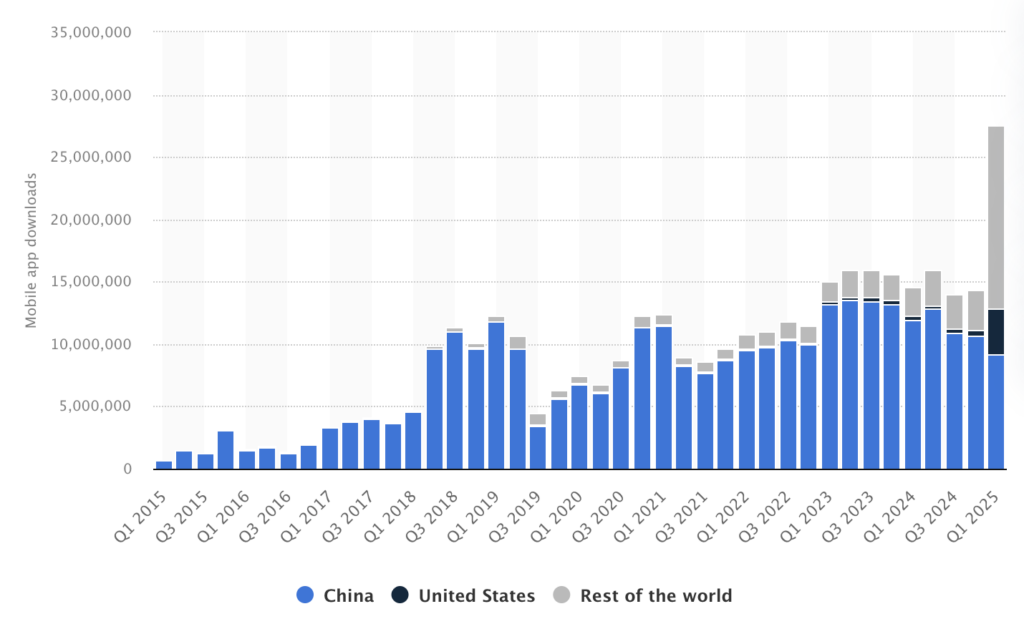
The widespread circulation of App Store screenshots by overseas Chinese users illustrates how global platform shifts become visible within China, even without direct reliance on Western social media. This suggests that information flows into China through multiple social and social routes, allowing users to engage with global developments in ways that are often overlooked.
What Happened After People Joined? Greetings Across Oceans
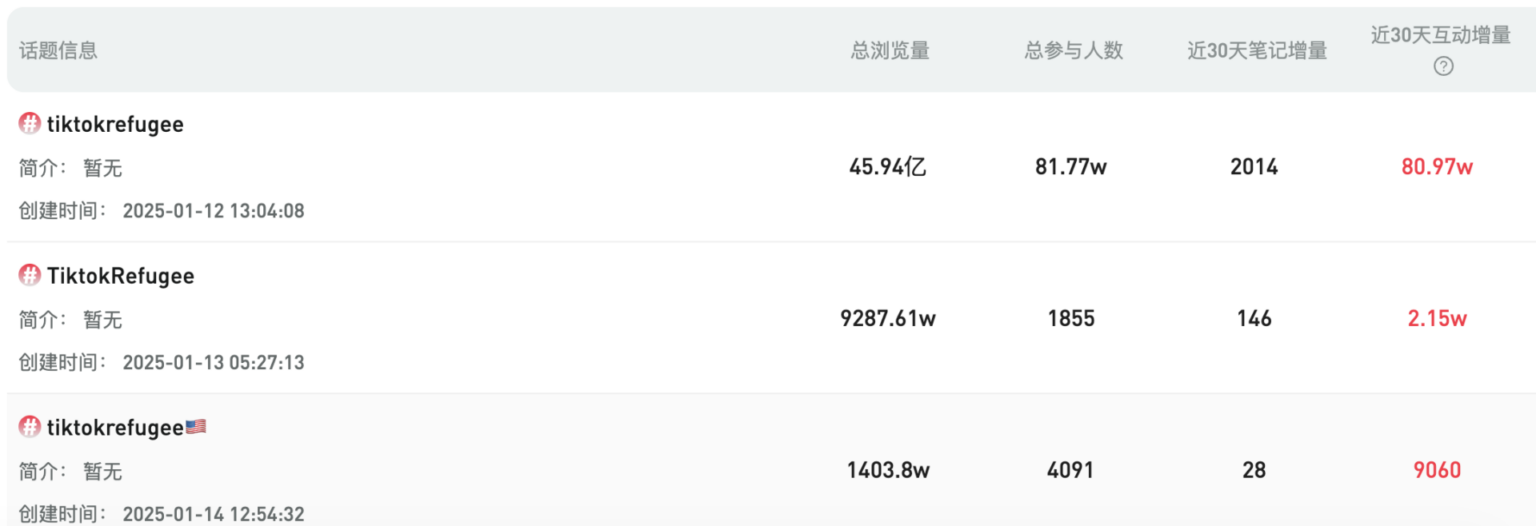
From early 2025 to the present, the hashtag #TikTokRefugee on Rednote has accumulated over 4.59 billion views, showing that interest in this cross-border encounter did not disappear after the initial wave. Among the most widely shared moments was a simple post by an American father, who uploaded a photo of himself and his child and added only a short greetings. The comment with the most likes came from a Chinese family who replied to an almost identical heartwarming family photo with a simple ‘Hi!’. This quiet exchange, built around everyday. family life rather than politics or performance, moved millions of viewers, many of whom described feeling unexpectedly emotional.
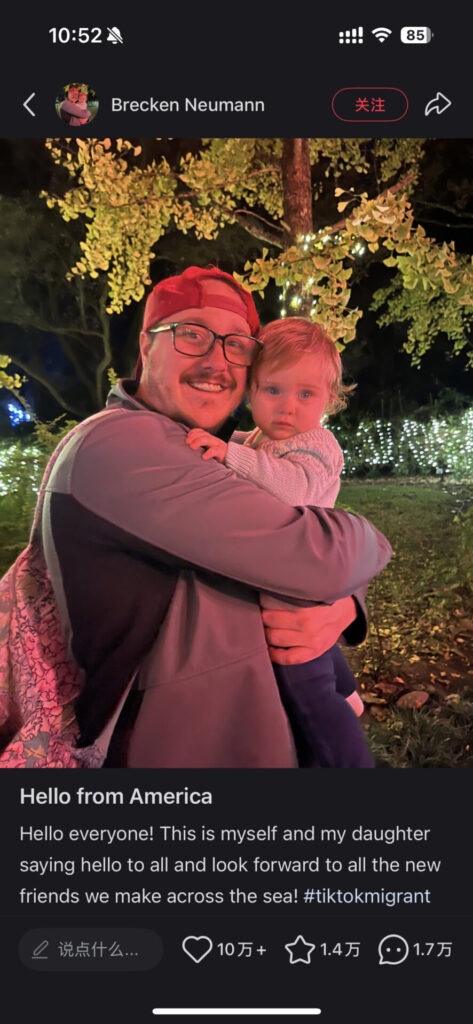
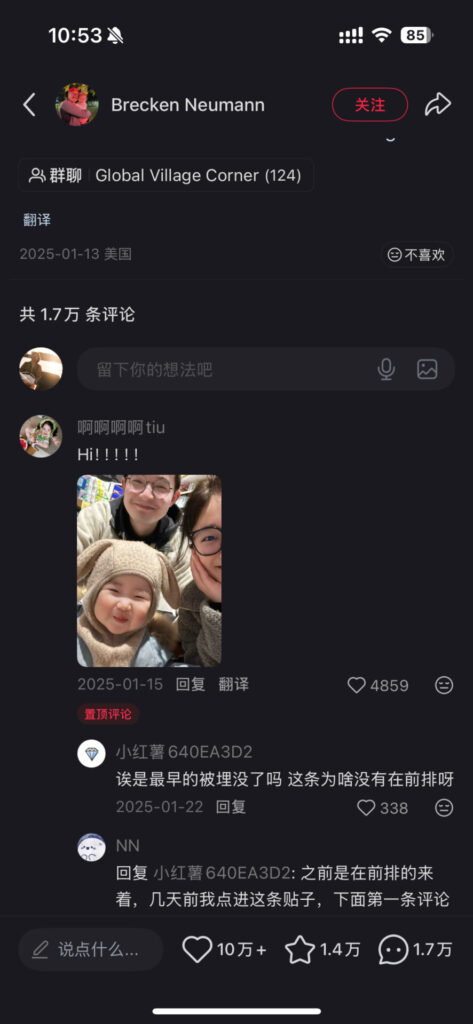
These small gestures of recognition, became a powerful reminder that direct, human contact had been rare for a long time. For many users on both sides, this was not just curiosity but a first real glimpse into each other’s ordinary lives.
When Everyday Life Became a Reality Check
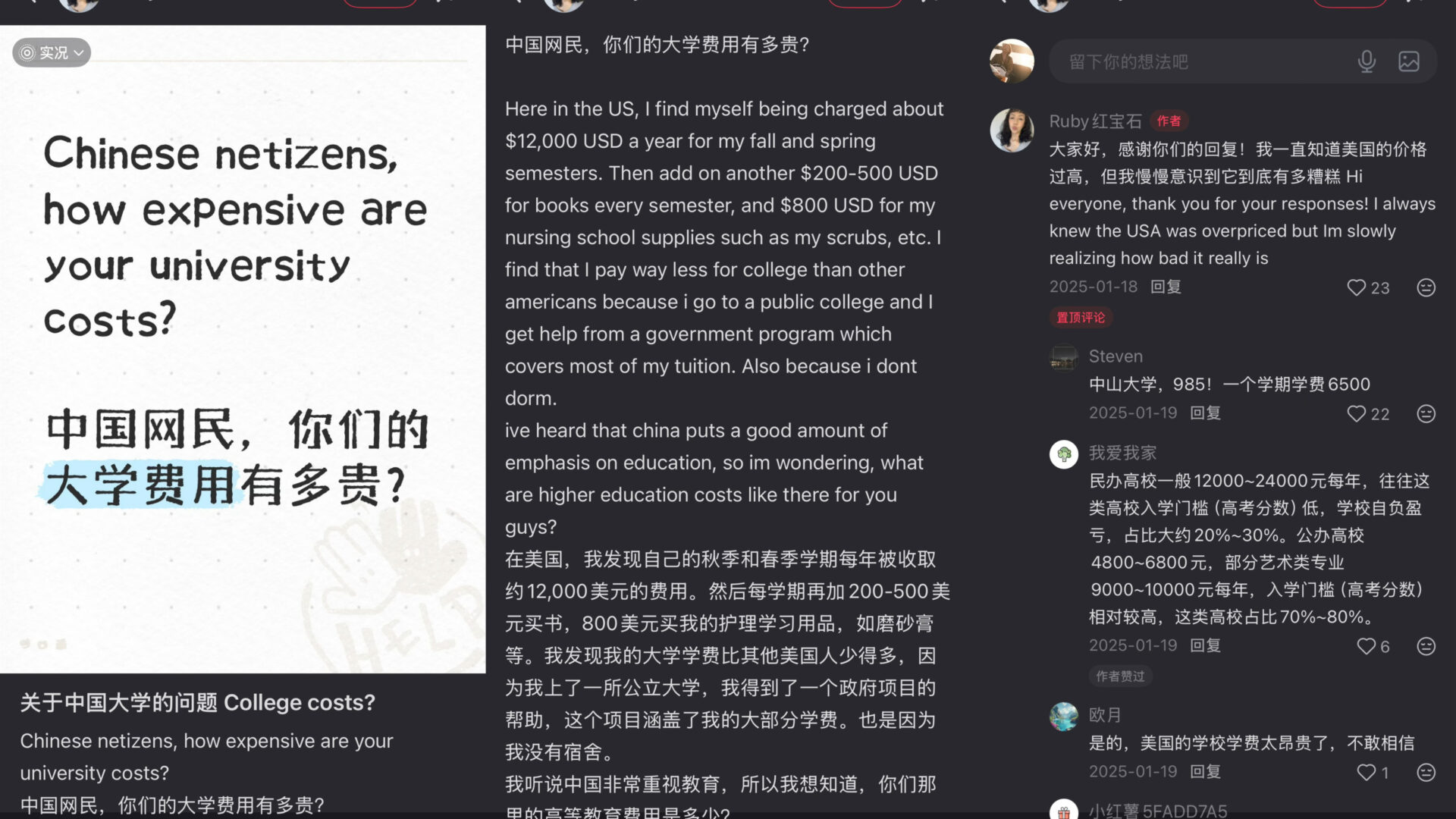
As these interactions continued, conversations gradually moved from greetings to everyday life. Informal comparisons emerged around work, housing, healthcare, and education, with tuition fees drawing particular attention. American usersthat annual undergraduate tuition can range from roughly $25,000 to $45,000, and with living expenses total costs often reach $35,000–$68,000, placing many under long-term student loan pressure. These figures surprised many Chinese users, who had assumed U.S. education was both accessible and affordable.
Meanwhile, Chinese users described their own expenses, noting that tuition at public universities in China is typically around ¥5,000–¥10,000 ($700–$1,400) per year. For many Chinese users, especially those who had never traveled abroad, these firsthand exchanges complicated the long-held image of American life as uniformly comfortable and prosperous. At the same time, American users expressed surprise at the relative affordability of daily life in Chinese cities and certain social services.
Such comparisons frequently provoke not heated debate, but quiet reflection. They reveal how distance and imagination profoundly shape perceptions of foreign societies, while everyday dialogue can swiftly alter these entrenched notions.
What is Remaining now?
Nearly a year later, are these “TikTok refugees” still on Rednote? Most have since left, while a smaller number remain active. Yet the importance of this episode lies less in how long users stayed than in the lingering effects it left behind. As a long-time Rednote user, I witnessed this process firsthand. In the earliest days of the migration, the platform lacked even basic translation functions, reflecting its orientation toward a largely domestic audience. Within a short period, Rednote introduced updates to support cross-language communication, including translation tools and English subtitles for uploaded videos. At the same time, many Chinese users and influencers began adding English subtitles to their own content on their own initiative, making an effort to communicate with new international viewers.
For a brief period, the platform took on a distinctly festive atmosphere, as users from different countries interacted closely and shared details of everyday life. These encounters had lasting effects, especially for Chinese and American users who had never traveled abroad. Ordinary posts about work, housing, family life, and personal finances revealed realities that differed from long-standing assumptions about life in other countries. Rather than reinforcing stereotypes, these exchanges introduced a more grounded understanding of foreign lives, showing how brief moments of everyday interaction can quietly reshape perceptions long after the initial excitement has faded.
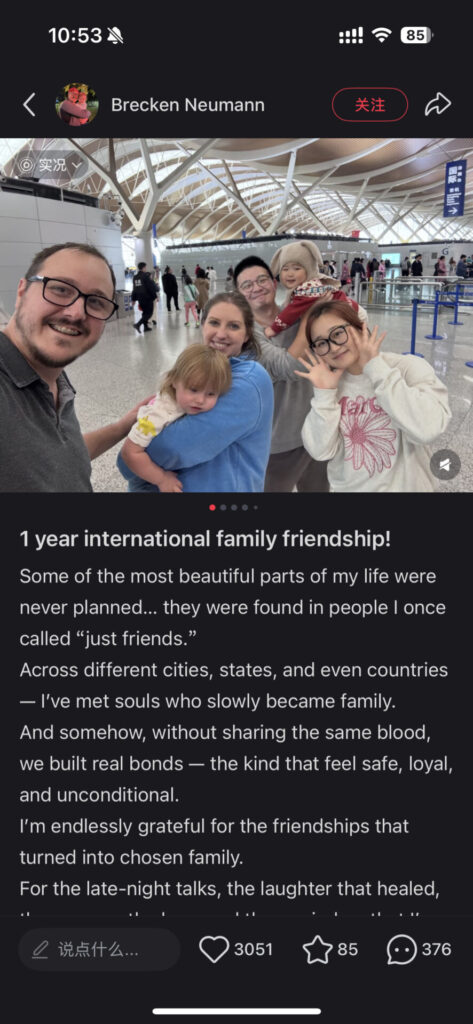
Do you still remember the families I mentioned earlier in this article? Guess what? They met each other in Shanghai just recently! Seeing them together, sharing smiles and greetings across continents, was a simple yet profound reminder of what ordinary people can achieve when given a chance to connect. Moments like this, born out of curiosity, small gestures, and everyday interactions, show that even when the world feels divided, human connections can bridge gaps that politics or geography cannot. If the world could hold more moments like this, I think we would love it even more.
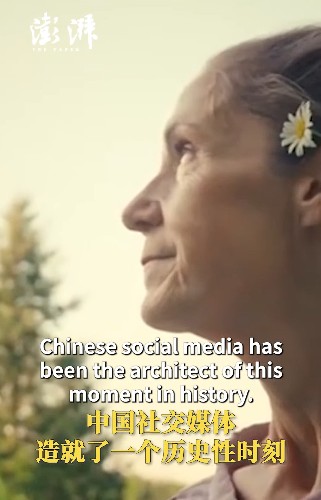
The following link is an interview about a 58-year-old Mary Jo from the United States became a so-called “TikTok refugee” when the platform faced a potential ban. She joined a Chinese social media platform and shared her first experience communicating in Chinese, moved to tears by the warm responses from local users. This unexpected encounter marked a turning point in her life. https://web.facebook.com/watch/?v=824507233741102
Yiling Lyu is a Master of Arts student at University of Copenhagen with a Major in African Studies, and a DDRN intern.