 by
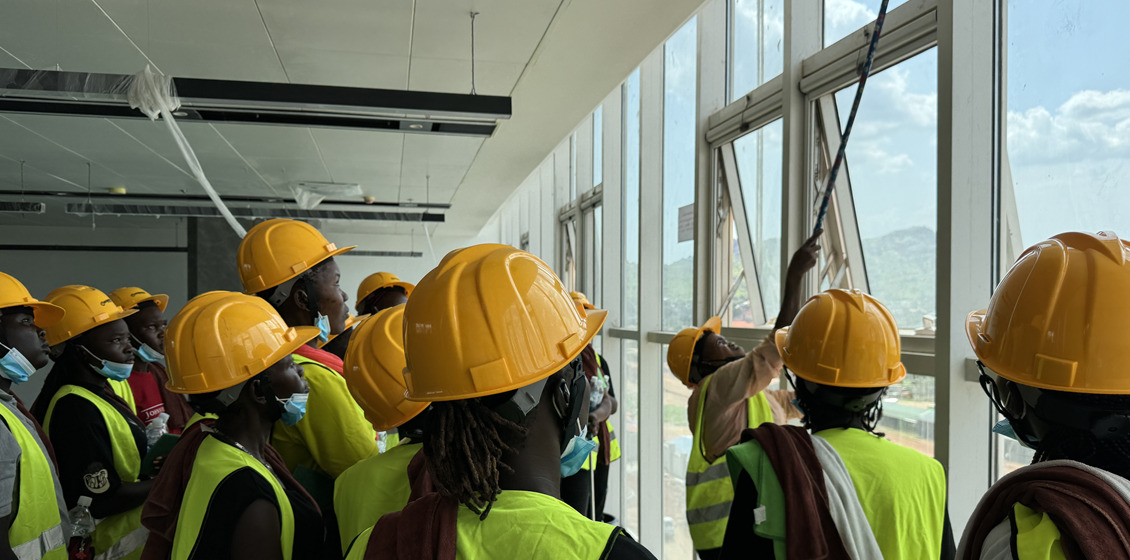
by From 2020 to 2024, I worked in Juba, South Sudan, as a property operations manager. My job required close cooperation with local staff, vendors, and clients, and on most days I communicated with between thirty and seventy employees.
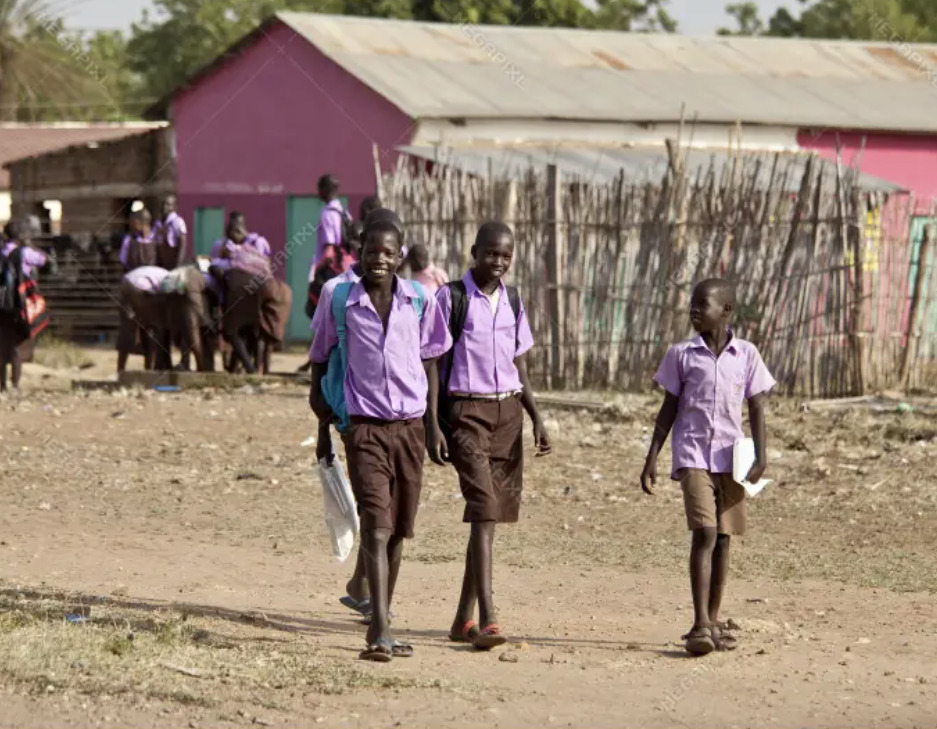
What struck me the most during my time in South Sudan was that nearly every staff or candidate I interviewed shared a similar goal: To save enough money to continue their education.[1] In a land filled with uncertainty and chaos, where roads are barely paved and electricity remains a luxury for most, hope still finds its way. Each time I walked through the streets, I saw groups of pupils in bright, colourful uniforms. Amid the dust and hardship, their neat uniforms stood out like symbols of persistence, quiet proof that even here, the pursuit of learning endures.
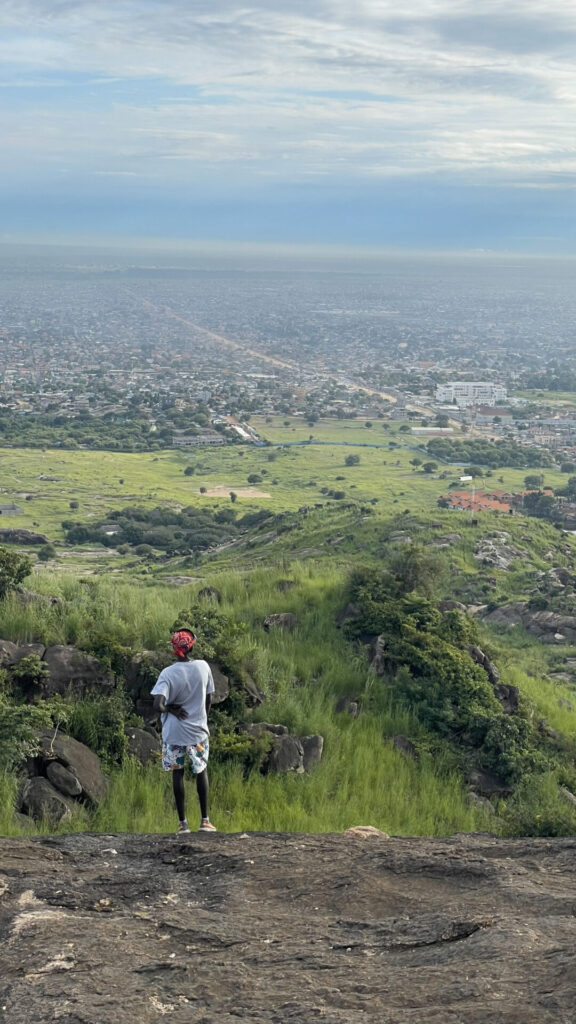
South Sudan, a place so often forgotten by the world, rarely finds its way into global conversations. When speaking with people from other parts of the world, I often realized how little they knew about South Sudan’s existence or struggles. The endless conflicts in neighbouring Sudan have drawn most of the world’s attention, leaving this young nation largely overlooked. Yet, within its borders, life goes on. Since gaining independence in 2011, South Sudan has endured repeated cycles of violence, floods, and political deadlock that have displaced millions and left schools, clinics, and roads in ruins. The World Bank estimates that about 72 percent of the population is under 30 – a generation that has known little beyond crisis.
Resilience in South Sudan rarely looks like triumph. It is often quiet, ordinary, and hard to define. In Juba and other towns, sports and art have become small refuges within the chaos. According to Sky News, children gather on cracked courts built by the Luol Deng Foundation, where coaches teach teamwork to those who have lost almost everything. For some, the game offers structure; for others, it is simply an hour of safety before the night returns.
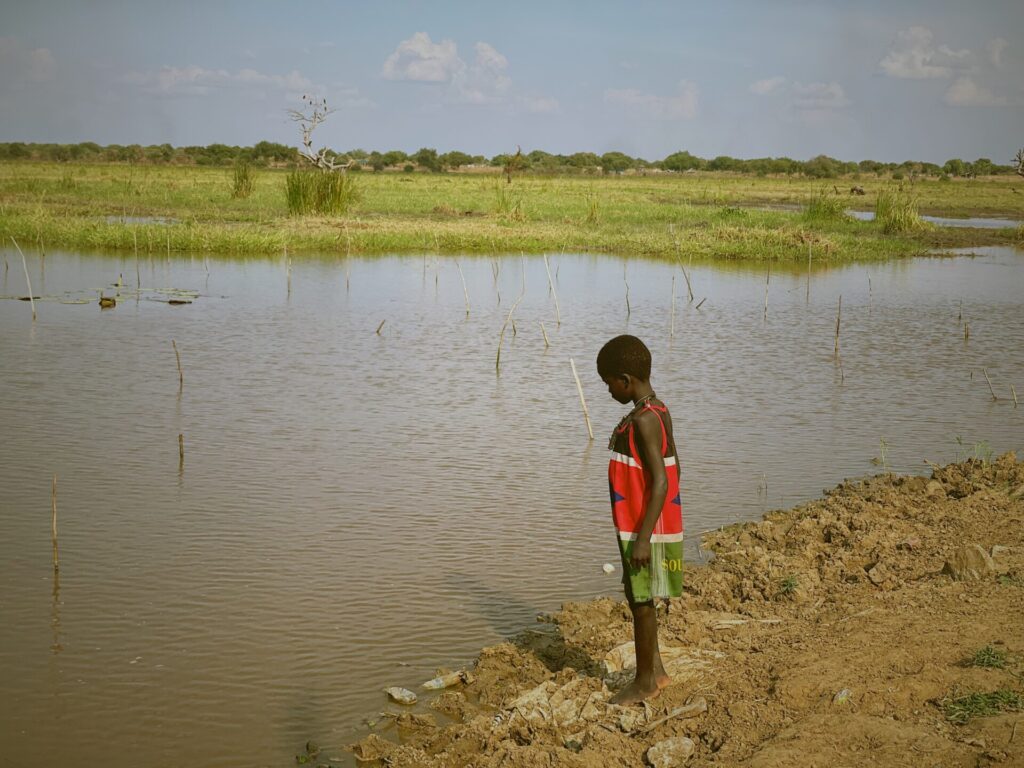
The same pattern appears in education. A 2023 UNICEF case study describes children in Twic East, Jonglei State, holding class in a single open-sided building used not only for lessons but also as shelter during the rain. Even amid conflict, floods, and displacement, teachers and education officers continue to build the framework for early learning. The report highlights how, despite declining education budgets and fragile infrastructure, South Sudan’s Ministry of General Education, with UNICEF’s support, developed the country’s first national pre-primary policy and implementation plan in 2023 , proof that even in crisis, system-building can continue.
Beyond classrooms and courts, young artists, photographed by Reuters, paint murals and write poetry about peace. Their work is not propaganda for optimism, but a record of exhaustion and longing. “We paint peace because we have seen too much war,” one artist said. These gestures , a brushstroke, a basket scored, a classroom rebuilt, do not promise a new dawn. They simply insist on the dignity of staying present.
Beyond classrooms and courts, resilience in South Sudan also takes the form of civic persistence, the attempt to remain involved, to speak, to organize. As the Chr. Michelsen Institute observed, young people form the majority of the country’s population, yet few have access to political influence or employment. Many of them move between jobs, activism, and survival work, creating informal networks that replace absent institutions. Some have founded youth groups that hold peace discussions or teach basic skills in camps for displaced families. Others simply try to stay visible in a system that rarely acknowledges them.
These efforts do not follow a straight path. The same report notes that youth initiatives are often underfunded and vulnerable to political pressure. Organizers who speak out risk harassment or co-option by elites. Still, many continue their work in quieter ways, facilitating community dialogue, repairing schools, or collecting local histories. Their persistence is less about optimism than about refusal: a decision not to disappear.
Photographs from Al Jazeera show the same patient determination. The photo essay titled Youth lead efforts to heal South Sudan’s war-torn communities follows young volunteers and mediators who bring people together after years of fighting. In towns such as Bor and Juba, they run trauma-healing sessions, organize dialogues, and create art activities for displaced children. The faces in the images reveal both fatigue and quiet strength. These are not moments of triumph but attempts to hold communities together. The story that emerges is not one of victory or despair but of people who continue to meet, talk, and rebuild trust in a landscape where peace remains fragile.
As 2026 begins, South Sudan remains in a state of suspended transition. The elections that were initially planned for 2024 have been postponed once more. The government has said that the delay is necessary to allow time for a permanent constitution and new electoral laws to be completed. The Wilson Center has reported that leaders describe the extension as a step toward greater inclusivity and stability, yet the decision has also deepened public concern about whether meaningful change will ever arrive.
When I was working in Juba, uncertainty was part of daily life. Whenever there was even a small sign of trouble, we would store food and fuel, unsure of what the next day might bring. Our construction projects were often interrupted or delayed because of government financial issues. Many of my Chinese colleagues eventually resigned and left the country for security reasons. I often wondered about the local workers who stayed. For them, leaving was not an option. Their families and entire lives were here. I could pack a suitcase and fly home, but they had to carry on with whatever stability they could create for themselves.
For those who remain, the present feels heavy with both patience and fatigue. The peace agreement has so far prevented a return to full conflict, yet incidents of violence continue in several parts of the country, often between communities competing over land, cattle, or political influence. The United Nations Peacebuilding Fund noted in 2024 that localized fighting and displacement persist despite the national ceasefire, while community efforts to maintain dialogue and daily life continue in parallel. Markets reopen soon after clashes subside, schools resume even after floods, and essential services are rebuilt again and again. The World Bank’s 2023 report on resilience in South Sudan also described how local markets and small enterprises regularly recover after natural disasters or armed disruptions, underscoring the endurance of ordinary people. In many areas, civic and youth organizations supported by the UN have resumed activities within weeks of conflict, proving that recovery, however limited, is a constant process rather than a single event. It is not peace in a full sense, but a shared understanding that peace, however fragile, must be protected.
From a distance, it is easy to forget how much endurance this requires. Many who live there understand peace not as a settled condition but as a daily practice. They continue because life must continue, even when the future remains uncertain. From afar, it is easy to forget how much endurance this requires. Those who live in South Sudan have learned to sustain life amid uncertainty. They continue not because they trust the future, but because daily life demands it. That persistence, neither hopeful nor hopeless, is what keeps the country moving.
I often think of the children I saw walking to school in their bright uniforms, stepping carefully along the uneven roads. Many of them are grown now, still living through the same uncertainty, still trying to learn, work, and plan for a future that shifts each year. South Sudan’s story is not one of victory or defeat. It is the steady rhythm of people who continue despite everything, holding on to ordinary life as if it were the truest form of resistance.
[1] The author worked in Juba, South Sudan, as an operations manager for a construction company from 2020 to 2024.
Further reading: https://ddrn.dk/7025/ and https://ddrn.dk/11379/
Yiling Lyu is a Master of Arts student at University of Copenhagen with a Major in African Studies, and a DDRN intern.