 by
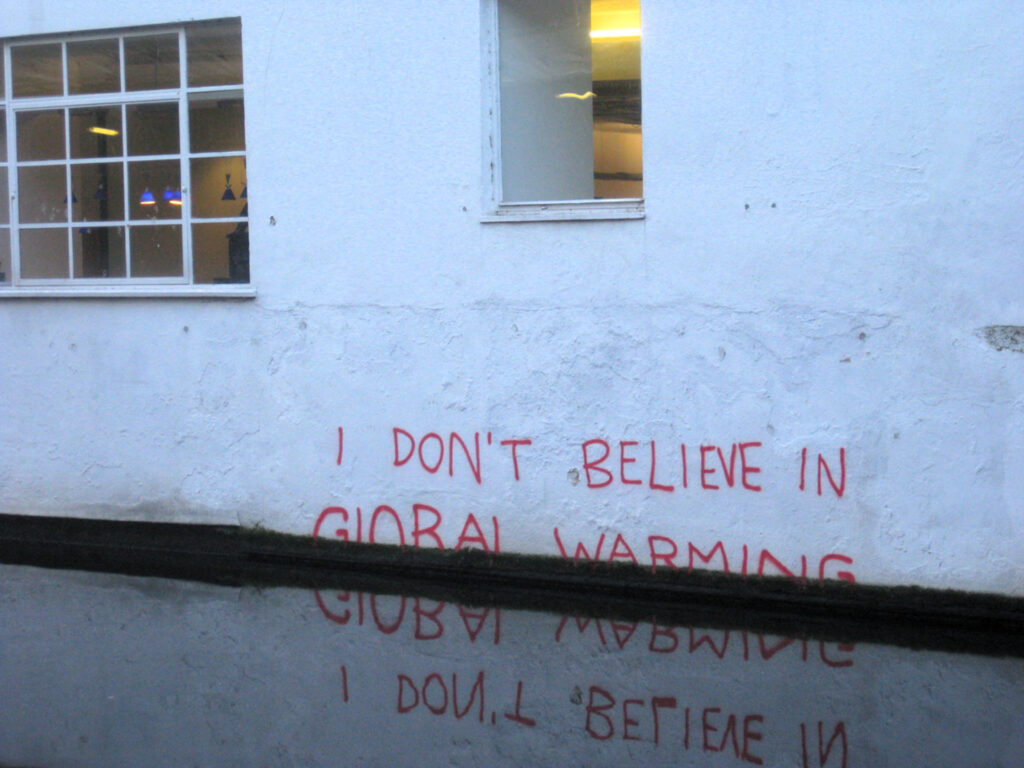
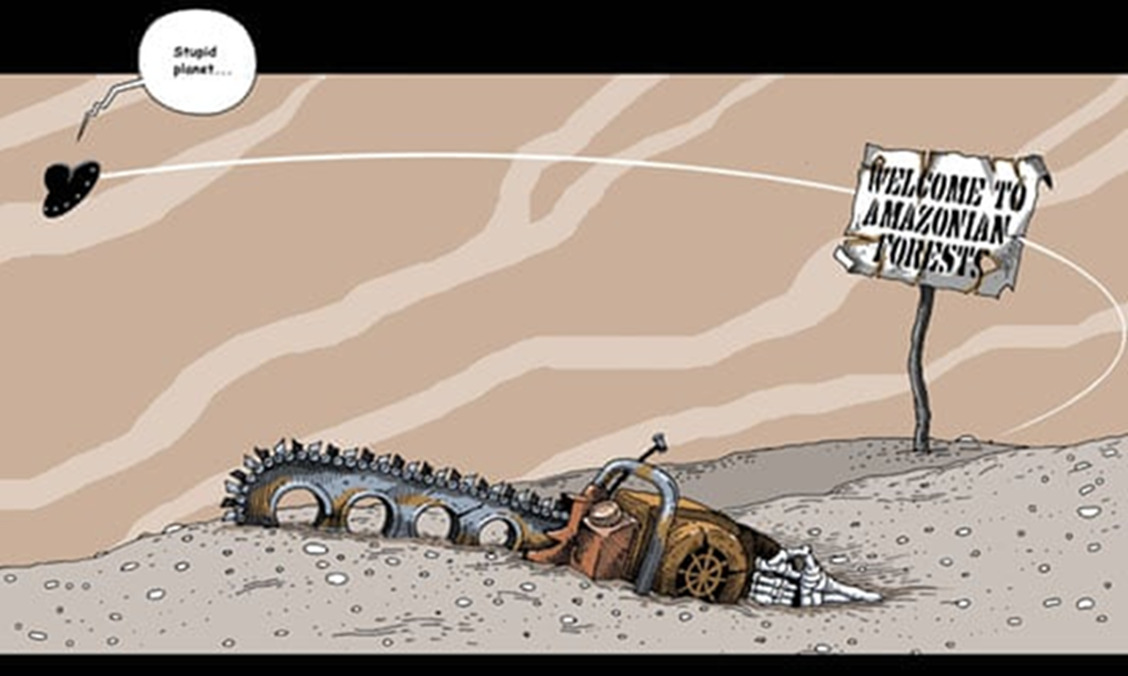
by We have spent decades finding technical solutions for the climate crisis. Yet, emissions have kept rising, and climate policies fall behind the cultural, political and social behaviors, unabling to provide sufficient responses. Our shared aspirations might be bold, yet our efforts fall far short of what is required. If we are to come together in a display of collective heroism to save the planet, we need to ask: what can unite us to try? It might be the laughter.
Massih Zekavat has been an Alexander von Humboldt postdoctoral fellow at Europa-Universität Flensburg in Germany and a researcher at the University of Groningen, Netherlands. He has spent years researching the integration of humor and satire in the climate discourse.
According to Zekavat, humor could be an effective tactical and rhetorical tool that can bridge intention and action, build a shared culture, and help hold different actors accountable for real change.
Despite the seriousness of the threat of the climate change, actions like changing consumption patterns or challenging polluters have not been completely achieved. People often feel powerless, overwhelmed, or guilty, especially when the scale of change requires ‘individual responsibility’ and rests on the shoulders of ordinary citizens alone.
Massih’s work pushes environmental psychology beyond models that focus on individuals and toward a systematic, culturally informed approach. He argues that humor has a unique power for collective mobilization: “If you want something to cohere people together, to create a community, if you need collective action that goes beyond holding a sign on your own in a city square, humor might help.”
Humor can offer a psychological bridge. Climate communication usually makes people feel scared or desperate. However, humor and satire let us confront uncomfortable truths together and confront those in positions of power and influence, in a world where companies and policymakers have greater impact than average citizens.
Parrhesia is of Greek origin. It means speaking truth to power, candidly and frankly. In the past, there were always some parrhesiastes, particularly in Athenian democracy, who spoke truth to the king without fear of repercussions, often jokingly and by playing the jester.
“It is a situation where somebody who is less powerful talks back to power, somebody who is more powerful, and tells them the truth. Like when I address Frans Timmerman, saying, ‘hey, what you’re doing is messing things up. Instead of trying to make people change, why don’t you do something about Shell? Or when I confront Shell, Tata, Amazon, or Elon Musk.’ So, this is one of the functions of satire. Satire has been traditionally associated with speaking truth to power… It is one of those discourses that facilitates expression when there is an imbalance of power in a conversation.” Zekavat adds.
“There is no symmetry in the power relationship between individuals and corporations or policy makers… You need a rhetorical device that facilitates bridging this power asymmetry… satire could be more effective than any other form of language.” Zekavat says. Humor and satire have given a level of protection to those without power for centuries. We need to laugh, and in laughing, we refuse to be silenced.
The laughter we overlooked
When Zekavat shifted his humor-focused research from politics to environmental issues in 2018, he found little scholarly attention to the role of humor. Many people were either sceptical of the climate crisis or unconvinced that humor could contribute to climate action.
One of the reasons that humor is sidelined is the assumption that it trivializes the crisis. “The main concern is that the climate crisis is something very serious. Humor is not serious. So if you treat climate crisis humorously, you’re reducing the seriousness of the topic. But this is not necessarily the case.” Zekavat says.
Utilizing humor for addressing environmental crisis is a newfangled concept, even for academics and activists. “Usually academics, particularly in the humanities, lag behind creative artists,” he notes. “Creative writers do something, and then it takes critics a decade to acknowledge it. There are comedy shows, cartoons, novels, and short stories out there that are humorous or satiric and deal with environmental crisis, but critics have not been engaging with them that much.”
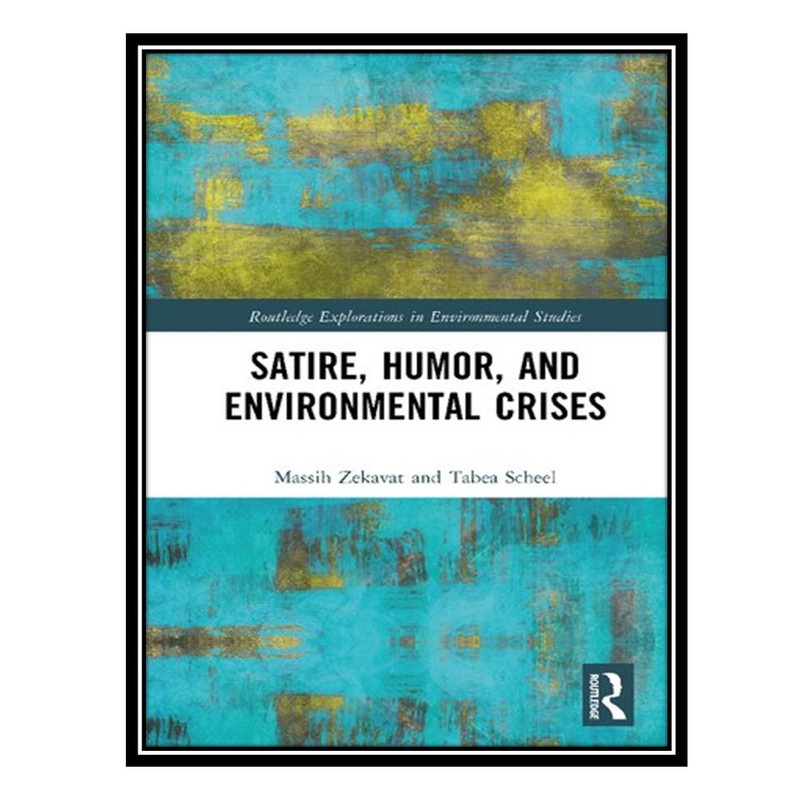
In his book Satire, Humor, and Environmental Crises, published in 2023 by Routledge, he analyzes the influence of humor and satire in mainstream media, in such works as The Simpsons, Last Week Tonight with John Oliver, and New Yorker Cartoons, to examine the relationship between humor and pro-environmental attitudes and collective behaviors.
He argues that climate communication needs a serious overhaul. Strategies proposed so far by policymakers and researchers tend to assume a “one-size-fits-all” audience. However, people do not respond to those environmental messages in the same way. Their behaviors and attitudes are heavily formed by cultural background, class, age, and their identities.
He proposes primarily to recognize and understand different groups, and then tailor the pro-environmental messages, such as narratives and multimodal texts, to where they stand. Effective climate discourse should speak to what people value, not what they are told to value.
This is where humor leads in. It is a gateway for an effective communication strategy to engage different groups and make messages more relatable. It also has the potential to assist individuals in coping with the psychological impact of a crisis, simultaneously reducing the gap between intention and action.
Detecting the target of the joke
When considering the root causes of these disasters, we usually encounter a huge gap in the damaged caused by companies and individuals. Zekavat states that the climate crisis is not something that is caused by an individual, nor can it be addressed by an individual. The scope of the crisis is much larger. “You cannot really compare my carbon footprint to that of the Pentagon or to that of Amazon… Me deciding not to use plastic straws is very different from the EU banning the use of plastic or disposable dishware”.
An Oxfam study found that the lifestyle of 50 of the world’s richest billionaires produces as much carbon dioxide as the average person would in 300 years, with them taking, on average, 184 private jets a year and spending 425 hours in the air. Additionally, the use of luxury yachts by them is equivalent to the level of carbon emission that an average person would produce in 860 years.
A new report also concluded that more than 70% of the world’s greenhouse gas emissions have been caused by only 100 companies since 1988. Most of these companies are supported by investments of billionaires, such as Shell, ExxonMobil, BP and Chevron.
Yet, policymakers often point at ordinary people to “do better”. Recycle more, use paper straws, and buy green products. This narrative, Zekavat argues, carries a colonial and classist tone, ignoring the agelong lifestyle of indigenous people and many other communities. “I’m not comfortable with this for many reasons. It has colonial and imperial presumptions. It has a hierarchical epistemology… it is usually: ‘I know what is best, you don’t know, so I tell you what to do.’”
It also distracts people from structural and systemic issues. “It disproportionately blames the individuals compared to institutions, politicians, or corporations. So what it essentially does is it facilitates the perpetuation of the status quo,” Zekavat says.
It is a vicious circle that we continuously find ourselves in, fighting for clean air to breathe and a land we can still call home before it sinks. This crisis is packaged and presented so well that we see ourselves as the culprits, striving to reduce our individual carbon footprint through guilt and despair. Meanwhile, a powerful group remains largely unnamed, the ones in tailored suits who hold high shares in fossil company stocks, just stepped off their third private flight in this week and will most probably take his spaceship to other planets when there is nothing left here.
Nilüfer Khudaykulov is a Master student in International Politics and Governance at Roskilde University, Denmark, and a DDRN intern.



Click to read the second part! The Emotional Path We Take for Climate Change