 by
by Have you felt that we have failed to address environmental crises? If so, you may be experiencing anxiety or guilt feelings while you hunt for alternatives to flights for your dream trips. Or perhaps, you have stopped giving such importance to it, convinced there is little left you can do to save the planet.
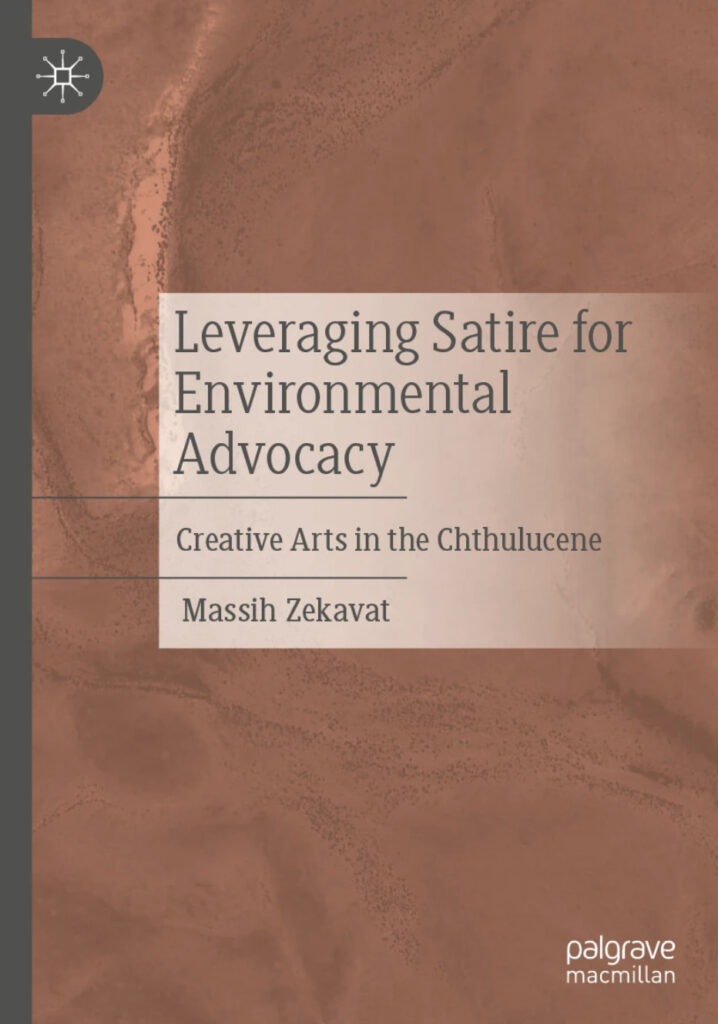
This article continues our exploration from “Humor can help climate crisis? You must be joking!”. In this second part, we turn to insights from Massih Zekavat’s forthcoming second book, Leveraging Satire for Environmental Advocacy, discussed during an exclusive DDRN interview.
For years, climate advocacy has relied on a single powerful emotion: fear. Images of melting ice caps, raging fires, and flood disasters are intended to shock us into action. Yet this urgency does not seem to be effective. Zekavat argues that it has reached its emotional threshold and began to often produces paralysis, rather than mobilization.
This paralysis does not stem from ignorance; rather, it is partly rooted in an emotional paralysis. It means that despite knowing all about climate change, we feel powerless to mitigate it. In his second book, one of the points Zekavat sheds light on is the denialism and quietism through apocalyptic narratives. Through these narratives, we tend to have the illusion of living in the “end times” and denying ecological urgency as a coping mechanism. The missing link, he proclaims, is material engagement, and one way toward this is looking into the culture industry, where satire plays a pivotal role.
“The main psychological mechanism behind apocalyptic narratives is fear… and overexposure to fear can also lead to negative impacts on it. It can cause eco-anxiety, eco-distress, and essentially apathy…which might lead to political inaction and inertia.”
Apocalyptic narratives often portray the end of the world as it is distant, far away in time and place. When our daily lives appear normal, surrounded by trees and blue sky, people do not feel threatened, as the imagined end does not match the daily observations. Climate change, however, is not spatially or temporally distant; it is here now. The planet is indeed deteriorating, but not in the way we expected from myths or movies. “Instead of using apocalyptic narratives… we should use narratives that facilitate speaking power to truth for people whose voices have been silenced,” Zekavat says.
Satire enables us to illuminate the aspects of individual and collective behavior that environmental psychology overlooks, including the power dynamics ingrained in class, race, gender, and material inequality.
When coping becomes complicity
Climate policies, particularly within the European Green Deal, have long prioritised resilience, adaptation, and coping. Zekavat warns that this maintenance can preserve the status quo, rather than challenge it. “You are making sure that the status quo goes on… we can still dig up fossil fuels, still burn them, still make money out of that. And someone else will pay the price.”
That “someone else” is rarely the ones who benefit from fossil fuels. It is the communities in Africa, Middle East, or other countries already burdened by environmental injustice; it is the global majority. “This is essentially what resilience and coping come down to,” Zekavat remarks critically.
“We have empirical data that uncertainty emotions could be more effective, and shame is one of those emotions that could be induced by satire,” he explains. “Satire is again a very strong rhetorical means of creating shame and indignation.” He contends that what we need is not better coping, but an actual disruption. And holding the powerful to shame can spark real transformation.
Within or against nature: a story of ambitious Homo Sapiens
Anthropocene is described as the geological period in which human activity has become as dominant as much as other geological forces. It is a time when mountains can be destroyed not only by earthquakes but also by mining companies. The term is famously used by the literature to indicate the level of adverse impact of humans on the planet. However, it carries significant flaws.
Zekavat points out that the term blames Anthropos, targeting humanity as a single, unified entity. It ignores the staggering inequality of who caused the damage and who suffers from it. “It doesn’t really differentiate responsibility,” he argues. “The responsibility of Senegal, for example, as compared to the Netherlands, China, or the US – both in creating the climate crisis and in their capacity to address it – is not even comparable.”
The second flaw is that Anthropocene often reflects a colonial, imperial perspective. Much of climate fiction pictures New York or Florida being submerged in movies, yet “Pakistan was actually submerged. A third of this country was underwater two years ago in the summer, and nobody talks about that. It’s not even something that might happen in the future; it is something that actually happened. It is a part of the lived experience of those.”
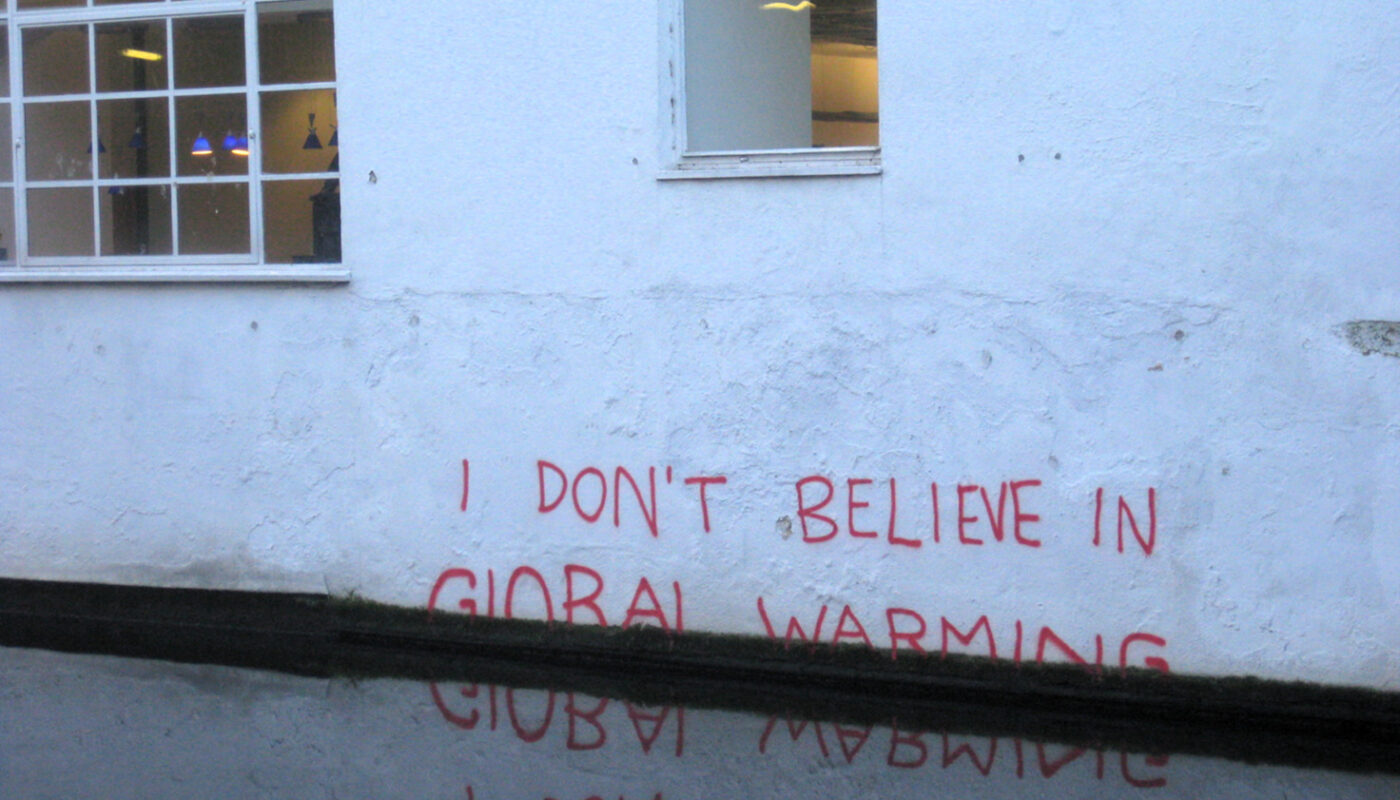
This supposedly universal “we” in climate storytelling needs to be questioned. In response, Zekavat persuasively embraces using the concept of Chthulucene, allowing us to reconsider the interconnections between the species in nature. He states that the framing of words is essential, giving an example of the shift between ‘global warming’ to ‘climate change’, which incrementally eliminated sceptics and denialists. Anthropocene, however, still obscures responsibility.
Two major misconceptions in climate communication
Zekavat identifies two persistent misunderstandings in climate advocacy:
- “If we inform people, they will change”
This assumption misrepresents how human behaviour works. Smokers, for example, are fully aware of the health hazards, but it does not help them change their behavior. Knowledge alone does not lead to action. Likewise, behavior can change without information, such as through propaganda or nudging, which is a term used to get people’s attention gently, by placing small bars of chocolate near the cashier in supermarkets, for instance. “If you want to change energy consumption behavior… change the architecture. People won’t even notice how their behaviour changed, but it will change.”
- “one-size-fits-all”
As elaborated in his first book, Satire, Humor and Environmental Crises, climate campaigns must reflect the diversity of habits in different communities around the world, since environmental behaviors come with some degree of abstinence, giving up travel, meat, and convenience. As might be expected, not everyone has the same capacity for sacrifice.
Humor provides a solution to both of these misconceptions. It simultaneously engages audiences on cognitive and emotional levels, making it exceptionally potent. It is also very context-dependent, culturally specific, and deeply tied to who delivers the message and who is targeted. “It reaches the audience at two levels, cognitive, rational, and emotional. So it’s not just giving information cognitively. It’s not scientific writing. There’s also an emotional, visceral, affective, imaginative aspect to that,” Zekavat says.
It is important to underline that humor should not belittle the crisis; instead, it should belittle the deniers. “Instead of poking laughter at the climate crisis, you poke laughter at people who deny the existence of the climate crisis.” Zekavat cautiously reminds us that satire must be used responsibly, as it can reinforce prejudices or punch down on vulnerable groups if misdirected. However, if it is used wisely, it becomes a “moral weapon”, as he aptly describes.
“We must be more open to approaches and strategies that are not established. It doesn’t mean that if something is not as popular or as frequently seen as others, it doesn’t work. Maybe nobody has dared to try them.” Satire is one such overlooked approach, in alternative to apocalyptic narratives. He hopes that environmental campaigns will change their focus from targeting ordinary people to confronting political and corporate powers. “This is a systemic, political issue… not an individual opinion choice.” He concludes.
Our planet’s decline is slow and unjust, and it is driven by choices we can still change. Who we shame, who we comfort, and whose responsibility we point at matters.
Nilüfer Khudaykulov is a Master student in International Politics and Governance at Roskilde University, Denmark, and a DDRN intern.