 by
by Definition
I have an old, uncreative newsflash, but one that many in the field of sustainability seem to forget: sustainability is not only CO₂ emissions. Shocking, I know. But what is the definition of sustainability? It is actually pretty subjective. In 1987, the United Nations Brundtland Commission defined sustainability as “meeting the needs of the present without compromising the ability of future generations to meet their own needs.” In the charter for the UCLA Sustainability Committee, sustainability is defined as: “the integration of environmental health, social equity and economic vitality in order to create thriving, healthy, diverse and resilient communities for this generation and generations to come. The practice of sustainability recognizes how these issues are interconnected and requires a systems approach and an acknowledgement of complexity.” But with many trends: definitions, goals, and actions, things start to become a little bit blurred. Suddenly, the word sustainability is thrown around to describe everything, but at the end of the day, what is truly sustainable?
I Hate Paper Straws
I am a sustainability manager in companies within the chemical building industries. Funny, I know. But due to my job, I am oftentimes exposed to a lot of bureaucratic procedures, and with that come the people (like me) who like to find loopholes so that they do not have to take on any extra work. I should be treading lightly, as my job is important to me, so let’s take a moment to clarify that I am in no way talking about anything that happens within any of the companies that I work at.
That being said, humans love to find loopholes. Rules are meant to be broken, and ever since the first rule was established, a loophole came shortly after. Which is good and well, as this showcases problem-solving skills.
Anyway, back to my original statement: I hate paper straws
When I order my orange juice and receive it with a paper straw, my mood is instantly ruined. I do not want to spend the next five minutes downing my juice in fear that I will later be met with a soggy straw that is falling apart in my mouth. I will go as far as to assume that most kids have tried to eat paper when they were younger, or at least I did, and if it had been in any way delicious, I would have continued eating it. I stopped for a reason. So why is it now in my orange juice?
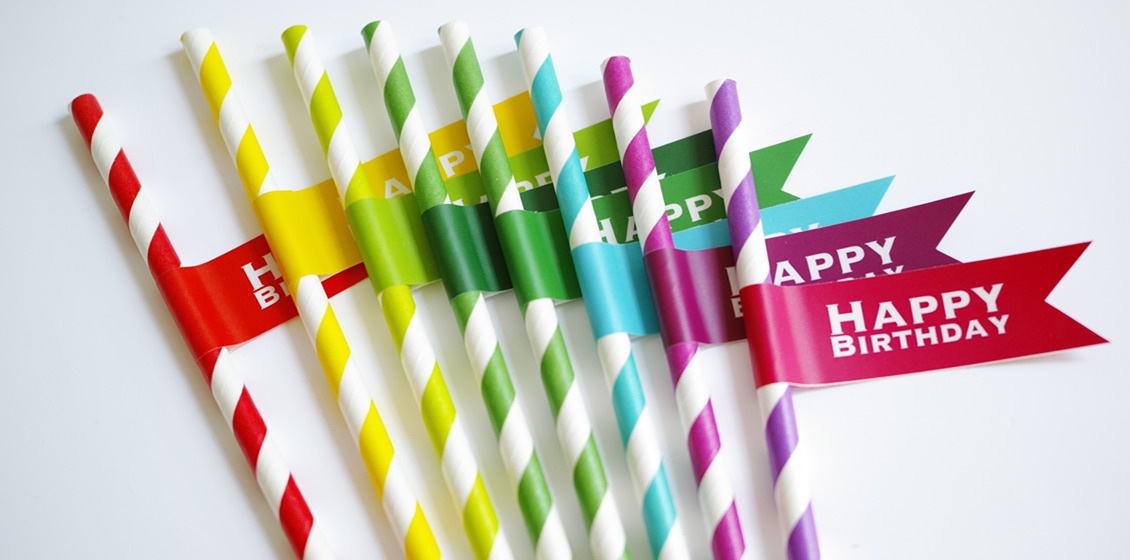
Paper straws have actually been around for a very long time. About a century, apparently. Not to get fully into the history of straws and paper straws, but for now, what is important to know is that paper straws have been advertised as a sea-turtle-friendly, sustainable solution to single-use plastic straws. This advertisement reached the point where people started claiming: “I am an environmentally conscious person, I help the world by drinking out of a paper straw!”
And the intention is great. It is great to want to make small changes in daily life in order to become more environmentally conscious. But what is even better is to actually stop and think about what is being advertised.
Is a paper straw actually sustainable?
Are companies buying carbon credits actually sustainable?
Is planting a random tree in a random field in a country far, far away really what makes a company “sustainable”?
Or are all of those just loopholes in order to ignore what actually needs to be done?
The Life Cycle of a Paper Straw
Back to my passion against paper straws.
I think it is fairly obvious that paper, in general, is not advertised as edible. At least that was the vibe I got based on my mum’s reaction when I once told her that I tried to eat some paper. I also think it is relatively obvious that paper is not a raw material.
Paper production causes water and air pollution, waste, greenhouse gas emissions, and in some cases deforestation.
A life cycle assessment is a means to evaluate the environmental impacts of a product, process, or service which encompasses its production, usage, transportation, disposal, and so on. A comparative study examined bio-plastic straws and paper straws. Bio-plastic straws undergo multiple stages, from corn starch production and lactic acid fermentation to polymerization, molding, transport, and disposal. Paper straws similarly begin with wood extraction, followed by pulping, papermaking,
straw formation, transport, and end-of-life treatment. Although the study was conducted in Malaysia and therefore is not globally representative, the findings encompass the issue that we struggle with when it comes to sustainability. The researches have found that paper straws showed higher global warming and acidification impacts, due to energy-intensive paper production. Bio-plastic straws performed worse in terms of eutrophication, driven by agricultural inputs for corn starch. So basically, neither option is to be considered as sustainable or better for the environment. It is actually really misleading to claim that paper straws are a guilt-free solution to our environmental issues. And just a reminder, paper cannot hold itself up in the shape of a straw in general, and especially not in liquids. Once it becomes a soggy mess, how could it be recycled? That’s right: it probably isn’t recycled, making it a single-use pollutant. Also, the chemicals that they use to bind the paper straw and glue it together? Either a celiac’s nightmare due to the use of wheat as a binding agent, or a yummy chemical substitute. Either way, I’m passing and focusing on what actually will help save the planet: green washing at the corporate level! Yes, really sticking it to the man.
Humans at the Core of Sustainability
Now that we are on the topic of humans and sustainability, the first thing to say is that without humans, there would be no need for sustainability. I will go a step further and say that the issue is not inherently humans, but rather greed, but that is a philosophical argument for another day.
The point about humans and sustainability is that we are the core of it. We need to find a way to continue with “business as usual” without burning every last bit of this Earth to the ground. Sorry, that was a bit of an exaggeration, but unfortunately, it is the reality for many people (and trees and sea turtles) who are being eradicated, all in the name of business. The more important question is: who does modern-day sustainability actually serve? I say this with caution, as sustainability could also be defined not as a movement or a field, but rather as a way of life.
Sustainability Is Not New
One of the most remarkable examples of sustainability can be found in Ancient Egypt: “…their agricultural practices. The annual inundation of the Nile River provided fertile soil for farming, which was carefully managed to prevent overuse and ensure long-term productivity. Farmers adhered to practices that minimized waste and preserved soil quality, such as crop rotation and the use of natural fertilizers.” And yet: “Western imperialism, which is embedded in the phenomenon of globalisation, is spreading dominant cultures and values through trade, production and consumption patterns, and communication. The unmastered modernisation, which Africans are subtly and brutally forced into through the globalisation process, is impeding
Africa’s sustainable development prospects. Sustainability is defined as “meeting the needs of the present generation without compromising the ability of future generations to meet theirs. ”It is a planned economic, social, and environmental change for the better. This change requires active cooperation at all levels by all stakeholders for the wellbeing of the masses.“
This sounds almost too familiar to some colonialist theories, but I promised my husband not to go on an anti-colonialist rant this time, so I will move on.
But you get what I mean, right? I am genuinely wondering why sustainability is advertised as a new and upcoming trend or movement when it has been deeply embedded in the way of life of many civilizations, especially in countries that are now suffering precisely because of their forced “modernisation” and “development.”
Maya Rakha has a Master’s Degree of Arts in International Security at University of Groningen and is a DDRN Correspondent