 by
by What happens when Europe’s own development failures mirror the inequalities it critiques elsewhere?
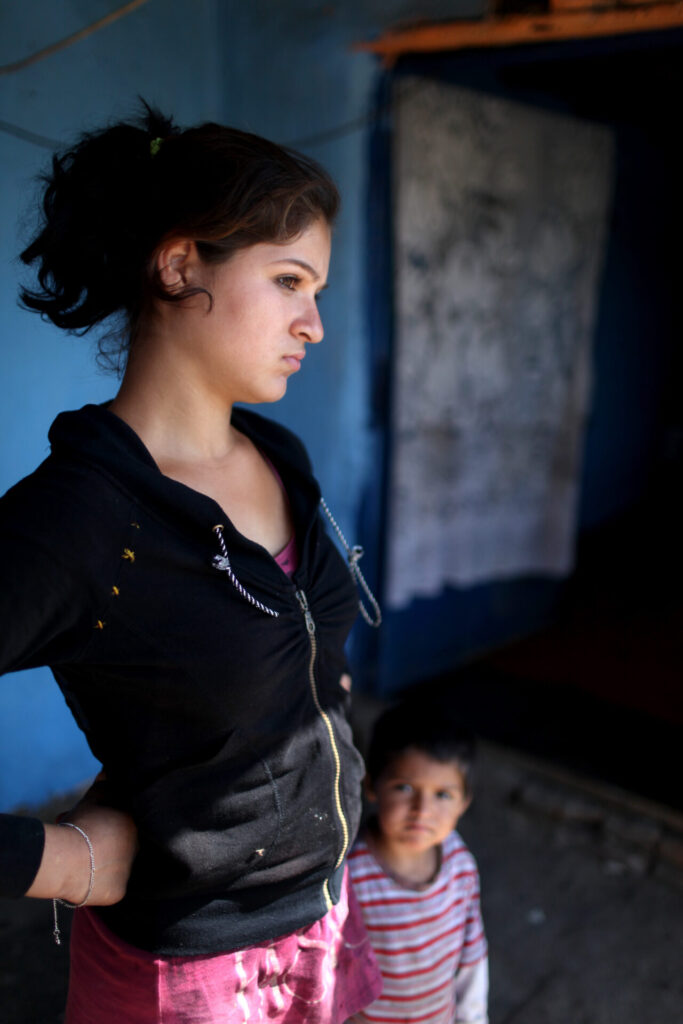
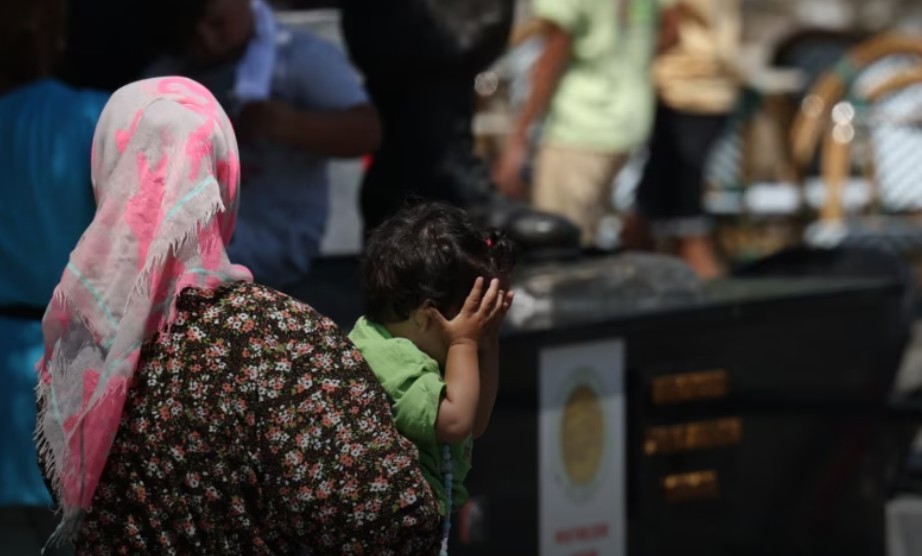
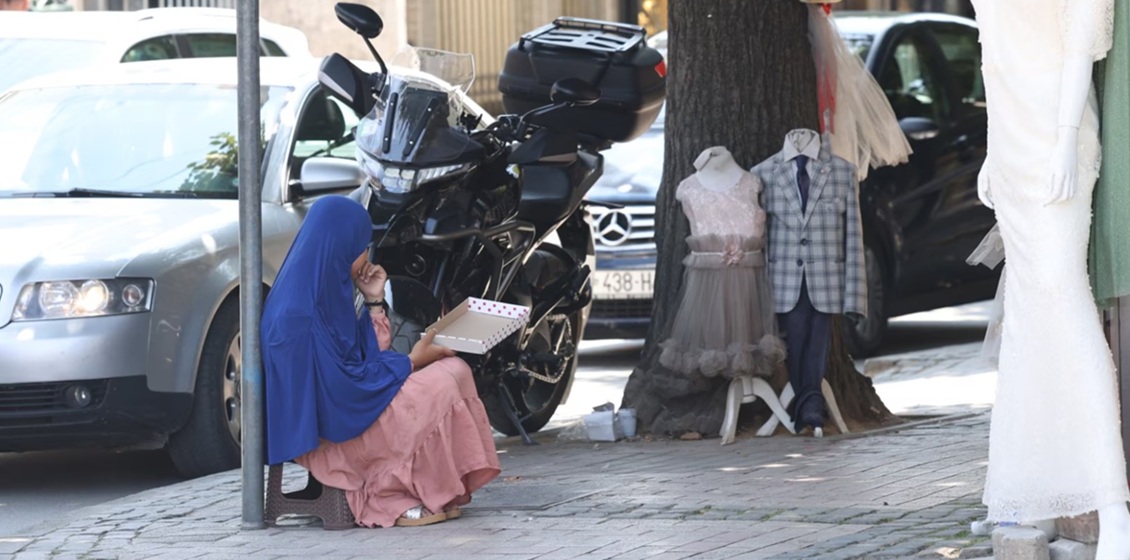
Walking through the streets of Albania, whether for a coffee or during an ordinary car ride, one repeatedly encounters small children and teenage girls carrying babies, begging in public spaces. Older women are often present too, though they tend to remain in the background. The children are the ones doing the work. At café tables, very young girls, some visibly pregnant, approach people asking for money. Surrounded by government buildings and public institutions, one cannot help but wonder how such scenes remain so persistently unaddressed. Child labour, underage pregnancies, and exploitation unfold in plain sight. The Albanian context serves here as an illustrative case rather than an isolated example. Comparable situations are documented across the Western Balkans and in several EU member states, suggesting a structural problem that transcends national boundaries.
When questioned, a local explanation often follows quickly: they are Roma or Balkan Egyptians, this is what they do. In this framing, ethnic identity appears to come before childhood, vulnerability, and even basic personhood. These girls are not seen first as children, nor as citizens entitled to protection, but as members of a group perceived as external to society. Marked as “other”, they are quietly dehumanised. Even in 2025, the laws designed to protect vulnerable citizens appear to apply unevenly, stopping short at the boundaries of ethnic belonging. These children are citizens on paper, yet in practice, they remain outside the reach of the state meant to protect them.
When a little girl is born in some of Europe’s most marginalised Roma or Egyptian communities, her future should be open, like any other child’s. Yet poverty, exclusion, and institutional absence often conspire to close doors before they ever open. In these conditions, she may be kept by the family, or drawn into networks that traffic children for profit. Instead of a comfortable cradle, she may spend her infancy in her mother’s arms on the street, used for begging as part of organised exploitation. As a toddler, she may be taught to beg herself, securing adults another day of survival. When she becomes a teenager, still a child, early marriage can emerge as a survival strategy rather than a choice, and the cycle threatens to repeat itself.
The babies born into these cycles of trafficking, exploitation, abuse, and early marriage do not represent Roma culture as a whole, yet these harmful practices are widely documented. And still, they are routinely overlooked by European governments. Discussions often defer to the language of cultural differences, which can complicate timely intervention and blur institutional responsibility. The result is a quiet hesitation: a sense that addressing these issues may risk misreading or disrespecting Roma and Egyptian culture. Yet the question remains unavoidable: how do we safeguard culture while also challenging the practices that confine Roma women in cyclical forms of oppression?
Moreover, it becomes necessary to question whether cultural difference is at times invoked as a quiet justification for non-interference. Are Roma still viewed, consciously or not, as a foreign element on the margins of Europe, and does this perception contribute to the reluctance to address the oppression faced by Roma women?
The Roma are a transnational ethnic group whose origins trace back to northwest India, from where their ancestors migrated toward Europe between the 10th and 14th centuries. No dependable accounts survive from the Roma’s Asian past or their earliest European history; we are left with only fragments, whose interpretation continues to be the subject of scholarly discussion. Experts estimate that there are between 10 and 12 million Roma across Europe, and about 6 million within EU member states, making them the continent’s largest ethnic minority. Because of their mobility, historical alienation, and the fact that many do not declare ethnicity, these are estimates, not precise census numbers.
Balkan Egyptians are a distinct ethnic minority found primarily across southeastern Europe, including parts of the Western Balkans and neighbouring regions. They are present in countries such as Kosovo, North Macedonia, Montenegro, Serbia, and Albania, and are often grouped alongside Roma communities in European policy and public discourse, despite important differences in language and self identification. Unlike most Roma groups, Balkan Egyptians are predominantly speakers of majority languages in the countries where they live and do not use the Romani language. Their historical origins remain complex and contested. While community narratives frequently link their ancestry to ancient Egyptian populations believed to have settled in the Balkans during antiquity, historians note that the available evidence does not allow for a definitive historical lineage to be established. What is more clearly documented is the emergence of Egyptian identity as a modern form of ethnic self identification. Today, Balkan Egyptians are recognised as an ethnic minority in several European states and, like Roma communities, continue to face persistent social exclusion and discrimination despite their long standing presence and citizenship in Europe.
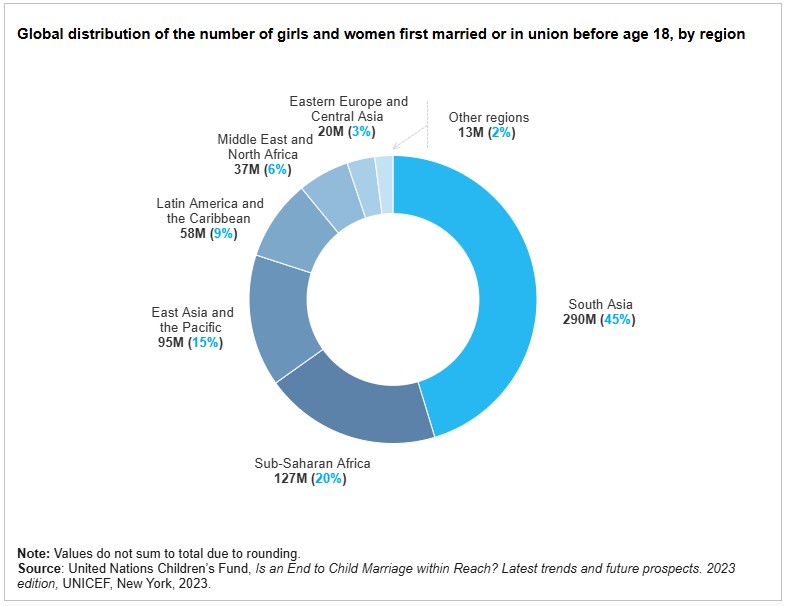
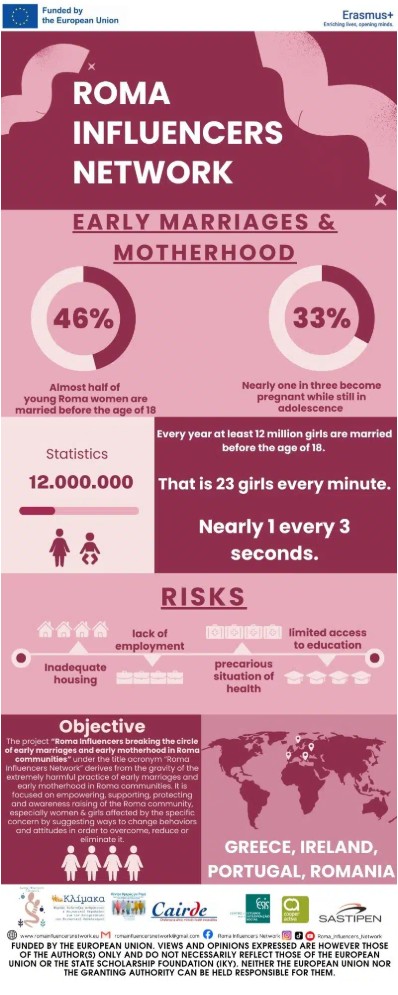
Comparative findings (Figure 1) drawn from the Roma Influencers Network’s transnational 2024 project “Roma Influencers breaking the circle of early marriages and early motherhood in Roma communities”, which includes national research from Greece, Ireland, Portugal, and Romania, paint a rather sad reality. Zarokosta writes for the European Public Health Alliance: “The United Nations Sustainable Development Goals include a target to end child marriage by 2030. Despite this, nearly 50% of young Roma women marry before the age of 18 and one in three becomes pregnant during adolescence”. Apart from the unmistakingly wrong nature of a child marriage, the 650 million women facing such a reality experience increased risks of health problems, particularly sexual, reproductive and mental health; limited freedom, autonomy and economic opportunities; barriers to education and employment; and higher likelihood of living in poverty and social exclusion.
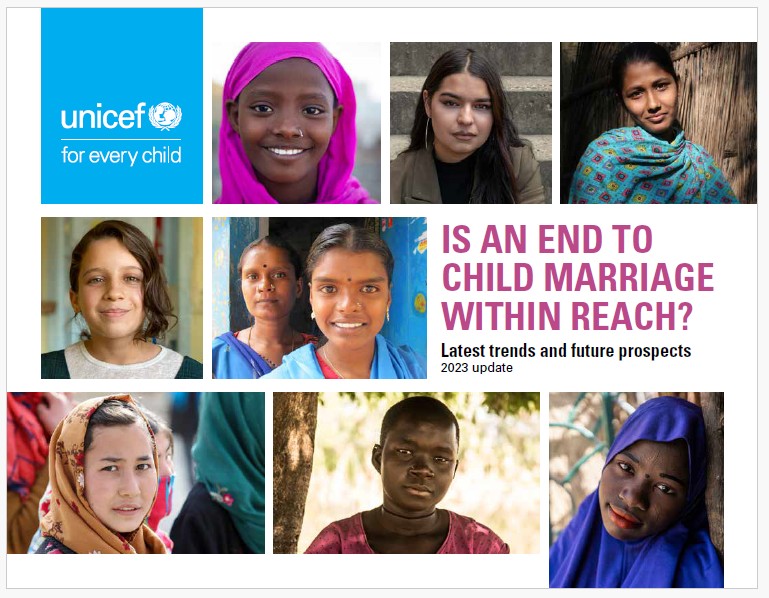
(UNICEF (2023) defines child marriage as any formal marriage or informal union involving a child under the age of 18 and it estimates that approximately 12 million girls are married before reaching that age limit each year, many of whom become mothers shortly thereafter. The research found that among Roma girls residing in Europe aged 13-17 and 15-19, over 40% are married or have a ‘companion’. Preliminary research results from an ongoing study in Greece, Ireland, Portugal and Romania found that 93.6% of Roma women were married between the ages of 12 –18, with 46.3% marrying as young as 12–15. Additionally, 66.7% of Roma women had their first child between 12-18, while 20.4% gave birth between the ages of 12-15. This illustrates a sustained pattern of structural constraint that undermines women’s self determination and prospects for empowerment. According to the report findings, the prevalence of early marriage is likely underestimated, a pattern that may also apply to the other partner countries. This underreporting is largely linked to the prevalence of informal unions, where relationships are not officially registered as marriages but exist as de facto arrangements, namely cohabitation without legal recognition.
According to the European Union Agency for Fundamental Rights Roma Survey for 2025, Three out of four Roma/Travellers (70 %) are at risk of poverty and 77 % of Roma/Traveller children aged under 18 live in households at risk of poverty. These figures raise a fundamental question about expectations and responsibility. What, realistically, is demanded of young Roma women in such contexts? Born as girls into severe economic deprivation and systemic marginalisation, how are they expected to resist the pressures of family survival strategies, community norms, and institutional absence? How does a child refuse to beg, remain in school, or postpone marriage when neither social protection nor trust in the law is firmly in place? And while European legal frameworks formally prohibit child labour, early marriage, and exploitation, these practices continue to unfold in practice, revealing a persistent gap between legal commitment and lived reality.
Regardless of this, one narrative continues to surface: that such practices are primarily a matter of culture. When news emerged that a thirteen-year-old Roma girl in Albania had given birth, public reactions were deeply divided. The father, a twenty-five-year-old man, was arrested, while the girl appeared before television cameras demanding his release, insisting that she needed her husband. She explained that early marriage was a Roma tradition, stating that she had been married at twelve and that she had not known her own age until others helped her read her birth certificate. The man faced a possible sentence of up to twenty-five years in prison. Yet following two protests organised by members of the Roma community outside the judicial hearings, and amid mixed public reactions, he was released. Protesters held banners declaring: “We know the laws, but underage marriage is a tradition we have inherited from our forefathers. He is innocent and must be freed”.
While many condemned the situation, others argued that cultural practices should be respected. This raises an uncomfortable but necessary question: is this an act of cultural respect, or a way of deflecting responsibility for having failed these children? Does invoking culture protect diversity, or does it offer a convenient language through which society avoids confronting its own institutional shortcomings? On the day of his release, the Albanian justice system failed not only one Roma girl, but also its obligations under international human rights law. Albania is a signatory to multiple United Nations conventions, including the Convention on the Rights of the Child and the Convention on the Elimination of All Forms of Discrimination against Women, both of which explicitly prohibit child marriage and require states to protect girls from exploitation. In this case, those commitments remained unenforced. The result was not merely a national failure, but one that sits uneasily within a broader European and international framework meant to safeguard the rights of children and women. In an interview with Euronews Albania only five years ago, Alanna Armitage, Regional Director of UNFPA for Eastern Europe and Central Asia, warned that despite Albania’s legal minimum marriage age of eighteen, judicial exceptions and weak enforcement continue to undermine child protection, and she called for clearer safeguards and specialised guidance for judges to ensure that the best interests of the child are upheld in cases of underage marriage.
Roma women face a dual battle: that of being women and that of belonging to one of the most discriminated minorities in Europe. The Albanian case is not an isolated event or an anomaly within the European landscape. On the contrary, similar cases across the continent rarely attract sustained media attention. They pass unnoticed and unreported. One cannot help but ask whether this silence would persist if the girls in question were not Roma or Balkan Egyptian. Would we fail to hear about it if research showing that over 40 percent of girls aged 13 to 17 and 15 to 19 were married or living in informal unions did not concern Roma communities?
And yet, the lived reality for many Roma girls and women remains stubbornly unchanged. For decades, the EU, the UN and other actors have launched programmes and allocated significant funds in the name of inclusion, but monitoring reports continue to document widespread poverty and persistent discrimination. The question is no longer whether initiatives exist, but why protection still fails so routinely. Resources do exist, but they do not automatically translate into protection. The European Commission reports that 15 EU Member States have programmed nearly €2.5 billion from ESF+ (2021 to 2027) to support marginalised communities, including Roma, and major philanthropy has also stepped in, such as Open Society Foundations’ €100 million pledge to a Roma led foundation. Yet serious questions remain about effectiveness and safeguards, including allegations reported by The Guardian this year that more than €1 billion in EU funds were used in discriminatory projects affecting marginalised groups including Roma.
The Roma Survey of 2025, published this year collected responses from 10 126 living in private households who self-identify as Roma or other groups under this umbrella term in Albania, Bulgaria, Czechia, France, Greece, Hungary, Ireland, Italy, North Macedonia, Portugal, Romania, Serbia and Spain. The findings show that there is improvement in the Roma community’s access to certain rights, such as the right to a standard of living adequate for their health and well-being and those of their family (partial improvement); the right to education (partial improvement); the right to work (partial improvement); and the right to access preventative healthcare and to benefit from medical treatment. However, one indicator has worsened and that is the one of self-reported discrimination. Overall discrimination, education attainment, educational segregation, gender employment gap and overcrowding have remained at the same level as in 2016. The study also finds that three out of four Roma/Travellers (70 percent) are at risk of poverty: they live in households with an equivalised income (after social transfers) that is lower than 60 percent of the median income in their country, 77 percent of Roma/Traveller children aged under 18 live in households at risk of poverty and 37% live in severe material deprivation.
In the end, the question is not whether Roma and Balkan Egyptian communities have a culture worth respecting. They do. The question is whether “culture” becomes the language through which Europe explains away its own failure to protect girls it already claims as citizens. Development is not only about infrastructure or income. It is about whether institutions reach the most marginalized with equal force, whether courts prioritize the best interests of the child, and whether girls can imagine a life that is not decided for them at twelve. If Europe wants to treat Roma inclusion as a serious development commitment, it must move beyond strategies and symbolic funding towards enforceable protection, reliable child safeguarding systems, and accountability for discriminatory outcomes. Otherwise, the gap between law and life will remain Europe’s quietest, and most persistent, development failure.