 by
by Integrated pest management and nature-based solutions is an urgent matter to reduce the dangerous use of chemical pesticides in the production of most of our food worldwide. Nepali Professor Sundar Tiwari from Bharatpur, Nepal, dialogues with Danish Erik Jørs, associate professor in occupational medicine.
How can the use of chemical pesticides be reduced drastically worldwide without affecting the production? What consequences do these pesticides have for farmers and consumers health? And how does it affect the planetary health?
That are some of the points discussed by the Nepali researcher and professor Sundar Tiwari from Agriculture and Forestry University in Bharatpur, Nepal, who has been specializing for years in biological pest control and sustainable agriculture. In a recent recorded podcast, a part of the Nordic Talks series, he dialogues with Danish Erik Jørs, a senior physician and associate professor in occupational medicine at Odense University Hospital and University of Southern Denmark, who a large part of his working life has spent leveling global inequality in countries like Nepal, Uganda and Bolivia, focusing on pesticide poisoning in several parts of the world.
Nordic talks are dedicated to addressing the UN’s sustainable development goals and is a series of talks addressing the biggest global challenges through conversations with some of the brightest minds in the Nordics and the counterparts from around the world.
Sundar Tiwari has been working with biological pest control methods and has also been involved in research in Nepal focusing on nature-based solutions as an alternative measure to pesticides. And then he has been engaged – together with Erik Jørs – in training of farmers.
Erik Jørs has been working with pesticides since 2001, where he started a collaboration with Bolivia due to a high number of human poisonings by chemical pesticides. Later on, he started out in Uganda and Nepal.
“The extensive use of chemical pesticides is of global concern, because people are facing many challenges in agriculture and especially in the intensive agriculture they are using high dose of pesticides, which are going to affect our whole ecosystem, society, farming communities including environment and biodiversity, “ says Sundar Tiwari and continues: “People are affected by cancer in many Nepalese villages and we have been facing many environmental challenges – we are losing our aquatic biodiversity. We cannot see fish in our rivers and streams. We are losing our bees, which are very important for pollination, and also some butterflies. We’re losing these good insects, and that’s going to affect our ecosystem and our biodiversity,” explains Sundar Tiwari.
Erik Jørs has especially been focusing on farmer’s health related to the use of chemical pesticides: “…because every time they go to the field and they might have contamination of the chemical pesticide. In short run the farmers they might experience vomiting and other health related issues. But in long run this pesticide contamination and everyday consumption of the pesticide is going to affect their whole health system including cancer, blood cancer, breast cancer etc. These are some health-related issues in case of the farmers,” explains Erik Jørs.
But he is also very worried about the environmental affectation: ”It’s actually planetary health that we are talking about. It’s not only affecting the health of humans – causing deaths and poisonings, nervous diseases, cancer, problems with the fertility and so on, but it’s also affecting the fertility of the land and the preservation of the land where we are growing our food. So, if we can’t grow the amounts of food we want due to problems pesticides killing the good insects which are maintaining the ground fertile, then we will have problems with the with the lower harvests and maybe even starvation,” says Erik.
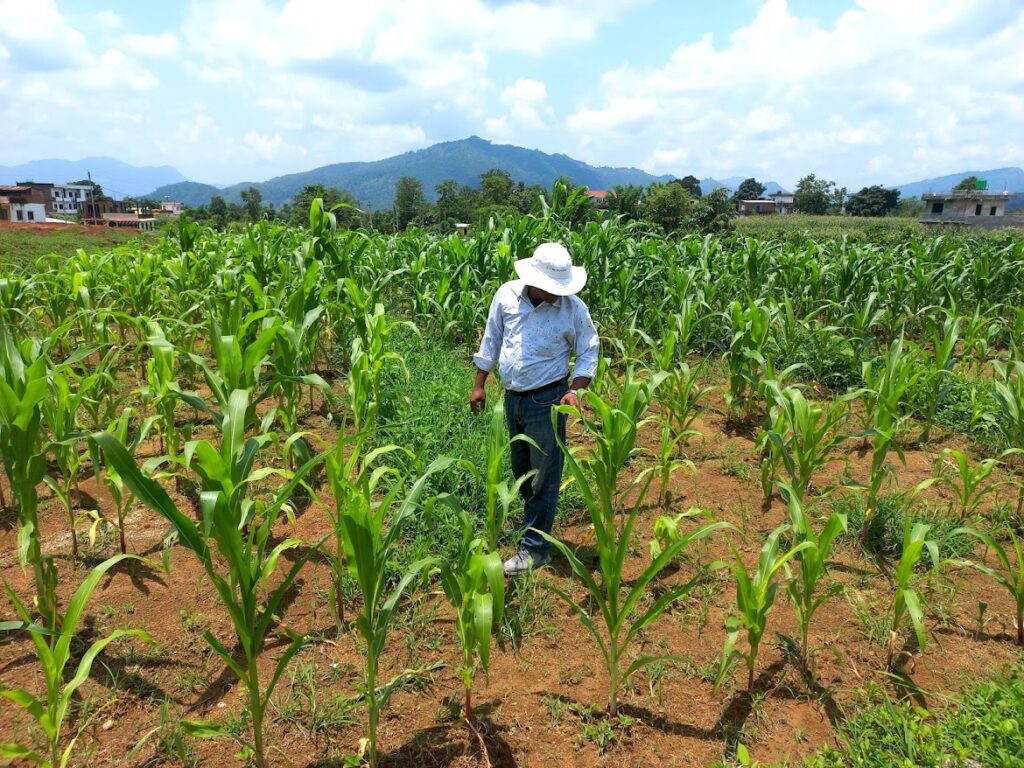
According to Sundar Tiwari, the majority of farmers in Nepal are still practicing traditional farming, but there is a big challenge or pressure created by many people migrating from the rural to urban areas, where people are focusing on increasing the production. Traditional farming has many good practices to learn from:
“They have their own practice of the cultivation like they use a local variety. They use mixed cropping, intercropping and they have a very good mechanism of maintaining the biodiversity. So, they also use some bio pesticide in local level using many plant materials together and they make a solution and they spray. So, this is a kind of biological pest control,” says Sundar Tiwari.
An important and well-known tool in the work of reducing the use of pesticides is the so-called integrated pest management – a principle promoted for years by UN’s Food and Agricultural Organization, FAO. Both Erik and Sundar have been working according to those principles.
“We teach farmers as far as possible to avoid chemicals. It’s cheaper for them and often it’s not necessary to spray with pesticides. But farmers need to know for example, if the insects in their field are beneficial or harmful to the crops, so they don’t spray the beneficial ones. And then they should use traditional methods, good farming practices including selection of the best seeds, how to water the plants when they are growing and give maybe traditional manure from the cows or whatever they have available to them,” says Erik Jørs and Sundar continues:
“So, we are integrating all methods, whatever available to the farmers. For example, seed selection. If you have a good seed, it is going to be germinated very well, and it’s can be very healthy. And the healthy plant is not going to be attacked as easily by insects and diseases. If there is no insects and diseases, then farmers are not using chemical pesticide. Similarly, if you have a very good fertilizer in the soil, for example, potash or some silica, so if you integrate into the nitrogen and that crop is very healthy. That is integrated pest management. We integrate all methods so that we can reduce the pest population in the farm. The nature is full of biological control, but we are wiping out that biological control agent from the nature because of the chemical pesticide,” says Sundar Tiwari.
Also, with a consumer perspective there is a great advantage of trying to avoid the chemical pesticides in our food production: “We have tested different food items and, in many cases, we have actually found the maximum residue levels of pesticides (by WHO) have been surpassed in many cases. That means, that there is a danger for human health. Not only for the farmer spraying but also for the consumers. Nowadays we are talking a lot in Denmark about the residues of pesticides in our drinking water. And in many of the wells, pesticides have poisoned our drinking water and now we are drinking our water but contaminated with pesticides,” tells Erik Jørs.
“In Bolivia we found that children who have been exposed to pesticides during their mother’s pregnancy they do not perform as well as children without that pesticide exposure during pregnancy. So, we also have to think about the future generation when we talk about pesticides and prevention of poisonings. An important issue if we want farmers to reduce the use of pesticide and use pesticides safely when needed,” says Erik – who underlines, that at the from his perspective, it is not necessary to make radical changes and it is important to take social issues into account:
“Integrated pest management doesn’t say no to pesticides, but they say minimize the use and do only use pesticides if you are in the danger of losing your crop. Many farmers in low-income countries cannot afford to lose their crop. Then they will starve and eventually suffer a lot from that. So, they have to reach out for the ultimate solution. If they can’t find another way to combat the pest or they have a big attack of pest and they can use pesticides. But they must protect themselves and they must use the pesticide in a proper manner,” says Erik.
“It’s necessary with interdisciplinary work collaboration to minimize this problem. Many people, many organizations have been working trying to reduce pesticides, but I think it’s also very important that government prohibit the most toxic ones and demands that the farmers gets educated and take courses in proper handling of pesticides. Many low-income countries want to be able to feed themselves and be able to grow crops that can be exported. But you have to put rules on that. For example, in the EU, we control the food coming from Africa, or other parts of the world to see if they comply with the maximum residue levels that we have in the EU. I think it’s important with some kind of political strong engagement. And we have the FAO, we have the WHO, they have their guideline on this. But it’s difficult because there’s also a strong lobby from the industry producing pesticides,” says Erik.
He mentions a responsibility from the financial system: “In some cases, loans to farmers are tied to the use of pesticides. The bank wants to reassure that the loan is paid back. So, they don’t want the farmer who take a loan to grow this crop, to lose it. So, the deal is: Okay, you can have the loan, only if you guarantee that you buy this packet of pesticides too. That is an unhealthy policy to promote. So political leadership is crucial if we want to reduce the use and amount of pesticides used, “ says Erik Jørs.
And it is urgent to make a shift in the commodities production worldwide, because as many scientific studies documents, it is not sustainable if we just continue business as usual: “If we continue this farming practice we will face a human, biodiversity and environmental crisis. Research also says pesticide use contributes to increase of non-communicable disease to human beings. In the end it will affect the food and nutrition security. And if our environment is polluted, our water, air and soil is polluted, then what happen? Then you cannot get a good future. Our children will be affected. Future generations will be affected. We will be sick. The whole ecosystems will be affected by chemical pesticides,” warns Sundar Tiwari.
“If we don’t minimize the use of pesticides, then we’ll end up with problems like infertile soils, lack of bees to pollinate our plants and grow the crops. We will end up with many more poisonings especially in low-income countries. So, I really think it’s time to make a big effort and swap to more ecological farming. Not saying that we totally can avoid the use of pesticides, but at least we can minimize it a lot;” said Erik Jørs.
Lise Josefsen Hermann is a freelance journalist who has been reporting from Latin America for 15 years. She has received grants from Earth Journalism Fund, GABO Foundation, Journalism Fund, National Geographic and Pulitzer among others. Her work has been published in media like Al Jazeera, BBC, Danwatch, Dialogue Earth (former China Dialogue), Deutsche Welle, Danish Broadcasting Corporation, El País, New York Times, and Undark Magazine.


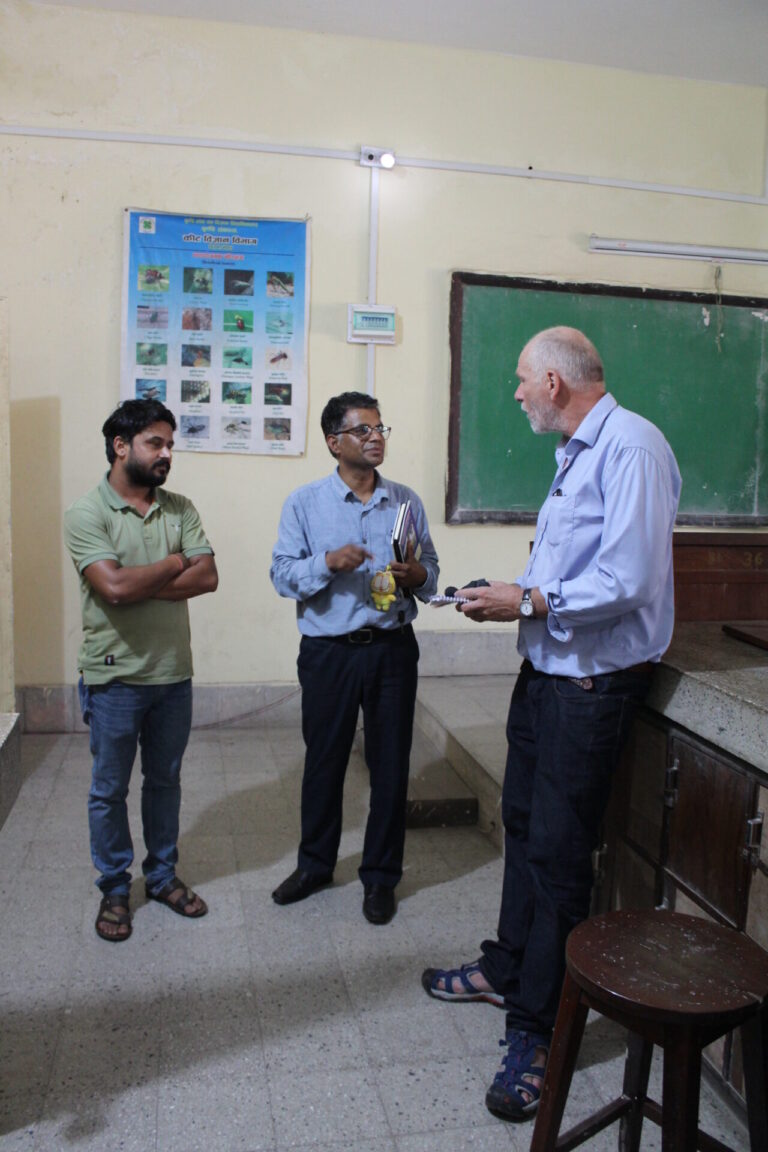
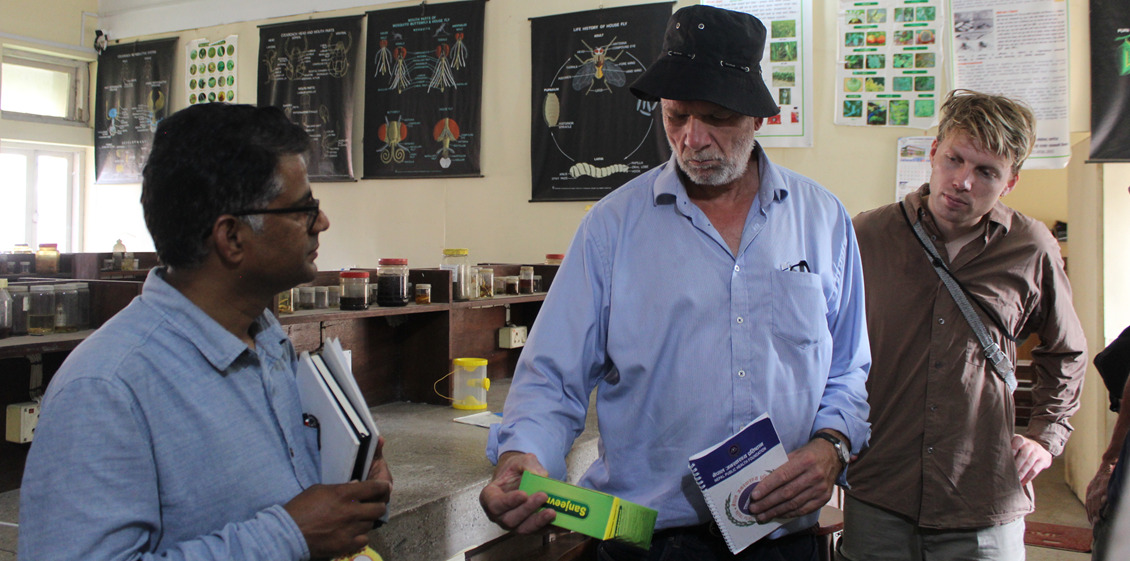
Nepali researcher and professor Sundar Tiwari from Agriculture and Forestry University in Bharatpur, Nepal, who has been specializing for years in biological pest control and sustainable agriculture in dialogue with Danish Erik Jørs, a senior physician and associate professor in occupational medicine at Odense University Hospital and University of Southern Denmark.