 by
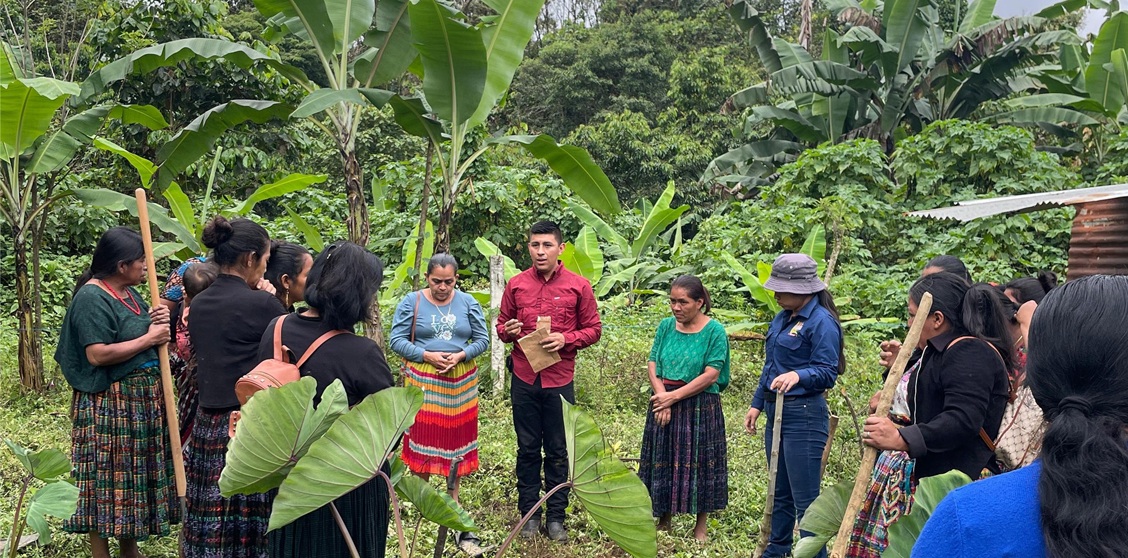
by In Guatemala’s Zona Reina, Q’eqchi’ peasant women are transforming maize fields into platforms for political participation. This is thanks to the initiative of the NGO PRODESSA to undertake (initiate) agroecology projects. This practice combines ecological, social, cultural and economic principles in the management of sustainable agricultural systems. Initially, agroecology projects aimed to serve as a means for achieving food sovereignty through ancestral Mayan practices. However, they have also proven to be a tool for increasing Indigenous women’s involvement and voice in decision-making spaces. Nevertheless, this is a very singular case that addresses a wider problem related to land management, structural marginalisation and gender inequalities of Indigenous women in many countries of the world.
While Indigenous women play a central role in natural resource management and community support, their participation in politics remains limited by structural discrimination affecting indigenous peoples. The inequalities regarding ethnicity and gender intersect, restricting Indigenous women’s access to resources and silencing their voices in institutions. Focusing on the specific case of Guatemala, the exclusion from politics and institutions is the reality for most indigenous women in the country. Even though the Mayan-descendant Indigenous communities represent more than 40% of the overall population, 72,9% live in poverty compared to a 46,6% of poverty rate among non-Indigenous people. This is mainly due to the historical discrimination, inequality and exclusion towards Indigenous people, which has limited the full recognition of their rights and perpetuated conditions of structural poverty. These structural inequalities hit women especially hard, with alarming levels of violence. In 2024, more than 10.000 sexual assaults were reported, and nearly 53.000 births among girls and teenagers between the ages of 10 and 19 were registered. In addition, at the start of the 21st century, around 90% of adult Indigenous women were illiterate, a stark reminder of the long-standing denial of basic rights such as education. This situation of social and political vulnerability makes communities that are more dependent on natural resources less resilient to increasingly frequent extreme weather events such as droughts or sudden torrential rains. This is the case of the Q’eqchi people, an Indigenous Mayan group primarily from the highlands of Guatemala.
Yet, agroecology is the weapon that many NGOs, communities and other stakeholders use to reverse this situation. Beyond a production technique, it is conceived as an alternative model to the current agro-industrial system. Agroecology has been used in several contexts to promote spaces of change and cooperation, and researchers have explored its social benefits. On the one hand, it has been explored how this practice promotes political activism, among other social benefits, through shared critical spaces within urban contexts in countries such as the USA and Australia. On the other hand, in rural contexts focused on the Global South, such as in Malawi, Cuba, Mexico, Brazil and the Andes or India, researchers found out that Agroecology empowers communities, improves cooperation, resilience to climate change and challenges traditional gender roles. Additionally, it generates Social Capital, which is the resources, benefits and opportunities generated by networks and interactions within the groups that share social norms and certain values. Previous studies have highlighted the potential of agroecology as a transformative social practice that strengthens community life and political engagement; few have examined its direct political impact.
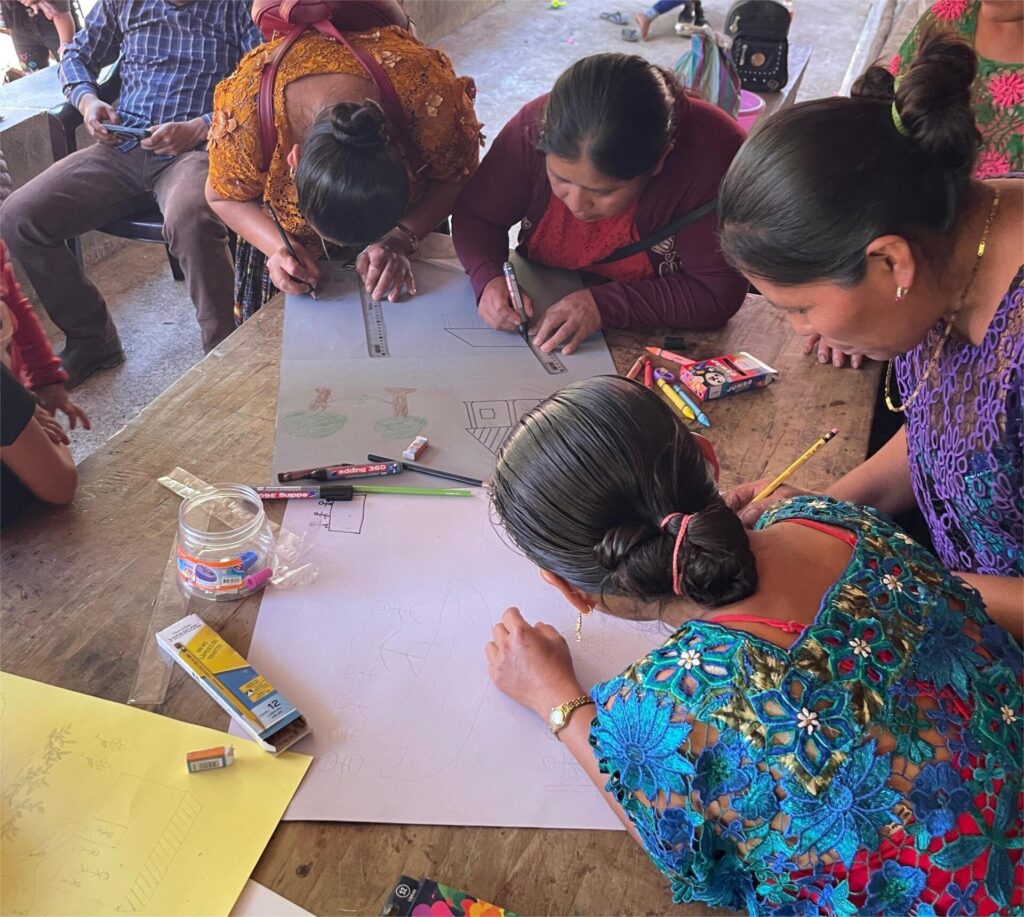
This article draws on my master’s thesis research, which covers this gap in the literature. By using participatory visual research methods, such as drawing workshops and photography elicitation, I examine how agroecology influences the political participation of Indigenous women, a group that remains largely marginalised and underrepresented in existing studies.
The Particular Case of Zona Reina and its Agroecology Workshops
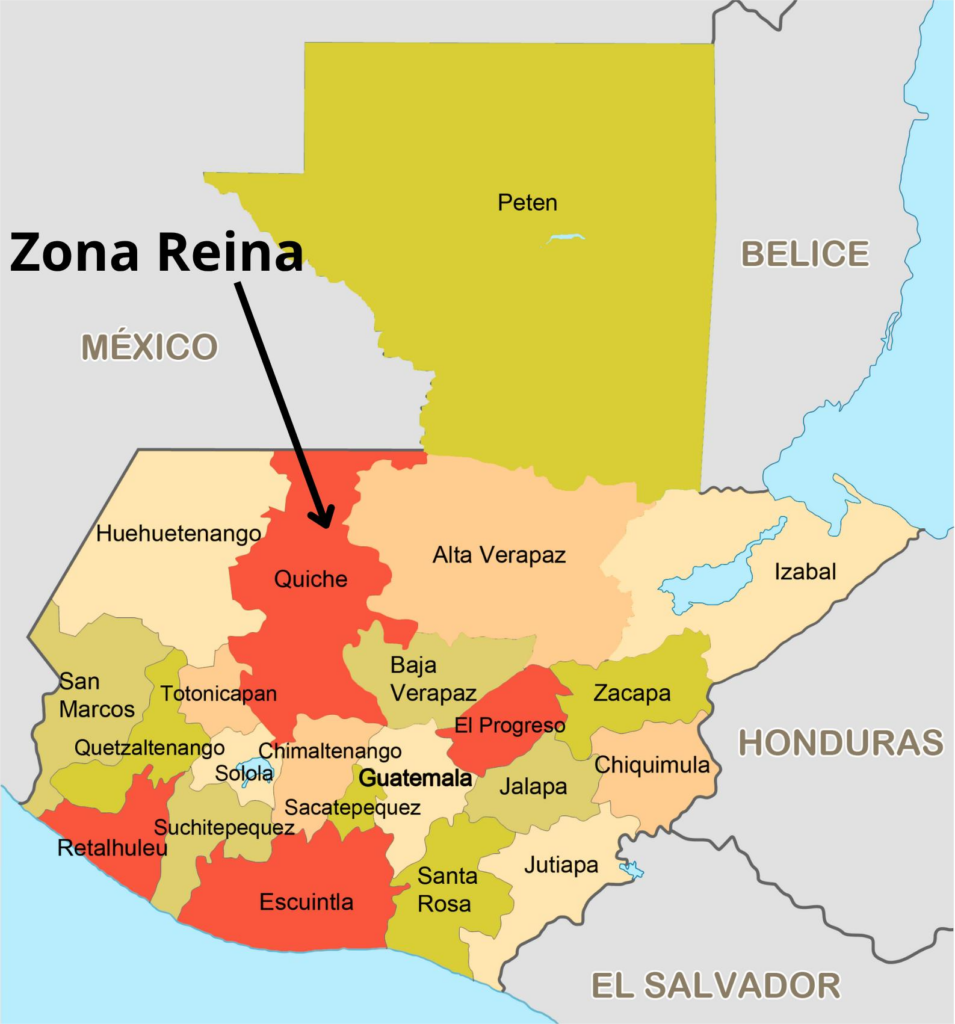
Zona Reina, located in the municipality of Uspantán, in the Guatemalan department of Quiché, is a remote region comprising 92 communities, most of which belong to the Q’eqchi’ Maya people. Despite its difficult access and lack of infrastructure, it is home to more than 40% of the population of the municipality of Uspantán. The region’s economic activity is mainly based on agriculture. Its semi-tropical climate favours the cultivation of maize, beans, bananas and cardamom, although recurrent droughts have severely affected agricultural production in recent decades.
Land ownership has historically been a source of conflict in Zona Reina. Historically inhabited by the Q’eqchi’ people, these lands were subject to state agricultural colonisation programmes in the 1960s, which transferred the land to external settlers. During Guatemala’s internal armed conflict (1960–1996), the region was the scene of extreme violence and forced displacement. Today, much of the territory is occupied by monoculture plantations with precarious working conditions, while indigenous communities continue to fight for their emancipation and fair representation in institutions. Nevertheless, communities do have sovereignty at a local level, as community organisation is structured around Community Deliberative Assemblies, the main instrument of local government. Authorities are democratically elected in these assemblies, which address issues such as education, resource management and municipal projects. However, women continue to be underrepresented in these decision-making spaces.
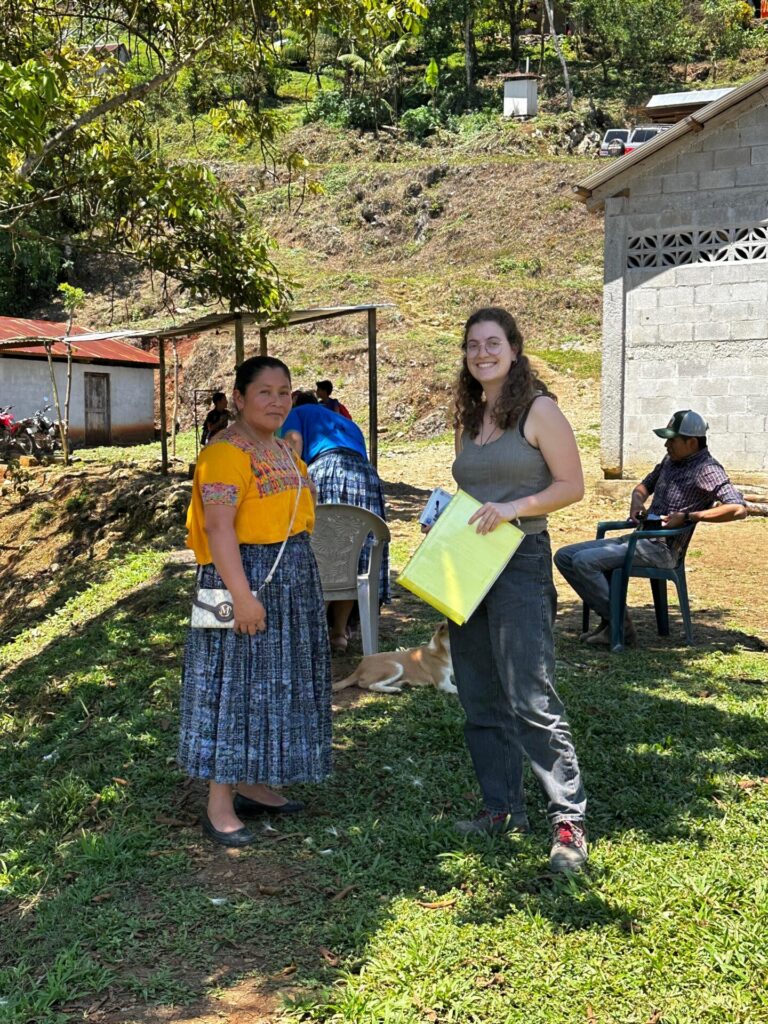
To address these inequalities, but mainly to promote food sovereignty, PRODESSA’s agroecology projects train Q’eqchi’ women in sustainable agriculture, food sovereignty and solidarity economy. Participants receive theoretical and practical training and replicate it in their communities, generating a multiplier effect that strengthens leadership and income generation. This methodology, known as “farmer to farmer”, is based on the transmission of knowledge from peer to peer, without marked hierarchical structures that perpetuate inequalities, and it is increasingly common in Latin America.
Analysing the Impact of Agroecology on Political Participation
To identify how agroecology impacts Indigenous women’s political participation, the case of Zona Reina was analysed through a qualitative study. The research was based on Social Capital Theory and Empowerment Theory. Both were used to identify mechanisms that emerged in the workshops and had a positive impact on the participation of Q’eqchi women in the community assemblies. Thus, elements such as leadership, resources, agency and cooperation were expected to emerge from agroecology workshops. The methodology consisted of a combination of semi-structured interviews and ethnographic participatory methods, in which the participants, who were merely Q’eqchi’ peasant women, generated their own data following methodological decolonisation principles. Over five weeks of fieldwork, including drawing workshops, photo elicitation, and conceptual discussions, the research revealed several mechanisms that make agroecology a powerful driver of political participation. The data also uncovered additional dynamics not previously identified in the literature that positively influence Indigenous women’s engagement.
The study finds that women’s ability to act and shape their own lives, their capabilities, is one of the strongest drivers of participation, along with access to social and economic resources. As Anita, a participant, claims: “Now that I am participating here, (agroecology projects) when I go out to the street, I think I am a brave, hard-working and experienced woman”. Cooperation, solidarity, and leadership within the women’s groups also played a vital role, strengthened by their connections with outside organisations. Finally, out of the theory, ancestral knowledge emerged as a powerful source of confidence and agency, helping women see themselves as changemakers within their communities: “… we have to value, to come back to our practices […] reject all that agro-industrial companies bring”, Ana María Santos explains.
Nonetheless, the findings also revealed certain barriers to participation, both in agroecology and in politics, which mainly involve domestic violence and paternalistic attitudes by men in the communities. Although few, these cases show how deeply rooted structures of gender inequality are in the area.
From Maize to Power: Lessons from Zona Reina
The findings of the research have multiple implications. Not only does it identify the relationship between agroecology and political participation, but it also points out the mechanisms that explain this relationship in this particular case of Guatemala. Furthermore, it reinforces the findings of previous literature on agroecology and further strengthens the applied theory, giving rise to new insights that were not previously considered. Despite the research limitations, mostly related to ethical considerations and logistical constraints, the study effectively showcases emerging models of production that stand apart from the prevailing global system.
One of the main takeaways from this study is the importance of investing resources in similar research that focuses on resilient initiatives and encourages participatory research in the global south. Firstly, it gives a voice and visibility to marginalised groups, such as indigenous women in Guatemala, who often lack formal channels for engaging in decision-making spaces. Furthermore, it highlights the value of local, resilient and sustainable practices. It offers useful guidelines for other actors, such as municipalities, NGOs or community-based organisations that wish to implement similar practices. By focusing on the local in a globalised world, this approach challenges conventional systems and explores alternative ways of living.
From the fields of maize to the local assemblies, agroecology is enabling women to claim their voice and transform their communities.
Iraide Arcos Fabrega is a Master’s student in Political Science with a minor in Environmental Governance and Behavior at the University of Gothenburg, Sweden.