 by
by All over the world, success in science is often seen as the result of talent and hard work. But for many Moroccan students, the challenge begins long before they encounter complex equations or laboratory experiments. It begins with language.
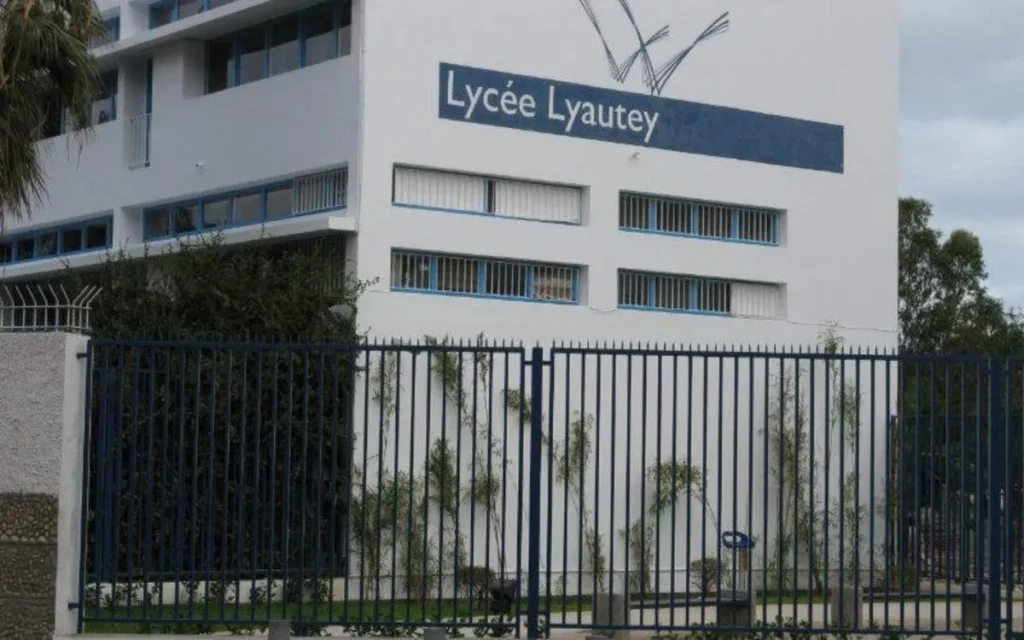
Located at the crossroads of Africa, Europe, and the Arab world, Morocco is marked by deep linguistic and cultural diversity. Most Moroccans grow up speaking Darija, the Moroccan dialect, or Amazigh, the Indigenous language of North Africa. Yet the language of schooling is Standard Arabic, a formal variety rarely used in everyday life, before students are expected to switch again to French for science subjects such as physics, biology, and mathematics.
For many students, this constant linguistic shift is more than an inconvenience; it is a barrier to learning. Understanding scientific concepts becomes not just a matter of grasping the material, but also of navigating the language in which it’s taught.
This challenge is also not experienced equally. Students from affluent families are more likely to attend private or French schools where the language is taught intensively from an early age, giving them a clear advantage when scientific subjects transition into French. Meanwhile, students in the public system, who make up the majority, are often left to navigate this shift with far less preparation. For some, the difficulty is enough to push them away from scientific fields altogether.
As a result, success in science can depend as much on socioeconomic background as on ability. This raises an important question: who benefits from this system, and why does it persist?
To answer that, it helps to look at how Morocco’s linguistic landscape was shaped in the first place.
How Colonialism Reshaped Moroccan Education
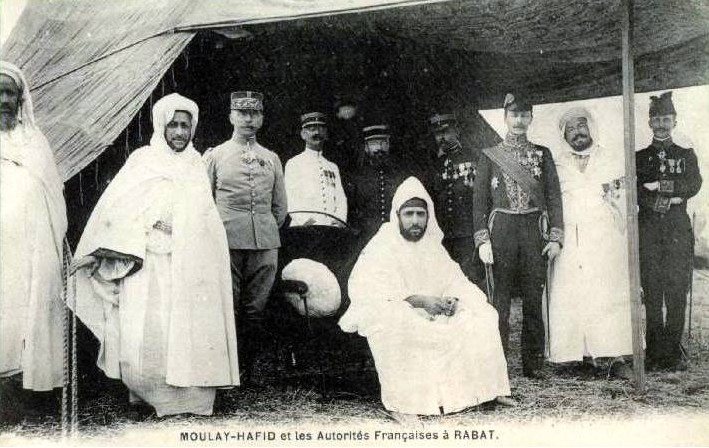
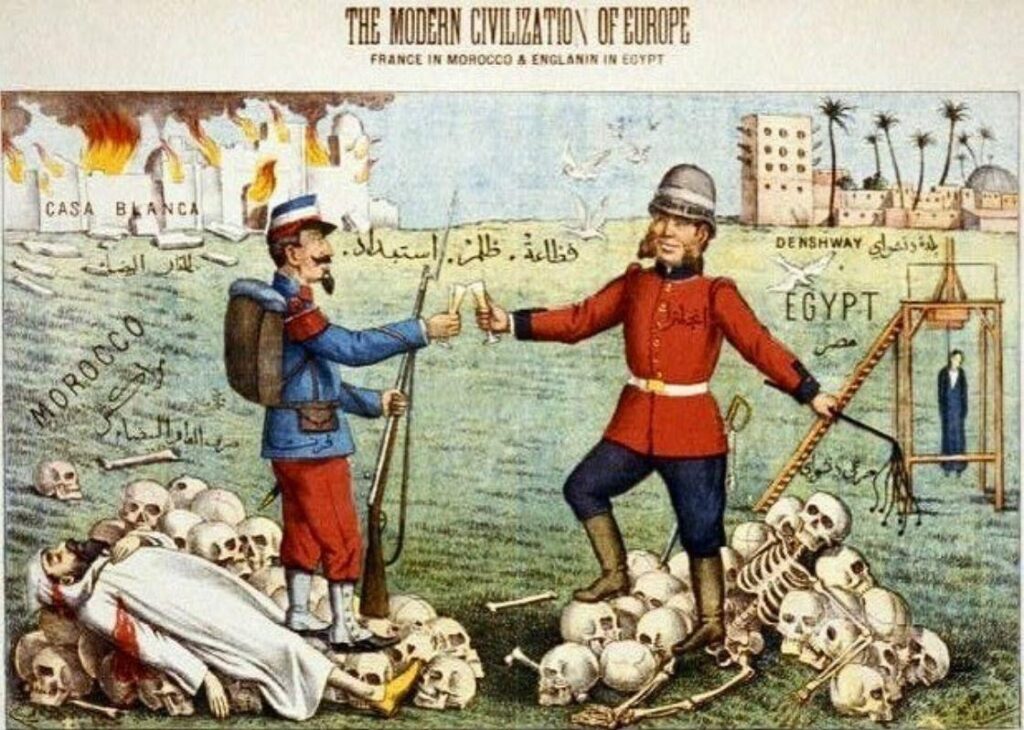
The prominence of French today can be traced back to the colonial period, when Morocco became a French protectorate in 1912, and the French language was institutionalized across key sectors. In a recent study published in Languages, researchers Brahim Chakrani (Michigan State University), Adam Ziad (Florida Atlantic University), and Abdenbi Lachkar (University of Montpellier Paul Valery) argue that the education system introduced during this period was designed to divide Moroccan society along socioeconomic and ethnolinguistic lines, reinforcing French cultural influence in the country.
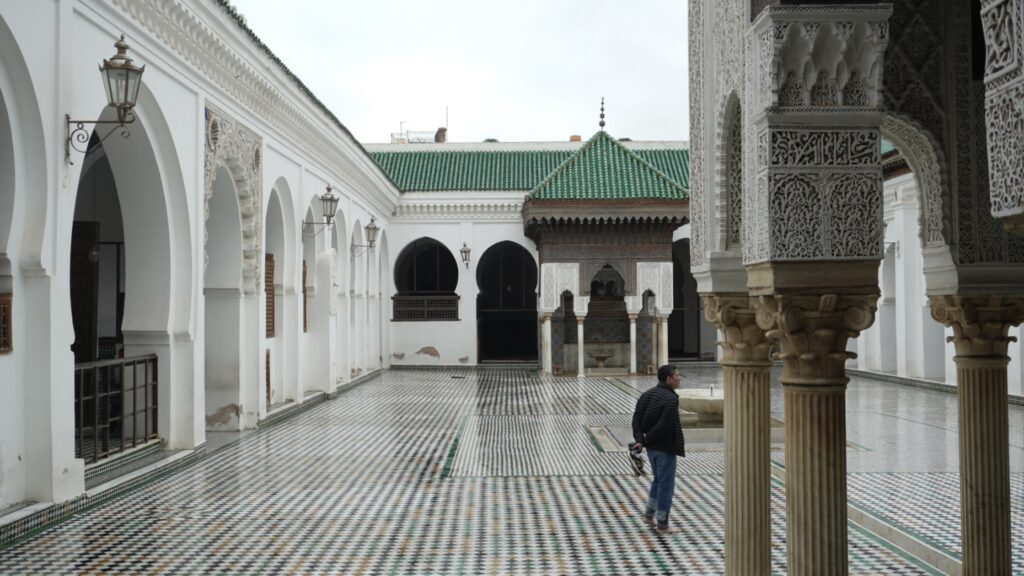
Before French colonization, Morocco had a traditional education system centered around Quranic schools, which focused on religious texts and where Standard Arabic was the main language of instruction. Students who excelled would go on to pursue advanced studies, either at the University of al-Qarawiyyin in Fez, often considered the oldest university in the world, or abroad.
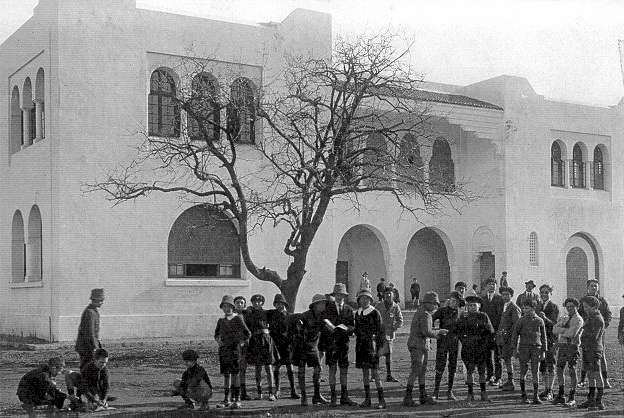
With the arrival of the French protectorate, the education system was reorganized along segregated lines, with separate schools for Europeans, Muslim Moroccans, Jewish Moroccans, and Amazigh communities. French-language schools were largely reserved for European settlers and a small Moroccan elite, while access to advanced education for the broader population remained limited.
This segregated system helped establish French as the language of modernity, and it increasingly came to be viewed as superior to Arabic. This outcome was no accident. Language was a central tool through which the colonial administration structured access to education and opportunity. Through its school system, it cultivated a French-educated elite loyal to the French language and culture, while the majority of the population remained excluded from advanced learning. At the same time, the system restricted social mobility, keeping positions of power within a small, privileged group.
The Moroccan nationalist movement strongly opposed French influence and responded by establishing Al Madaris Al Hurra (the “Free Schools”), where Arabic was the sole language of instruction. However, these schools reached only a small segment of the population and, therefore, had a limited impact on the broader education system.
The Unfulfilled Promise of Arabization
After independence in 1956, Morocco attempted to reclaim its education system, but the legacy of French colonialism proved difficult to undo. Although the policy of Arabization aimed to replace French with Standard Arabic as the language of instruction, French remained firmly embedded in higher education, private schooling, and the job market.
Arabization faced major obstacles. Many teachers had themselves been trained in French and struggled to teach scientific subjects in Standard Arabic, while educational materials and scientific research in Arabic remained limited. At the same time, French-speaking elites continued to promote French as the language of higher education and economic opportunity.
Some critics, however, argue that these problems were not caused by the language itself. Instead, they attribute the policy’s shortcomings to limited political commitment, insufficient funding, and outdated teaching methods.
Regardless of the explanation, the result was a system in which French consolidated its position as the language of science, while Arabic was largely confined to the humanities.
Several decades later, Morocco began to reverse its Arabization policy, reintroducing French as the language of instruction in science subjects at the secondary level. This move further marginalized Arabic and created a lasting disconnect within the education system. Students who had been taught primarily in Arabic were suddenly expected to master complex scientific concepts in French, often without adequate preparation.
That disconnect continues to shape Moroccan classrooms today. Students from privileged backgrounds, who are more likely to have strong French proficiency, are better equipped to succeed in science. Others, particularly those in the public system, face an additional linguistic barrier that can limit their academic performance and narrow their future opportunities.
I saw this dynamic firsthand. I was educated in a private school and benefited from early exposure to French. My parents were not wealthy, but they were acutely aware of how language shapes opportunity in Morocco. They made significant sacrifices to ensure that my sister and I would master not just one, but multiple languages, through school and additional language courses, because they understood it as our most reliable path to success.
I was able to enroll in the Baccalauréat International Option Français (International Baccalaureate French Option), introduced in 2017. Despite its name, it was not really an “option” in my school; it was the default track, and no Arabic alternative was offered. The preparation that made this possible, however, is something many students in the public system simply do not have access to.
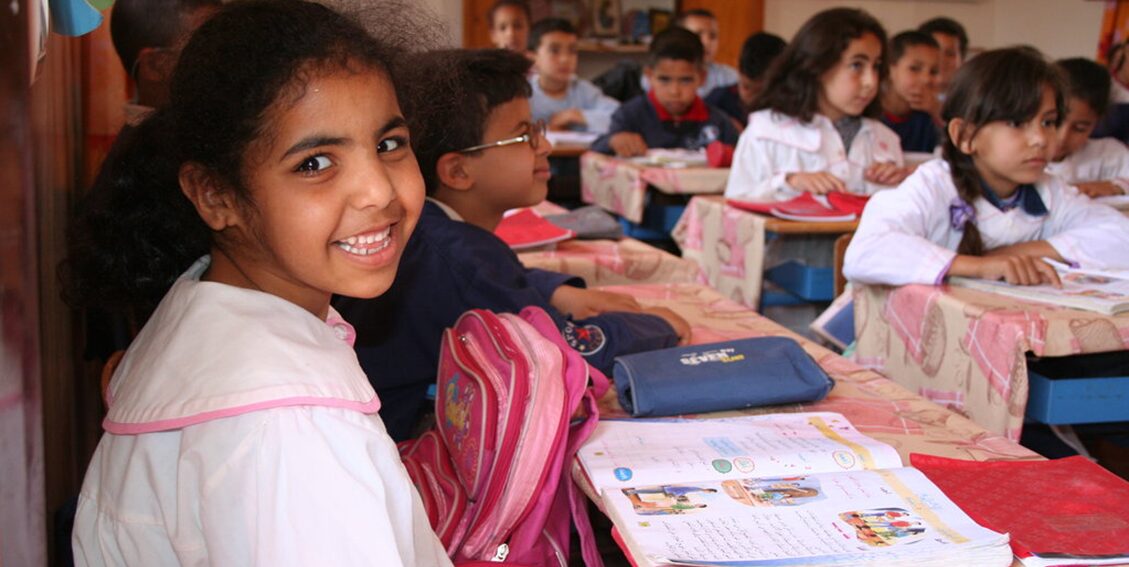
Recent figures from Morocco’s Higher Council of Education highlight the scale of the divide. By the end of middle school, only 9% of public school students were found to have a satisfactory level in French, compared to 62% in private schools. The same report found major gaps across all core subjects, including mathematics, physics, and life sciences.
Researchers Brahim Chakrani, Adam Ziad, and Abdenbi Lachkar view this divide as part of a broader form of French neocolonial influence that continues to sustain the dominance of the French language long after independence.
France’s Lasting Influence
France’s influence over its former colonies has long outlasted formal independence. Across much of Africa, political sovereignty did not fully sever economic and institutional ties. Many countries continue to rely on France for investment, infrastructure, and trade, relationships that echo colonial-era ties. The CFA franc system, used by several former French colonies in West and Central Africa, is often cited as one example of this enduring dependency, even though Morocco is not part of it.
According to Brahim Chakrani, Adam Ziad, and Abdenbi Lachkar, language has remained one of France’s most effective tools of influence. Through the ideology of La Francophonie Plurielle, France presents itself as a defender of linguistic diversity while French continues to dominate key domains such as education, administration, and economic life in former colonies.
This influence is also sustained through education. French-language schools and institutions help produce elites who remain closely connected to French systems and interests. For instance, in Morocco, former education ministers Said Amzazi and Chakib Benmoussa, both francophone technocrats, played major roles in reversing Arabization and restoring French as the language of instruction for scientific subjects.
Financial partnerships further reinforce this dynamic. A recent example is a €130 million loan aimed at strengthening French-language instruction in Moroccan secondary schools.
There is also a strategic reason behind these efforts. By 2050, nearly 90% of the world’s French speakers are expected to live in Africa, making the continent central to France’s global influence.
Language, Class, and Opportunity
Building on this, Chakrani, Ziad, and Lachkar argue that the promotion of French in key sectors is not only about maintaining external influence; it also shapes internal power dynamics within Morocco. It has become a way for the affluent class to maintain and reinforce its position while limiting social mobility. Scholars often describe this as elite closure: a process through which access to key resources is controlled in order to preserve advantage. In this case, the resource is language.
The researchers found that several conditions for this dynamic are clearly present. French holds greater social and economic value than Arabic in many contexts and dominates key domains such as science, business, and diplomacy. “Those who do not have command of French are considered illiterate,” Hamid El Otmani, talent and training lead at the Confederation of Moroccan Employers, told Reuters.
At the same time, advanced proficiency in French is far more accessible to students from privileged backgrounds, particularly those who can afford private or French-language schooling.
As a result, access to quality education and high-paying jobs remains closely tied to French fluency, reinforcing existing inequalities. A 2025 survey by the Sunergia research group found that 43% of higher-income earners reported being fluent in French, compared to just 6% of lower-income Moroccans.
Meanwhile, efforts to shift toward other global languages, such as English, can face resistance from those who benefit from the current system, as such changes risk disrupting established pathways to power.
A Generation Lost in Translation
The effects of this system extend beyond education and employment. They are also visible in everyday communication, particularly among younger generations.
Among many young Moroccans, conversations move fluidly between Darija, French, and English, sometimes within the same sentence. On one level, this multilingualism can seem adaptive, even cosmopolitan. But it also reflects a deeper uncertainty around language itself.
I often find myself unable to fully express an idea in Darija without switching to French or English to fill the gaps. Speaking to someone who does not understand those languages can suddenly make communication feel difficult in what is supposed to be my own mother tongue. In many ways, Morocco’s multilingual education system can leave students caught between languages, without ever fully mastering any of them.
This raises broader questions about the future of education in Morocco and the role language should play within it. A more equitable system would not require students to overcome multiple linguistic barriers simply to access knowledge or pursue scientific fields. Instead, it would build learning around the languages most familiar to students, particularly Arabic and Amazigh, while still treating multilingualism as an important skill rather than a prerequisite for opportunity.
Foreign languages undeniably remain valuable in an interconnected world. But in Morocco, proficiency in French often functions less as an academic asset than as a gatekeeper to education, employment, and social mobility. The challenge is not whether Moroccans should learn foreign languages, but whether mastery of a colonial language should continue to determine who gets to succeed in their own country.
As Morocco increasingly opens itself to English in business, technology, and higher education, the debate over language policy is also beginning to shift. For many young Moroccans, the question is no longer simply whether French should dominate public life, but whether the country’s education system should continue to revolve around it at all.
References:
Chakrani, B., Ziad, A., & Lachkar, A. (2025). Paradoxes of language policy in Morocco: Deconstructing the ideology of language alternation and the resurgence of French in STEM instruction. Languages, 10(6), 135. https://doi.org/10.3390/languages10060135
Manar Sadkou is a Bachelor student in Globalization, Governance, and Law at Karlshochschule International University, and a DDRN Intern.