

 by
by Lars Buur: Thanks for this opening to the Nordic talk: Just give all the money to the poor? – where we have a very interesting panel. Maybe I should present myself first. I’m a professor in political economy of development here at Roskilde University and I’ve been leading the research program called Cash-In that’s focused on social cash transfers by private managed organizations in Africa, predominantly Tanzania and Uganda. So, I’m a little bit acquainted with the theme of today, but the main experts here, no doubt, will be Miriam Laker and Jacob Ulrich. And I want you to present yourself and maybe come with a brief opening statement. Should we start with you, Jacob Ulrich.
Jacob Ulrich: My name is Jacob Ulrich, and I am currently a postdoc at Roskilde University. And I have done and finished last year a PhD about scaling of social cash transfers, looking at Uganda and Tanzania and globally. And before that, I have worked for many years as a practitioner, you could say, dealing with all sorts of development aid and working 15 years based in Africa, six, seven years based in Eastern Europe and working elsewhere as well. So that’s me in a nutshell. Do you want to move on to Miriam first, Lars, before I start talking about the issues or how do we do this? No, I think that’s perfect because you’re probably the one that knows most about the hands-on of cash transfers so, please Miriam.
Miriam Laker: Thank you, Lars, happy to be here. Jacob, I am happy to see you again after a while. I’m Dr Miriam Laker, I am the Senior Research Advisor at Give Directly, which is an international organization that gives cash unconditionally to people living in poverty. My background is in medicine, medical doctor who was practicing for several years and doing research in the clinical and public health field before I pivoted to the cash field, where I have been for five years now doing work on cash transfers and within GiveDirectly, my role has involved developing randomized control trials, evaluating programs, but also doing implementation science where we translate the evidence that is generated by us and other organizations into the way we practice cash in our organization but also in the way we talk about it in policy and other advocacy spaces so it’s lovely to be here.
Lars Buur: Yes, thank you Miriam and thank you Jacob. Just as an opening statement from my own side kind of setting the scene is that we we’ve seen dramatic changes in the global aid landscape here over the last year. Not only has USAID pulled out from many contracts, but the same has happened with DFID and many of the Western donors. There is a general pressure on aid, and that basically makes the whole question about social cash transfer even more pertinent, as the question is, what should we do with the rest of the money? Should we let global aid or other funding to be spent on social cash transfers instead of the many modalities we use now? And that, of course, raised some bigger questions. And I would just say that there are at least four themes, as we have discussed it, that we will take up today. The first one is related to the socioeconomic impact of scaled social cash transfers. What do we know? Can one actually scale in a sensible and pragmatic way? The second bigger thing is the issue of practicalities and the technology of scaled social cash transfers. How do we actually do it if it’s possible? The third one is where Jakob’s main expertise is probably, about the politics of scaling of social cash transfers. And then the last point that maybe is worth discussing is: How do we move forward if this is an agenda that we should pursue more globally. But first, I want to hear your comments on the first bigger theme about social economic impact of scaled social cash transfers. What do we know about the types of impacts that social cash transfers can do? What is the experience from the field and what do academia say? Should we start out with you, Miriam, because you have some very practical knowledge about what seems to work and not work, seen from your experience with Give Directly. And then we can revert to Jakob as a second point. But Miriam first.
Miriam Laker: Thank you Lars and you’re right, I’ve been exposed to cash transfers in multiple settings, give directly works in has worked in 15 countries around the world, most of them in Africa but also in Asia and in the in the global north which is the United States. I think what has been pretty striking from what we have learned from randomized control trials of cash transfers is that the impact of cash transfers remains the same irrespective of where you are. And essentially, it’s because people living in poverty tend to face the same challenges around the world. The findings have been consistent that when people are given cash transfers, a very high priority on their list is meeting their basic needs. It might be housing, it might be health, it might be food, it might be clothing. And this is not surprising because at the end of the day, when we all work for money, that is essentially what we are seeking to make sure that we have met our basic needs. So, we’ve seen this across the countries that we’ve worked in. But in addition to that, when cash transfers have been in large amounts, people then begin to think about the sustainability of the effects of the cash transfers they had. And so, across the globe, we’ve seen people investing in business. People are starting businesses or people are moving to better paying jobs or people are spending time to better themselves in the angle of education. It might be skills training; it might be getting a better degree or a better diploma. In other words, they are working hard to make sure that they continue to sustainably meet their own basic needs. And once again, what is true about this is that it is the same whether you’re talking about Europe, Africa, Asia, or the United States. The other thing that we have seen is that the duration of the impacts tends to very much be associated with how much people receive. We’ve generally noticed that when you give small amounts of cash transfers, the priority, again, because these are people living in extreme poverty, the priority is meeting basic needs. And then if you don’t have excess, then the small transfers will just be consumption smoothing transfers but once you have larger cash transfer amounts then you have longer term effects and i guess it’s simply because like i said earlier people are investing in things that can bring back an income return and sustain them out of poverty so those are some of the key things that we have been seeing in practice across the globe.
Lars Buur: Okay and Jacob, seen from an academic point and a person who has studied this?
Jacob Ulrich: Yes, I certainly recognize everything that Miriam talked about as well, but maybe I can highlight some of the key points that came out of the PhD analysis that I’ve done together with colleagues from, among others, Makere University in Uganda and also from Ministry of Finance in Uganda and with Michael Noble, former social policy professor from Oxford University. So, we tried to model what would happen if in Uganda, if we were, we, I mean mankind, were to spend a much larger share of the development aid that is available for Uganda on social cash transfers. And we went through a number of scenarios and put the data into different types of economic models, a static tax benefit model called UGAMOD, and also general equilibrium modeling just to double check the data and what we found out is that if we for example allocated around 75 or 80 percent which is an extreme scenario of the aid that at that point in time was available to Uganda, so this is one or two years back data. Uganda was receiving about 2.4 billion USD per year. So, if we allocate about 75-80% of that for social cash transfers in the form of child support, so around $18 per child at the age of 0 to 5 years old per month, so $18 per month per child, then what would happen to poverty figures? They would drop quite dramatically from around 22, which is, or at least at that point in time was the formal the official poverty figure for Uganda to around eight so you can reduce the poverty in Uganda by about two-thirds by allocating a little bit more than two-thirds of development aid for social cash transfers which is an astounding result, it’s quite amazing that how far you could get with just the money that is available. We also did a scenario which was a little bit less ambitious just to say what if we allocate only a third of development aid for social cash transfers. It’s the same scenario, child support $18 a month but only for the children between zero and two years of age as opposed to zero to five which was the former scenario. So, if you do that then you spend about a third of development aid for available to Uganda on social cash transfers and poverty would drop from about 22% to about 14%. So by allocating about a third of development aid for social cash transfers, you could then reduce poverty by about a third, at least for as long as you do the social cash transfers, because then there is the dimension that Miriam is also talking about. Is it a lot of money or is it not a lot of money? What happens when the cash transfers phase out and so forth. But at least for as long as you do this, then there would be that impact. And then we know from other studies from around the world that have looked at a much longer period of time that there can actually and there will most likely be intergenerational impacts for families that are receiving social cash transfers for their children. If they do that in a sustained manner over time, then 10-15 years down the road, when these children become adults, young adults, they will do much better in terms of income and in terms of educational attainment and in terms of general life performance. We know that from studies from, for example, Mexico and Brazil. So, all sorts of positive things would come out of allocating a lot more money for social cash transfers in at least Uganda was the result that we arrived at. And we can then benchmark that with other types of assessments that have been done at a global level. And it matches it. There’s not a conflict between our findings and then the findings of other researchers that have tried to look at how much money would you need globally to eradicate global poverty, maybe around $100 billion per year, which is comparable to the amount of global development aid, which until recently was about 180 billion dollars a year. So, to summarize and to conclude, it would be possible with the development aid that was until recently available at least, to make very big gains in the reduction of poverty, extreme poverty, by allocating it to social cash transfers, mainly in the format of child support. So that was sort of the opening salvo from my side. And then there are, of course, all sorts of ifs and buts and so forth. And we can discuss some of those.
Lars Buur: Thank you to both you, Mirjam, and to Jacob. This of course raises one of the big questions and big discussions that we have seen in the whole social cash transfer discussion and that is should it be given conditional or unconditional and part of this is related to where do you get the best results; what works the best; is it basically to set up certain conditions for how people should use the money. What is your experience from GiveDirectly? And I know that’s not universally for the whole sector, but that you have some very clear and practical results to refer to from many, many different countries. Miriam –
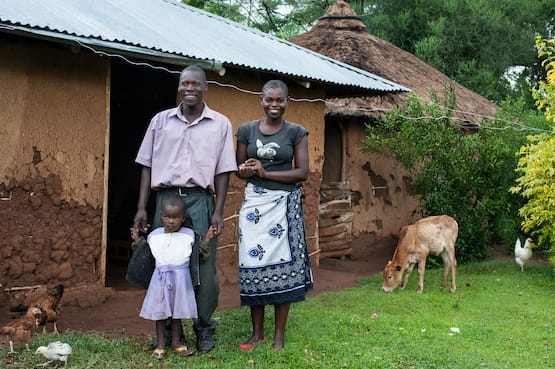
Miriam Laker: Yes, happy to take that question. So, Give Directly’s first value is recipients first. And what we mean by that is that people living in poverty have the same dignity as people that are living in extreme wealth. And so, recognizing that they should be given agency because they know what matters for themselves the most. And because of that, our model of cash transfers as an organization is unconditional cash. But then last, we haven’t stopped at that level of naivety. We’ve gone ahead and done rigorous evaluations. As we speak today, GiveDirectly has run over 20 randomized controlled studies independently evaluated. And these are looking at the impacts of cash transfers among the recipients. And we’ve seen the impacts that I talked about earlier on, we’ve seen that across the board, even when recipients are not told what to do with their money. So that has been a really important finding. And the other thing about unconditional cash transfers, therefore, is that it helps, even ask the practitioners, the donors as well recognize what is important for recipients. I’ll give you an example. In GiveDirectly’s very first programs, when cash transfers were given out in Kenya, a household received $1,000. What was shocking to the founders of Give of give directly and the people working there at the time was many of the recipients improved their houses either they built a new house or improved the roofing of the house and initially that was shocking and the question was is this a bad use of money and so in talking to the recipients we got some very interesting insights. Recipients said first of all if you replace a grass-thatched roof with an iron roof, it is going to be cheaper in the long run because you’re not going to have to replace your roof every one or two years. It’s a one-off and you’re going to have this for a very long time. Other recipients said the advantage of improving their roof from grass to iron to metallic roof is that they were able to harvest water. So, they’re not walking long distances to look for water and they’re getting cleaner water and harvest it directly from their roof. Another recipient said, for them, the peace of mind knowing that on a rainy night, your children are not going to get rained on in the house was a big thing for them. And recently, we published a paper with Johns Hopkins University where they were looking at the incidence of febrile illnesses, malaria, in essence, in places that received cash transfers. And there actually was, according to that, a qualitative reduction in the number of people that had malaria because the roofs were no longer a breeding place for mosquitoes once they were changed. So, by not telling people what to do, we are seeing all these different impacts. Recently we had results that were released from a study in Kenya where Give Directly gave cash for poverty alleviation. And looking back 10 years, we found that there was about a 50% reduction in infant mortality in communities that have received cash. No one told these communities about going to hospital to have their babies, but we saw an over 50% surge in hospital delivery, a reduction in infant mortality of 48%, 45% reduction in child mortality. So in other words, giving recipients the freedom to use their money as they see important drives many indicators of poverty rather than one. And finally, it is cheaper to do unconditional cash transfers because for the conditional cash transfers you need someone to actively check if it affects the condition. If it’s going to school, you need to make sure someone is making sure the recipients go to school and the question is why don’t you just use that money to give it to a recipient and also it is more scalable because as we think about scaling programs nationwide Jacob has been talking about giving 70 or 80 percent of funding to social protection if you’re going to scale something this big the cost of having people check the conditionality doesn’t make sense and then finally also we found that conditional cash transfer programs tend to alienate the most vulnerable because it’s usually the poorest in the communities that cannot meet the conditions that are being set up by the program and those are the premises around which Give Directly and I mean and I believe many other organizations that do unconditional cash transfers used to continue doing cash the way they do.
Lars Buur: We also raised the question about biases. Maybe you have a word on that Jacob because at least many of the rumors around cash transfers are related to temptation goods. Men use it for alcohol there are all kinds of rumors about what people use the money for and they’re not going to be spent correctly or rightly. What does the literature say about this this theme?
Jacob Ulrich: Yes, a good point and it actually relates also to the issue that Miriam was talking about with conditionality or not. So I think the literature is quite clear that poor people, when you give them money, tend to spend it wisely and responsibly. And they do not tend to spend them on what we sometimes call temptation goods, which would be alcohol or gambling or going out dancing or whatever it might be. Of course, you can always find anecdotal evidence, and you can always find cases where poor people spend money, if you will, irresponsibly, as you can with rich people who get money. We might also, from the more developed parts of the world, spend money in a way which we later regret. But overall, the findings from serious studies are pretty clear that poor people do not spend money irresponsibly. They do tend to spend them, as Miriam is suggesting, on immediate needs and immediate needs that are important for their family and for their children. Now, at the same time, the general understanding, and I think that goes for both Africa, as far as we can see from studies, but also from Europe, we are sitting in Europe now, you and me, Lars, is that there is a reluctance in the general population to believe that people, when given money, will spend them wisely. So, there’s a bit of sort of some people call it the belief in productivism. And you can’t just give money to poor people because they will waste them. It’s not going to lead to anything. So, the whole issue of conditionalities that Miriam was also talking about, I agree 100 percent with her observations that you don’t need conditionalities to make people do the right thing with the money. But conditionalities, for example, demanding that the recipients of cash, that they send their children to school or they let their children be vaccinated, these conditionalities can sometimes be useful for the political legitimacy of the cash transfers. So, to convince all the rest of the people that the money is not wasted, these conditionalities can then play a role, but they don’t play much of a role in terms of socioeconomic or the social impact. The evidence is quite clear. People will do the right thing with the money, and especially if they are families, they will do what they can to protect and promote the welfare of their children. So that’s sort of, in a nutshell, what I can say about these biases, if you will.
Lars Buur: It just reminds me about an interview I did with a member from Red Cross who had been working in the Bangladeshi camps and the shock they had from Red Cross when they realized that women used the money on getting big, nice cats. And they thought it was some kind of welfare syndrome until they realized in further research that that was actually the best way to protect their food against rats. So if a family didn’t have a cat, then they would basically be without food. So suddenly what they first saw as a major bias and a need to stop a whole program actually turned out to be something far more important that was actually about food security. But it does raise other questions related to what type of cash transfers are best. There are many things here that have been talked about, unconditional. But what about child support? Or is it focusing on the youth? Old age pensions, short, long-term, sequenced. I know, Give Directly use quite huge amount of money compared to other organizations that have it more small amounts every month or every two or three months. What are the evidence on the different types and modes of cash transfers in this regard? So we start with you, Miriam, you’re trying different things out, but you’re seen from Give Directly, it’s mainly bigger pots of money once in a time.
Miriam Laker: Exactly, yes. So yes, you’re very right. We’ve tried a number of different things, still trying a number of different things, but we predominantly do the large lump sum cash transfer because at the end of the day our ultimate objective is to meet needs that are urgent but also help people get out of poverty and be able to sustain themselves. Our overall goal is actually poverty alleviation. However, we’ve also tried different programs and really depending on the outcome that we’re interested in. For instance, in Malawi right now we have a program that is running alongside Save the Children where the primary outcome is really childhood nutrition and for these, we are giving small amounts of cash transfers and we’re giving it over a period of time, also evaluating using a randomized control trial. But the outcome that we are interested in, in this case, is just to make sure children at the phase of life when they need this extra nutrition are receiving it. We also just launched a program also right now in Kenya that is focused on infant, maternal, and child outcomes. And in this program, we are targeting cash transfers to women who are pregnant. And in this case, we are testing out different modalities this one where we’re giving a lump sum around the time the baby is born or shortly before and another one where we’re giving smaller cash transfer amounts during pregnancy then around the time of child birth a larger amount and then continuing for a few months after the child is born so i think just to answer your question what is important is what objectives someone is interested in. If the interest is consumption smoothing or just making sure that you maintain people at a certain level meeting their basic needs, then maybe the way to go is the smaller cash transfer amount. But if you’re thinking of getting people out of poverty, then probably the larger amounts. One of the things you brought up was old age pension. So, while we haven’t done this explicitly, I believe Jacob may have better insights on this. I think it gets to a point where it is unreasonable to think an elderly person is going to launch a business or is going to spend money on doing some kind of skills upgrade training. So, I believe for older people who are no longer able to do these kinds of things, a pension may be a better way to meet their needs so that for the rest of their lives they are assured of an income that is coming in that can help them meet their basic needs and have something extra. Sometimes a glass of wine there’s nothing wrong with having a glass of wine when you’re feeling good about life so that’s what I think.
Lars Buur: Any comments on this, Jakob.
Jacob Ulrich: Yes, I can follow it, I think that the modality of gift directly of giving sort of large lump sums when we say large it’s large in a sort of a poor african village context, it might be $1,000 or $2,000. We’re not talking about $100,000, which is something Piketty in his book is talking about, that there should be these large lump sum payments for the young generation of Europe of $100,000. That’s not where we are. We’re talking about $1,000 or $2,000. And that can, I agree with Miriam, in many cases be used as a productive investment that can have some permanent or semi-permanent impact in terms of a family building a business for itself or investing in a cow or several cows or doing something that is productive over the long term. I think, however, that there will also be many cases where that does not succeed, where people will make the investment, but it will not lift them out of poverty in the medium to long term. And I think the evidence would suggest that while that approach of Give Directly is useful in many cases, you can also find good arguments why it would be advisable to have sustained cash transfers over time, for example, child support, so that you go in and you give such as we have modeled for Uganda or such as it has been done in reality in places such as Mexico and Brazil and South Africa, where you give child support on a monthly basis for a long time until the children are at the age of whatever it might be, 12, 15, 18 years old. And then you will see a sustained impact in terms of intergenerational impacts that these children will actually do better than they would otherwise have done. So, I like the combination of something biggish and lump sum upfront, and that will help some families move out of poverty. And then also having this kind of a safety net, which is more permanent in the form of durable child support over a period of say 10 years or whatever it might be. So that combination might in many settings be quite helpful.
Lars Buur: Yeah, I think it’s an important agenda in that sense also to get beyond the issue of poverty alleviation, because one of the critiques that has been there from a more productive camp and from people who want to see transformation of the economies in manyof the developing countries is that it does not do anything to the productive basis of the society. People are basically maintained in a form of poverty. So, you just make it more doable to be there. So, this question about how one make it productive in a greater sense and actually transformative, is an important agenda. And that basically allows me to move to the second bigger point, I think, of today’s agenda and that’s related to the practicalities and technologies of scaling social cash transfers. How to do it? There are many new technologies at stake, many modalities that are tried out, but the first big question in this regard is, you know, what does technology mean for social cash transfers? Many of the first cash transfers was basically done in kind, then became cash and now it has become e-money in different forms. So with mobile banking, mobile phones, mobile networks, there are all kinds of different modalities at stake. So, what is the experience from Give Directly on this issue of the and this transformation of in the way you provide cash? Can you first speak to this Miriam?
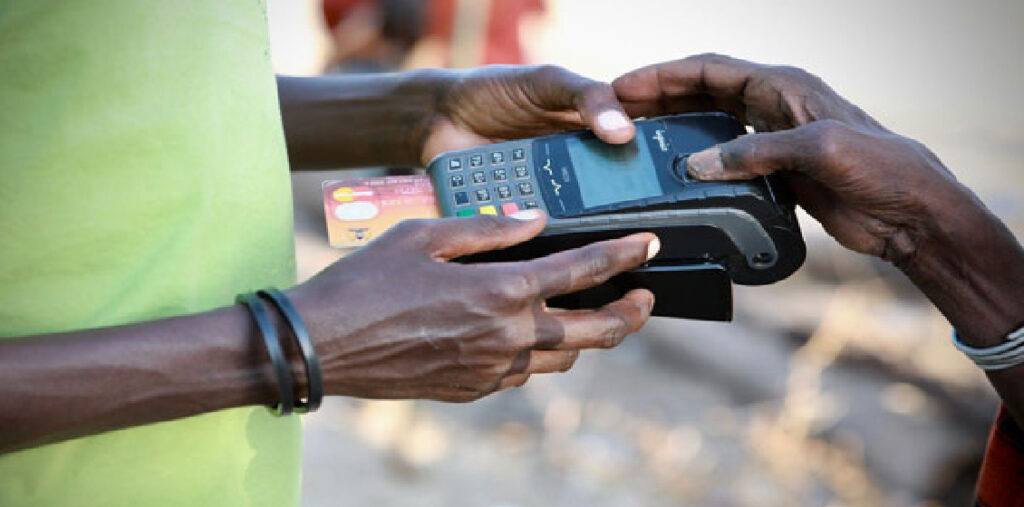
Miriam Laker: Yes, I’m happy to speak to this. So sometimes when I sit back, I think about Give Directly and technology and they are so intertwined that I almost think without technology, Give Directly would not exist the way we know it. So, for Give Directly, technology has been a huge enabler because even while you say, and we all know that technology is advancing really fast, this is happening in many parts of the world. In most rural parts, we are still basic. And so Give Directly, in most of the places where we work, has taken advantage of the most basic mobile phone technology available most of them are not banks they do not have bank accounts in the traditional banking mechanism we now have at least a basic cell phone basic cell phone coverage and then we also have a mobile money banking which is really banking in an individual’s mobile phone using the mobile phone and telecom providers. So, Give Directly has taken advantage of that and all the cash transfers that we do are through mobile phones, mobile money platforms. We go out to a community, talk about mobile phones, train people in the community how to use phones and for many of them it is the first time they are actually seeing and having their own phone and we’re training them on how to use that. We are getting them registered into mobile money, in other words opening up a bank account for them in the mobile money platform showing them how to use it how to make sure that it is safe
in getting money out and how to use it for their regular lives so that is the first thing that we do. The cash is then sent directly to their phones and they’re able to access it but another layer that technology has given us in this work that we do is that technology has helped us want to monitor so we have toll-free call center numbers. The other layer that technology has provided for Give Directly is that it’s enabled us to keep in touch with our recipients remotely because we have toll-free call centers where the recipients now with the cell phones we’ve given them are able to call us anytime to talk about anything related to the cash transfers, whether it’s how to access it, whether it’s safeguarding issues, whatever it is, they can call us for that. The other thing about technology is that it helps with transparency and auditability. You know where every coin has gone, to whom it has gone, when it was received. So if anything is diverted, we are able to immediately track and catch it so those are the great things that it’s done but at the end of the day it has also really heightened the efficiency of cash transfers because at the moment about our efficiency is 80 to 85 percent meaning for every dollar that we get as an organization from donors 80 of it or 85 of it goes to the recipients and only 15 is for all our overhead costs simply because we don’t have people physically going to a bank, picking up money, driving out to the community, or buying in-kind goods to give to the recipients. And finally, on this topic, I think that speaks a lot about the ability to scale these kind of programs. We are never going to live in a world again where people do not have access to cell phones. It is just increasing. It’s getting more complicated but also more available and that actually then means that this method of delivering cash to people who need it is very easily scalable, and I don’t see anything happening to take us back to a place where we don’t have this kind of technology.
Miriam Laker: Okay, I think that my observation from the other players is that they’re mainly infrastructure development groups when you look at China they’re working on roads you look at JICA Japan they’re working on things like the health system, education system. It’s a very strong infrastructure. It’s more infrastructure-driven assistance to many of the countries, at least in Africa, where they are assisting. And I think this brings us back to what I was saying. If this group of people are focusing on infrastructure, then finding other means to make sure cash transfers are sent out will therefore increase the demand on the infrastructure that is being built up in the countries, that is being built up in the countries that uh that are being that is being built up in these countries but this is like really theoretical i don’t know what the practical solution to this is going to be Jacob, you might be better than me or maybe not, I don’t know but I would think that if we look at this sort of the four major powers if you will so we have Russia we have China at large with the rest of Asia, and then we have Europe, and then we have the United States, right? So, where it used to be that United States and Europe together would be the big boys when it came to development aid and would be somewhat aligned, and both would be interested one way or the other in social cash transfers, now we have the US dropping off, which leaves Europe and China with the rest of Asia, so to say, and then Russia as some of the major players in Africa.
Lars Buur: It’s a very interesting point but there’s also some critique of these e-money ways of operating particularly when they get so to say, nested or embedded in all kinds of debt provisions, loan options, etc., etc., that it can be a way of indebting rural people or poor people. There is some experience from South Africa. Can you speak to that, Jacob?
Jacob Ulrich: Yes. Well, true, as Miriam was saying, and I can confirm that from having studied at least some of the literature. Yes, technology is a great enabler and it has really been a game changer for social cash transfers across the world. But it does also come with some danger. So there was a case in South Africa where they are very advanced with their social cash transfers, but where a private operator was brought in to manage the whole system. And that private operator was a financial institution that then got access to all the poor people receiving, poor or not so poor people receiving social grants and could then market their payday loans to these same people and convinced a lot of them to take these sorts of payday loans or loans with very high interest rates. And then all of a sudden, these people found themselves, the recipients of the cash transfers found themselves in a situation where the money that they were getting every month from the government child support, old age pensions whatever was immediately went into their account but it was then immediately transferred to pay back the operator of the system with a very high interest on the loans that they had sort of had stuffed down their throat right so that was that was fixed then.
in South Africa and that operator was not allowed to continue operating like that. But it is an indication that one needs to be on one’s toes in terms of who is allowed to operate and implement these programs. And what is the role of big finance, big international finance, big financial companies, big tech companies and so forth? They’re not all of them benign, although the general experience is very positive.
Miriam Laker: Lars, do you mind if I could jump in at this point?
Lars Buur: You’re most welcome.
Miriam Laker: Thank you, Jacob. Thank you for sharing that. It’s almost scary to think about it. And I think I just need to clarify something at this point. So, while we all understand that people in poverty know what is best for them, I think we should not be naive enough to think everyone knows how to deal with technology when it shows up. And so, it’s really important that the upfront engagement with the recipients to tell them the potentially fraudulent activities that could happen as a result of them receiving these large cash transfers or any amount for that matter. It doesn’t have to be a large cash transfer. Simply the fact that they’re receiving money puts them at risk for fraud or even for violence. So, I think that makes it really important. In Give Directly, what we do as the program starts off, we actually meet the entire community and try to have these conversations with them. So, while there’s excitement that there’s this money coming out, we go back to reality and say, you know, these are things that could happen. How do you safeguard your pin? How do you withdraw your cash? When do you withdraw it? So, I think that is really important. We haven’t experienced what Jacob shared, but I think this is really important for us as an organization as well, because as we grow as an organization there is a likelihood that we could get service providers who end up trying to defraud our recipients that way, so Jacob thank you for that learning point
Lars Buur: Yeah, it raises a question about yes you provide the cash but who should be the recipient, should it be old people which we suppose are more responsible, it’s not always the case should it be the young ones that know how to operate these technologies? So, when you stand there in a situation with Give Directly and you need to provide the money and you do it electronically, how do you decide who gets the money and who does not?
Miriam Laker: Yeah, so when we go to a community, our recipients are primarily adults who have their mental faculties in order and are healthy and not bedridden for that matter. So all those, and that’s a majority of our recipients. However, we’ve had situations where we’ve given cash to a household where the primary recipient is either very elderly or chronically unwell, or there have been cases where the head of the household is actually under the age of 18. In those cases, for safeguarding purposes we get a trustee in the community. So someone who can be a trustee, someone who is trusted by that household and to the extent possible someone who is known by the community leaders and that person becomes a person through whom this family receives cash transfers. If the person is under 18 then the trustee will be the recipient on behalf of the family and in that case, we have a safeguarding team checking in with the family each time cash transfers come to make sure they’ve received the cash and the amount that they should have received. If it’s a person above the age of 18 and for whatever reason, they are not capable of receiving the cash themselves, the transfers are sent to their phone, but they have a trustee who helps them withdraw the money. So that is how we have done it overall, but we have a very strong safeguarding team that will, for the duration of that project, keep their hands and their eyes on what is happening in that community.
Lars Buur: Do you directly have any experience with doing cash transfers in situations of conflict? Because now as we see cash transfers being used by the humanitarian sector to a far larger degree, this suddenly becomes an important aspect because the whole issue of trustees, the whole issue of operating systems and maybe a backup and checkup is more difficult when you are in conflict situations. That is true. This first from Give Directly and also Jacob, what do we know about this more generally?
Miriam Laker: That’s a very pertinent question we’ve done cash transfers in the context of conflict in two ways one where we are remote for the from the conflict in other words refugees that have moved to a safer space that is quite easier to do than in places with active conflicts we’ve done active conflict zones in Yemen and the Democratic Republic of Congo in those situations the efficiency of our programs go down because they’re all the security issues that are involved as well. But we have done it successfully. Of course, it is more complicated. You have more safeguarding issues, so you need to have a stronger safeguarding management presence. But also, it is still one of those areas where we are learning. We have like an active program, for instance, in the Democratic Republic of Congo, where people have been internally displaced. They are still very close to conflict. And so, we are running that program and trying to evaluate it. What or how do these people use their money differently? Are there extra saving safeguarding issues that they experience as a result? How easy is it to continually get cash transfers to people when they have moved away from the place where you first encountered them? So as an organization, we are very passionate about doing cash, even in the setting of conflict, because we shouldn’t exclude people because of circumstances that they have, they have nothing to do with but we need to learn how to do it correctly in places like that so those are some of our hardest programs to run at the moment.
Jacob Ulrich: I do not have so much on how to do it in a conflict situation. Miriam knows much more about that than i do but one for me at least interesting fact if we distinguish between humanitarian assistance and then more long-term development assistance, it’s actually humanitarian assistance that sort of started out the whole cash transfer thing to some extent. And about 20% of the funding that is allocated for humanitarian assistance is actually allocated for social cash transfers. So, there’s been a lot of positive learning from that, from funds being given as social cash transfers to refugees in refugee settings. And the reason is simply that it’s much easier to give people cash and then they can provide for their own needs by buying whatever they need in the market, rather than as an organization having to provide food and shelter and all sorts of in-kind contributions when you can just give the cash. So that’s an interesting sort of humanitarian aid came first and then development aid is catching up based on the positive experiences. So, there’s some sort of a nexus there that has been interesting to study historically.
Lars Buur: Thanks. This raises another question seen from my point of view related to governments where you’re working. Do social cash transfers need to go through government systems, or can they be provided in parallel? There are all kinds of questions related to social contract dynamics, there are all kinds of questions related to taxation, directly or indirectly. What are the experiences from Give Directly on how to work with governments in relation to cash transfers?
Miriam Laker: One of the things that excited me most when I met Jacob was the fact that he was looking at the government arm as well. Because personally, I believe while it is great for NGOs and other people to do these programs, the ultimate goal should be the sovereignty of a nation. There should be a point at which after evidence has been generated and the implementation mechanics have been figured out, that programs are handed over to governments to look after their people. So, I loved Jacob because of that. As Give Directly, over the last five years we’ve begun to have stronger government engagements and because of this we actually now have a policy department whose purpose is actually that. So having conversations with government about one, the evidence of the programs and as much as possible we try to align the programs or to identify outcomes that are aligned with what is important in a government’s development agenda and so presenting to them the evidence first of all and then going through how we actually did implement the programs both from the operational perspective but in this case things like safeguarding are very key as well so we have those conversations we’d also started having conversations with government on how to develop their own technical systems to be able to do the cash transfers themselves through their own through technology that is overseen and run by the government so hopefully ultimately all programs should be handed over to governments to run this because when governments are running this they know how much it costs they know who is receiving cash they understand the population better I think the role of NGOs is to fill in gaps that the government needs to be filled but ultimately these programs should be transferred to governments. I know it is much more complicated because governments change quite frequently. Issues like safeguarding, many times governments struggle to make sure that they’re ensuring that safeguarding is in place, which is a key issue with cash transfer programs. But I’d love to hear from Jacob what you have learned in the course of your PhD related to government.
Jacob Ulrich: Yes, I can respond to that. I think for me, doing this analysis has been like black and white or night and day in terms of socioeconomics on one side and then politics on the other side. So, socioeconomically, as we have discussed, it’s a great thing to do scaling of social cash transfers, finance with development aid, if the objective is short-term or long-term poverty reduction. No doubt about that. Politically, it looks much more difficult. And it’s almost a conclusion, but not quite, but almost a conclusion, this is never going to happen, right? Because it’s politically very difficult. And if you look at it from the government perspective, and again, I did some case studies in Uganda, but you could make parallel analysis elsewhere. What would the government think if someone came to them and suggested that you should take most of the aid that they’re receiving and just hand it out as social cash transfers to as child support or old age pensions or whatever. Well, there will be at least two three reactions one is there would be a skepticism and which is healthy in terms of is this really the best way to create economic development for our country shouldn’t we invest the money in infrastructure or in health or in building businesses or whatever and i think a case can easily be made that investing in social cash transfers does actually promote economic growth because it creates demand in the medium to long term and the short term as well. So, but that’s the first skepticism that you would be met by from government. The second skepticism relates to what you could call political legitimacy or patronage or social contract. I mean, the government is currently or Uganda as a country is currently receiving its development aid, $2.4 billion a year in a way which sort of promotes or at least secures some sort of political stability, right? And if you were to change that quite dramatically, then you would rock the boat. And what would then happen with political stability? And in particular, if we imagine that this was to be a success, so we took a major part of development data and allocated it for, for example, social cash transfers in the form of child support, and you would then end up quickly with a positive social contract that the government would be able to say to its people, we have negotiated with the donors that all that money that used to be spent on something else and was perhaps a little bit less productive, now it’s given to the mothers of Uganda for child support or whatever. It could very quickly become quite popular. And that would put the government at risk because what happens if the government and the donors end up in a conflict or in some kind of disagreement? And all of a sudden, the donors would decide that now we need the money for something else. We need the money for stuff in Ukraine, or we need the money for other priorities that we have elsewhere. Or what if the donors just disagree with the government about something? I mean, there’s been a law on homosexuality, for example, quite recently. There might be a corruption scandal, you know, something, where the government would then be at risk of the donors pulling their support quite quickly. And that would then impact negatively on the deal, the social contract, so to say, between the people of Uganda and the government of Uganda. Because people would say, between the people of Uganda and the government of Uganda, because people would say, ha, we used to get child support, but now the government did something with the donors and now we’re not getting child support anymore, right? So the government would be understandably, rationally concerned about such issues, which means that you would have to have some sort of a different aid structure and more long-term commitments so that the government could count on it and the people of Uganda could count on it, then it’s not something extremely temporary. So that’s on the government side. The government would also most likely, and again, it’s very rational, insist on the money flowing through the government systems. Why would you have that much money flowing through, say, NGOs or the UN system or some other entity? It’s quite natural, you could say, for a government to want to control such money flows, which is happening in its own country. So, there would be some resistance, which would require some different aid modalities and a rethink of how donors and government cooperate. And then the whole thing of dramatically changing international geopolitical landscape right now, as Lars talked about in the beginning, that further complicates things. So politically speaking, it’s not super straightforward, but it is certainly doable. And you could see the advantages of everyone, also of the government, if this was done the right way. Maybe I’ll pause there, Lars, because otherwise I’ll speak forever.
Miriam Laker: Can I jump in, Lars, just quickly? Yes, I’m going to share a similar example from the health field that I think is an experience we could think about for cash transfers. So in the health field for HIV in particular, the money, the donors and the governments worked, it’s essentially in parallel, money that was sent for HIV care from places like PEPFAR did not go, most of it did not go through the government, they went in through the NGOs. And because of that, when the relationship broke earlier this year, we all know what happened in the donor space. The social contract wasn’t broken between the government and the people. People say the donors have pulled out and that is why we don’t have money for treating HIV now. I think that was a very smart way of doing it. So the HIV donors avoided the risk of sending all their money through the government by having organizations that they had faith in deliver the services with government oversight and so when the relationship ended the government has come out looking good people say okay government you should have provided something to in the event of something like this happening but the blame actually in when you go to all these African countries is on the donor and not in the government. I think that was a very smart way of doing it i don’t know if it could happen with the cash transfers as well.
Jacob Ulrich: Yeah, I guess it could, but it depends very much on the context, I would think, because it’s pretty clear with the HIV AIDS funding and PEPFAR disappearing, that was essentially President Trump and Elon Musk, right? Everyone could see it. But what if it is something else that generates that the donors would pull out of child support? For example, a disagreement with just Uganda. I mean, for the HIV AIDS, it was all of Africa. Everyone could see. You can’t blame the government for that. But in the other situation, maybe some people blame the government. But it’s not a straightforward situation, but it’s something to reconsider. Yeah, you bring up a good point.
Lars Buur: Yeah, there’s no doubt that if one was to scale, it would change both how NGOs operate, but also how States operate in relation to the cash transfers, because they need to set up systems that allow for it to happen. And that would in itself make major leeways into how many governments operate. That’s clear. We can see that with the NGOs that are moving, particularly in the humanitarian sector, that these NGOs that have moved from providing in-kind to cash, they have had to change the whole departments of procurement before going out buying mattresses or blankets to suddenly negotiate very technical contracts with mobile operators and banks, etc. It just changes the organizations. And I think that will create a whole ripple effect of changes, both in relation to the NGOs and the States, if they were going to scale in that sense. But is it feasible to actually scale? Is it just a pipeline dream you have, Jacob, and to say, give directly?
Jacob Ulrich: Yeah, I think, well, technically, it’s entirely feasible. I mean, it’s almost super easy. I mean, it’s not hard to do it. You know, it comes with all sorts of complexities, but we have certainly seen that it’s very doable. And it happens already, not with donor funding, but with government funding in places like Brazil and Mexico and South Africa. So yes, it can be done. The only difficulty is on the, or the major difficulty is on the political side. And we’ve talked a little bit about the political side with the domestic government, say the government of Uganda, there would also be issues on the donor side, because what is the purpose? What is the reason that we give development aid? Well, technically speaking and officially speaking, the purpose of development aid, at least the part that we give for Africa, is mainly aimed at doing something about economic inequality and poverty reduction, right? That’s the official purpose. But the real purpose, unofficially and increasingly also officially, is that donor aid is seen as yet another tool in the geopolitical toolbox. So, it’s something that we give also to promote our own national interests. So, we worry about geopolitics, we worry about climate change, we worry about migration from south to north, we worry about regional and international terrorism. We worry about the future of our businesses. So for the donors to be, or the donor countries to be interested in dramatically increasing the share of the funding that goes to social cash transfers, I think it will be necessary to argue credibly that social cash transfers do not only lead to reductions in poverty very effectively, they also have positive implications for those other issues that are important to us, including, as I mentioned, climate change, international migration, international security, and our business interests. So that sort of indicates that we need to shift the dialogue or the analytical studies of social cash transfers a little bit in the direction of what can scale social cash transfers do for geopolitics, instead of just what can scale social cash transfers do for geopolitics instead of just what can scale social cash transfers do for global poverty?
Lars Buur: Any comments on this, Miriam?
Miriam Laker: Okay. I agree with Jacob. I think while, yeah, so agreeing with Jacob, so while technical evidence is necessary and impact evidence is necessary, it is not sufficient bought in. For Give Directly, we are scaling there. We have the ambition of covering the entire country. In Malawi right now, we are giving cash transfers to an entire district. So we are moving from the little villages to an entire district. But what is really important from my experience with Give Directly in the realm of politics is aligning with what the government believes to be important. And we have tried that a lot, looking at what the government vision is in the area of development for their countries, poverty alleviation. What is the government’s vision, for instance, in Uganda and Kenya about refugees? So, we’ve tried to do that a lot and then presented to them the evidence of what has worked. So, we say this is what you have tried and we are presenting to you something that might work if you tried it. And we’ve got quite a bit of buy-in as a result of that. Also, with organizations like USAID before it closed, doing a randomized control trial where we’re comparing interventions, for instance, water, sanitation, and hygiene, and nutrition, and comparing that to cash. Does cash move the same outcomes to
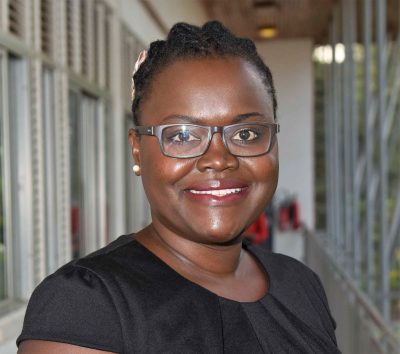
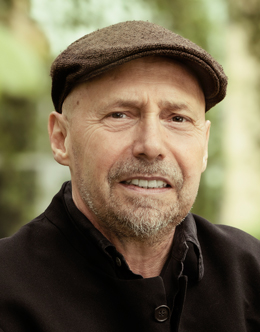
Dialogue between Dr. Miriam Laker and Postdoc Jacob Ulrich moderated by Professor Lars Buur




the same extent or cheaper than the interventions do? And we actually got a lot of buy-in from USAID. Last year, we got a lot of USAID funding, which unfortunately has fallen apart because of the circumstance. But so what I’m trying to say is, while it is great to have technical evidence, impact evidence, it is very important to align with what the governments see as a priority. The other thing we’re doing right now in Kenya is an alignment of showing the government that giving cash transfers actually increases demand for infrastructure that already exists. The example I gave you is the infant mortality study where we saw the infant mortality reduction because of uptake of services that the government already had in place. So, in other words, we are improving on the investment that they’ve already had on this infrastructure simply by giving people cash transfers. But at the end of the day, like Jacob said, this is a long walk. It is not a sprint. It’s a marathon. And we just keep taking the wins as they come and using them to advocate for bigger uptake across countries.
Lars Buur: What has been the impact of the closing down of U.S. aid? We know that U.S. money is still flowing into countries related to the security sector in relation to other sectors.But the general impression is that the U.S. aid, as we knew it has more or less been closed down. What has been the impact seen from the side of where you are deeply engaged with the Give Directly in different country contexts?
Miriam Laker: Yes, so Give Directly was not immune from the impacts of the closure of USAID because like I said over the last one year they had become major or key donors in Give Directly and so there were a number of programs that we had to close because we didn’t have the Give Directly, I mean the USAID funding. We actually did close one of our countries which was Morocco where our programs were 100% funded by USAID. However, on the positive side and this is a commendation to people who have been donors for the programs that we run as Give Directly and other organizations as well. Their donations were able to fill the gap that USAID left because we had promised recipients cash transfers and now we couldn’t go back and tell them, oh, unfortunately we do not have money coming in. So the donations that we got from other donors were able to be a stopgap measure for the programs that were stopped going forward. The other thing that I think this, the closure of USAID has done has given us time to also think about cash transfers compared to other modalities of cash transfers or of giving aid. We foresee that there’s going to be a time when we are going to have some changes happen. And I feel at the moment that the fastest way for us to meet the gaps that have been generated by closure of USAID is giving cash transfers. Like once again, I said in the beginning that the advantage of cash is that a single transfer will meet multiple needs. So, it will meet nutrition needs. It will meet health needs. It will meet agricultural needs. It will, like multiple needs will be addressed simultaneously. And I think that is a gap that cash transfers can now begin to take up in the development space.
Lars Buur: Okay, that’s very interesting. How does this relate to the wider geopolitical reconfiguration that we see at the moment with China becoming far more important in many of these African countries? We also have Russia coming in with the Wagner Group or whatever the name is at the moment, particularly in some parts of Africa and the European Union trying to find a different way of operating because they are aware that they cannot operate in the same way as the Americans or the Chinese, etc. How do you see this? Is it possible to tap into some of these other geopolitical players and operate? Or is it you as a U.S. organization? Is this more or less a closed field where you had to rely on Western donors in US.
Jacob Ulrich: Or maybe not, I don’t know but I would think that if we look at this sort of the four major powers if you will, so we have Russia we have China at large with the rest of Asia, and then we have Europe, and then we have the United States, right? So, where it used to be that United States and Europe together would be the big boys when it came to development aid and would be somewhat aligned, and both would be interested one way or the other in social cash transfers, now we have the US dropping off, which leaves Europe and China with the rest of Asia, so to say, and then Russia as some of the major players in Africa. We’re talking about Africa. I think as you are both alluding to, it’s very difficult to see Russia and China and even JICA or some of the other Asian countries moving into social cash transfers. That’s just not their thing. And it doesn’t reflect fully the sort of historical legacy that they come with. We come from Europe with much more of a legacy of the welfare state and we are much more familiar with this whole notion of cash transfers in having multiple purposes that are both social and are useful in terms of securing political stability and building sort of a key social demand or economic demand and so forth. So, I would think that we can actually, if we want to from Europe, we can stick to and further build our ability to engage with social protection systems at large in Africa, including social care transfers, and then leave some of the more infrastructural investments to the likes of China. I wouldn’t say we should leave much to the Russian Wagner Group, and I wouldn’t count on us getting much in terms of development aid or development interventions from the United States in the short to medium term at least. So that still leaves, we can actually, if we want to from Europe, we can say, let’s be the ones who are leading this large niche of social protection in the Global South together with Global South partners. I would think that that could actually be advantageous for both parties.
Lars Buur: And particularly seeing this, one see and look upon this from the point of view of the Nordic talks. Some of the major international donors has been Denmark, Norway, Sweden. There’s been a lot of changes there. There could be a new alliance if one got it formulated in a strong way. What would be the main challenges? Because to be honest, when we talked about long term, short term, donor aid is generally project based, short term. Yes, we formulated control programs that ran five years but used half of the time on evaluation and the other half on formulating new programs. So, so, so that would really, really require a change of the whole way. The whole aid mentality, wouldn’t it?
Jacob Ulrich: Yes I think I can maybe give that one a go it was one of the issues that i was interested in and that i have analyzed as well yes if we are to move into a situation where a major part of development aid is used on or invested in social cash transfers then that would require new modalities especially a more long-term way of thinking because you can’t just go in and do social cash transfers with a three-year perspective at scale. Then you need a longer perspective. And the major obstacle, I would think, that even for Europe, but also for the other geopolitical players that I talked about before, the whole security situation, which is up in the air, requires us to invest a lot more in defense and military expenditure. We are now moving towards 5% of GDP in Denmark to be spent on defense, which is a lot. We used to be like 1% or 1.5% with the objective of sometime reaching 2%. Now we are actually reaching 5%. And there’s been some of the same discussions and decisions made in, for example, the UK, where they have also reduced their aid budget quite dramatically and with direct reference to the need for spending more money on defense. So, the whole security situation is a major obstacle. I think realistically speaking, this idea of spending a lot more money on social cash transfers in the immediate future, that’s unrealistic. But one can still prepare and game up, so to say, and be ready for when geopolitics change and one part of that can be to explore and investigate and argue how increased investments in social cash transfers in the global south can actually be helpful in terms of building global security as well right so that’s that would be some of the strategic choice one would need to make if one wants to push this agenda sort of in the medium to long term.
Lars Buur: And seen from your perspective, Dr. Miriam Laker, how do you see this field? Is there space for expansion, for scaling?
Miriam Laker: Yes, I want to be optimistic and say there is space for scaling, because one of the common questions is where will this money come from? We estimated as an organization that it would take about $100 billion per year to end poverty. The World Bank says it might be 200 billion if you include things like administrative costs. But the reality is that the money exists. When you look at what wealthier countries and even wealthier parts of Africa spend on things like looking after their pets or cups of coffee, that money actually does exist. And I think it’s going to be important to appeal to people who have money to contribute, to donate to this cause, that’s the first thing. I think that is very important. The other thing is for the players in this field to not work independently of the governments, of the policy makers. Like we’ve said, even when you have technical and impact evidence, if you don’t have buy-in from the politicians, it is not going to happen. And I think that as we run these programs, getting them involved from a very early phase is very important hearing them out what is important for you as a government in your five-year tenure what do you want to achieve and how do how can cash transfers then play into that i think are going to be very important conversations to have from early on but continually as well i really believe that this is a way to go cash transfers i hear we have evidence that has shown that it works and we just need to find a way of working together with the key people that are needed in making the decisions for scaling going forward. I am very convinced that this money, even without USAID, exists in the pockets of people around the world.
Lars Buur: Thank you. One last question in this regard. Give Directly has shown one way of working. It’s still in the bigger scheme of things, small. How could one organize this field, Jakob? I know you have been looking into different possible models or modalities or ways of setting up a more global push for social cash transfers.
Jacob Ulrich: Yes, and certainly not only me, but there are also others that are more advanced than me in terms of setting up some structure. For example, the ILO has been much involved together with others in promoting this kind of an idea of having a global social protection fund that money would go into. And one could imagine that if such a global social protection fund was established and if a number of players, be they private, as Miriam is partly suggesting, or be they governmental donors. If money was put into this kind of a global social protection fund with a long-term mandate to do something about social protection and cash transfers, social cash transfers in the global south, then money from such a mechanism could be allocated, for example, to similar vehicles at national level, so you could have the Uganda Social Protection Fund or the Kenya Social Protection Fund or the Tanzania Social Protection Fund, which would be operated as something that would be controlled partly by governments, partly by donors, partly perhaps by NGOs or by respected people in the national community, and would provide some kind of a long-term dependable mechanism for financing long term investments in social protection to minimize the risk of someone taking the money and running with it, and also to minimize the risk of donors pulling out from the funding too early or other finance actors pulling out prematurely, if you will. So that’s some of the ideas that already exist out there and which I think could be useful to elaborate further.
Lars Buur: Would you see yourself in such an aid scenario, Miriam, in such a global front? Would there be space for you or would you basically crowd out organizations like yours?
Miriam Laker: That’s a good question. You know, one of the things we say in Give Directly is that we should be like medical doctors, essentially working yourself out of the job. You want everyone to be healthy so that doctors don’t have to work. In the same way, we want the world to get to a place where you don’t need organizations like Give Directly. And I think one of the things that I think the listeners should think about is when a cash transfer program is done well, you’re actually reducing the burden, the number of people who need cash transfers. Jacob talked earlier on of children who grew up in households that are receiving cash transfers eventually getting a better education and better income, meaning they will not be recipients of future social protection or cash transfer programs. We’ve seen with the large lump sum programs that the people who do in fact graduate out of poverty and evidence has shown that people who are not born in poverty are less likely going to be in poverty as well. So, at the end of the day, I think we need to remember that if we do programs that have been shown to work, there’s a likelihood that we will reduce the burden of social protection. There’ll be fewer people who need to be on social protection or these cash transfer programs. But I think that what we need to do now is begin to implement what we’ve learned as we wait to get to a place where the governments, the donors and everyone is working in sync. At the moment, we have a critical mass, and I think we should be starting and pushing the agenda in any forum that is provided to us.
Lars Buur: I would say thank you to Dr Miriam Lekker and to postdoc Jakob Ulrich and then hand over to the Danish Development Research Network.
AW: Thank you very much. Just allow me one short question here at the end. I mean in your opinion how receptive is the Danish government I mean in its development aid policy to cash benefits and maybe if you know about the other Nordic countries now we’re having this Nordic talk how receptive are they to these ideas which i find very interesting and important
Jacob Ulrich: Yeah, I can start with my response. I don’t think that major investments in social protection are something that is being much discussed in Danish government circles in relation to development aid, but it is a growing field, there is a growing interest. I myself have been doing a couple of presentation, one in the Danish Parliament, one in the Ministry of Foreign Affairs. People are listening, but it’s not something where we have sort of a huge portfolio of programs that we want to expand. So, we’re starting from a sort of a relatively limited space, which is sort of in a way surprising and I don’t have a good explanation for it because we are such a welfare state country. So why have we not over time invested more in spreading some of these welfare state ideas with child support and old age pensions and unemployment support, all of that stuff. Maybe part of the notion has been that those types of services are something you can afford when you’re a middle-income or a high-income country. And until you have become a middle-income country, you should focus on something else. But I think as we have discussed in this conversation here, you don’t need to wait. So maybe there is further space for the Danish government to engage.
Lars Buur: Can you experience, Mirjam, seen from an African context of the Nordic countries and their engagement after USAID pulled out?
Miriam Laker: I think from my perspective, so we actually haven’t really got funding from the Nordic countries. We’ve had conversations with organizations like NORAD. We’ve had presentations in Germany, like the Freiburg Institute of Basic Income Studies as well, but not much engagement. But they are curious to know about how we are running cash transfers, the evidence that we are finding. But interestingly, one of our key donors that give directly is IKEA. IKEA is from one of the Nordic countries. So very interesting. They are supporting a lot of our refugee work in Kenya and Uganda, but nothing from the government yet.
Lars Buur: Thank you and over to you.
AW: Yeah, thank you very much, it has been the most interesting dialogue and we will definitely follow your future work and cooperation, I think it’s very exciting, this talk.