 by
by Central Asia is home to over 80 million people but is often overlooked and seen by many as a peripheral region. Central Asian countries also do not feature in classic academic works on authoritarianism around the world.
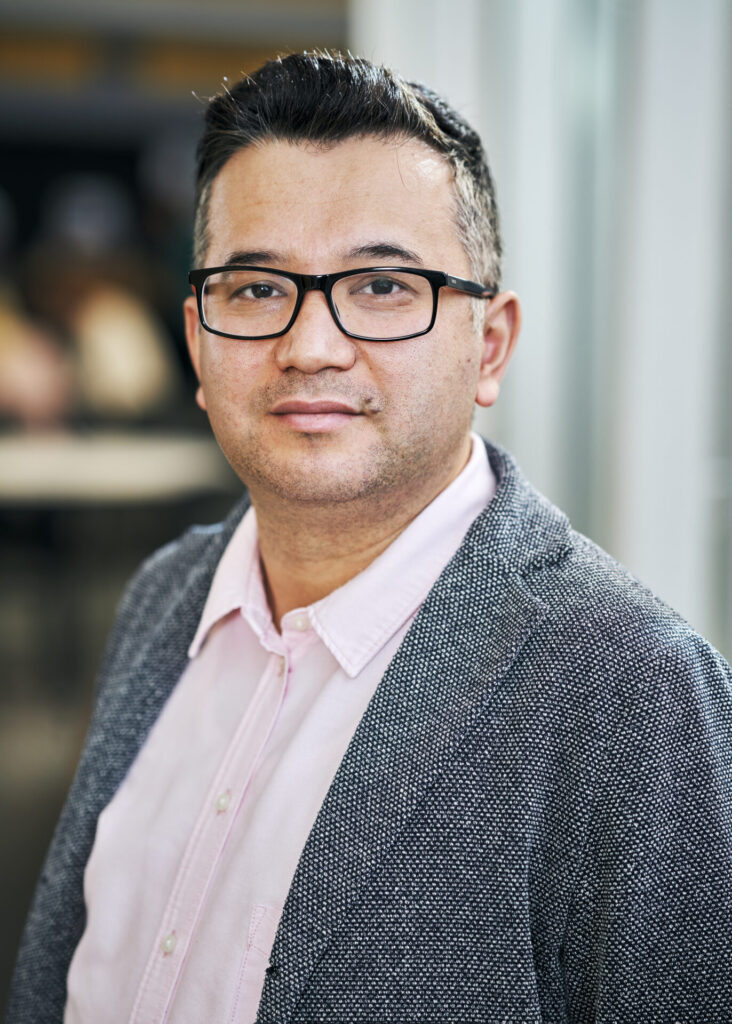
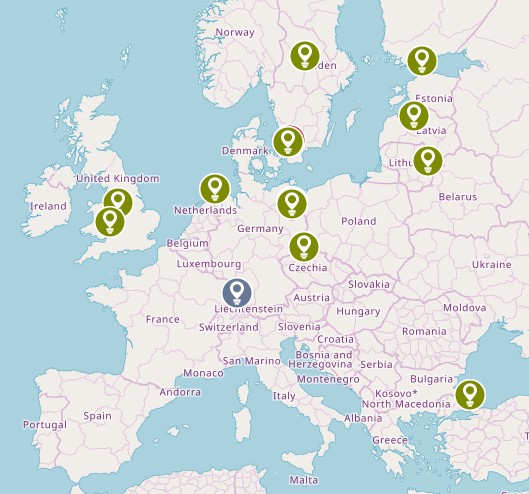
A consortium of 14 educational institutions was recently awarded a 60 million SEK grant to study authoritarian legal landscapes in Central Asia, funded by the European Union and the Swiss State Secretariat for Research, Education and Innovation (SERI). The project, called Sociology of Authoritarian Law: Insights from Central Asia, is headed by Dr Rustamjon Urinboyev, Associate Professor at Lund University. The project will examine how society, law and politics interact in Central Asian countries.
Sociology of Authoritarian Law: Insights from Central Asia is the first doctoral network led by Lund University under the EU’s Horizon Europe funding programme and will include 17 PhD students from universities in Europe and Canada. In addition to PhD dissertations, the project will produce academic articles, books and policy briefs. A central aim of this research is to translate it into strategic intelligence and policy insights for policymakers in the EU and beyond, who seek to advance democracy, good governance and the rule of law in authoritarian contexts, says Dr Urinboyev, who recently sat down with DDRN to discuss the project.
Understanding the Significance of Authoritarianism in Central Asia
Q: Why should we study authoritarianism in Central Asia?
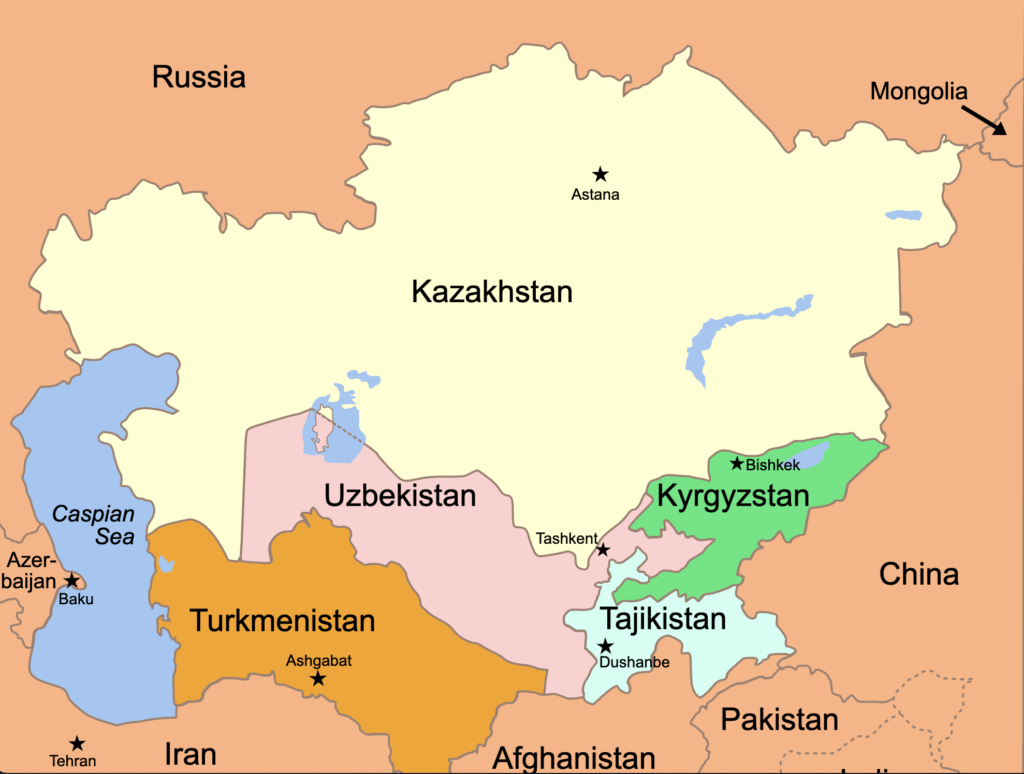
Because it can serve as an archetypal region to study authoritarian law and legality. Authoritarianism has different forms, and Central Asia includes several types of authoritarian states. Turkmenistan is a super authoritarian regime resembling North Korea, to some extent. There are also relatively liberal authoritarian regimes in Kazakhstan and Kyrgyzstan. Kazakhstan, for example, is often seen as a hybrid political regime, combining authoritarian and democratic elements. In between, we have Uzbekistan, which was heavily authoritarian but is now opening up to the world. Then there is Tajikistan, which is drifting towards repressive authoritarianism.
This [regime variety] means that the tools, theories and frameworks we develop in the context of Central Asia can be used to study authoritarian regimes in other parts of the world.
Q: What is the Sociology of Authoritarian Law: Insights from Central Asia project, and why is it important?
The [project] is connected to my personal journey. I come from Uzbekistan, which is an authoritarian regime. After the collapse of the Soviet Union, Uzbekistan and many other post-Soviet countries, including Russia, Georgia and Kazakhstan, became laboratories for international development assistance. The EU, the US and many Western donors invested a lot into the rule of law, good governance and democratisation programmes. But, so far, despite millions of dollars and euros spent on these development programmes, we have disappointing results. When the Soviet Union fell, there was euphoria, and we expected that democracy would become a universal form of governance. But after three decades, we know that authoritarian tendencies are resilient. These global developments influenced the design of this research project.
Using Local Dynamics to Strengthen Democracy
I also felt, growing up in Uzbekistan, that Western-centric paradigms and understandings of how authoritarian regimes work don’t fit the local context. We need new tools, new paradigms and new frameworks to understand what keeps authoritarian regimes so resilient. As a sociologist of law by education, I think looking at the legal landscape in authoritarian regimes can give us a more nuanced understanding. The legal system [in authoritarian countries] is a less politicised arena of communication between citizens and the state because, in authoritarian regimes, unlike democracies, channels of communication and daily interaction between citizens and the government take place through legal institutions, not political institutions. This means that we need to examine legal and societal dynamics to gain a better understanding of how authoritarian regimes operate.
Q: Can you give an example of such local dynamics?
The idea actually came from a wedding I attended outside Tashkent, [the capital of Uzbekistan]. Usually, guests are seated in rooms depending on social status. I ended up in a room with the leader of the community, a local politician, local businessmen and a police official. While we were eating, the community leader, as a representative of the people, started talking about social problems and addressed the local government official, “You have resources, and we have problems here. Why don’t you solve this problem?”.
At the same time, the community leader mentioned an instance of corruption. So did the police officer. It was a company that received money from the state to plant trees, but it wasn’t doing that. The local businessmen also pointed out the extreme checks by the tax office and the problems with doing business. The state official gave promises and said they would fix these issues. People are not passive. People can actually bring their concerns to the attention of state officials—not via state institutions but through these kinds of informal domains of society.
Very often, Western development actors have the understanding that legal and governance reform is a technical matter and if the right Western-style institutions are transplanted into the fertile soils of authoritarian regimes, change will come. [To advance democracy], it’s better to understand the local dynamics and maybe develop programmes based on these local structures and local level power geometries.
Research Partnerships on a Large Scale
Q: Let’s talk about the research partnership aspect of the project. How will it work in practice?
We wanted to onboard scholars from different disciplines—criminology, sociology of law, political science, economics, business science, public administration, anthropology. We also tried to bring partners with expertise in Central Asian studies.
According to the project design, we will have three research streams, and the 17 PhD students will be split into these streams. Each research stream will have stream leaders, and each PhD student will have two academic supervisors at their home institution. In addition, we are appointing two regional mentors for each PhD student from Central Asia to support the PhD student in doing fieldwork. We are collaborating with governments, civil society, the business sector, think-tanks, and international organisations [in Central Asia] to offer alternative career tracks to students. As part of the PhD training, there will be a [six months] compulsory non-academic segment. They might go to a think tank or the prosecutor’s office in Uzbekistan, for example, to do their internship or practical work, trying to understand the non-academic market.
[These local partners will also] enable PhD students to conduct fieldwork safely and give them access to the grassroots level of society. Otherwise, we know that authoritarian regimes are usually closed, and it’s not easy to collect data.
Mitigating Inequalities Between Researchers in the Global North and South
We try to treat all partners equally. Usually, researchers in the Global South produce and collect data, while the knowledge producers and the researchers [who publish academic articles and books] are based in the West. We want to change this by fostering collaboration and ensuring that knowledge is disseminated in both ways. That’s important. This has to do with my background. I want to contribute to ameliorating the inequalities in knowledge production between the Global South and the Global North.
Q: Do you have any ideas on how to improve research cooperation between the Global North and Central Asia or the Global South more generally?
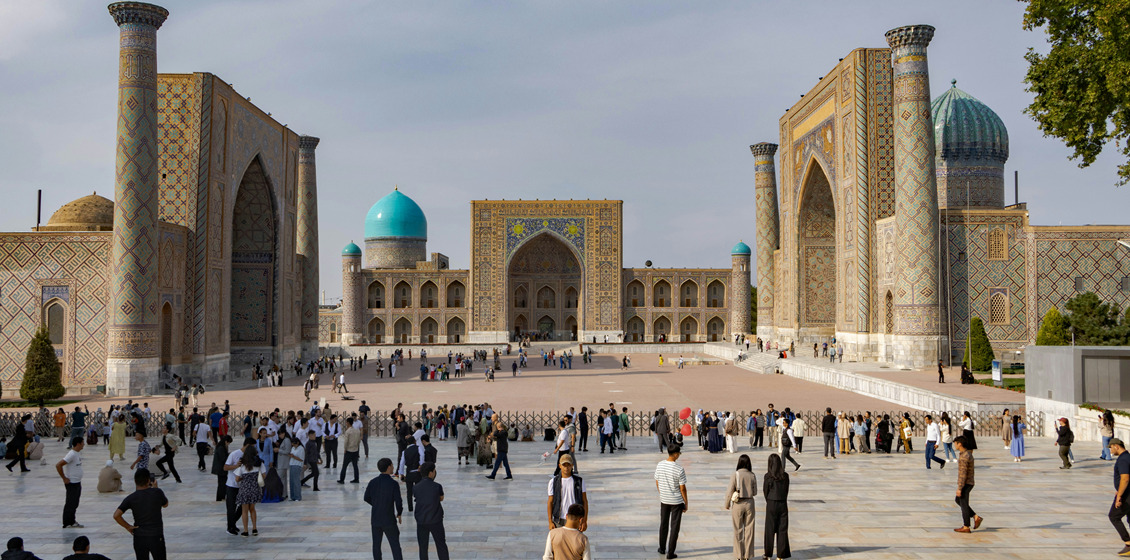
More funding, especially more targeted funding to regions outside the West, and I think Central Asia is still under-represented. It is often seen as a peripheral region between China and Russia, but the EU has shown a renewed interest in Central Asia, evidenced by the recent summit between EU and Central Asian leaders in Samarkand, so things are changing.
Also, I think another reform proposal would be to build the competence of researchers and scholars outside the West. The EU’s MSCA Staff Exchange funding scheme, for example, where I’m currently leading three projects, is a good initiative that gives possibilities for researchers outside the West to enhance their capacity.
Adrian Ganic is a M.Sc., THE LONDON SCHOOL OF ECONOMICS AND POLITICAL SCIENCE and a DDRN CORRESPONDENT