 by
by Final Report: Empowerment of Science Journalists and CSOs in Uganda and Rwanda for Research-Based Advocacy (Extract)
“Overall results
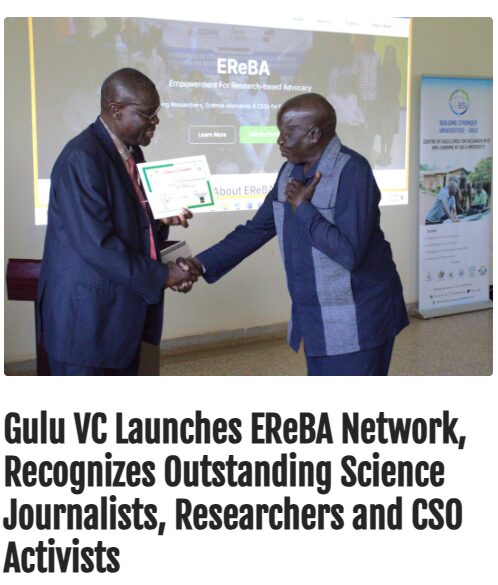
The project established and launched a network of science journalists, researchers, and civil society organisations to advance research-based advocacy. Named EReBA (Empowerment for Research-Based Advocacy), the network was officially inaugurated on July 30, 2025, by Prof. George Ladaah Openjuru, Vice Chancellor of Gulu University. At the event, he also unveiled the network’s online portal—developed by DDRN and USJA—to enhance collaboration and interaction among science journalists, researchers, and civil society actors. This marked the culmination of the project’s networking phase, which included a series of online engagements among DDRN, USJA, RASJ, and project participants, as well as separate interactions among the participants themselves, complemented by in-person meetings in Uganda between USJA and Gulu University.
Describe the results achieved for each of the intervention’s outcomes (objectives or goals). Use your indicators as a basis for the description.
Outcome 1: Increased capacity of science journalists and CSO staff to communicate research findings and carry out effective evidence-based advocacy in Uganda and Rwanda
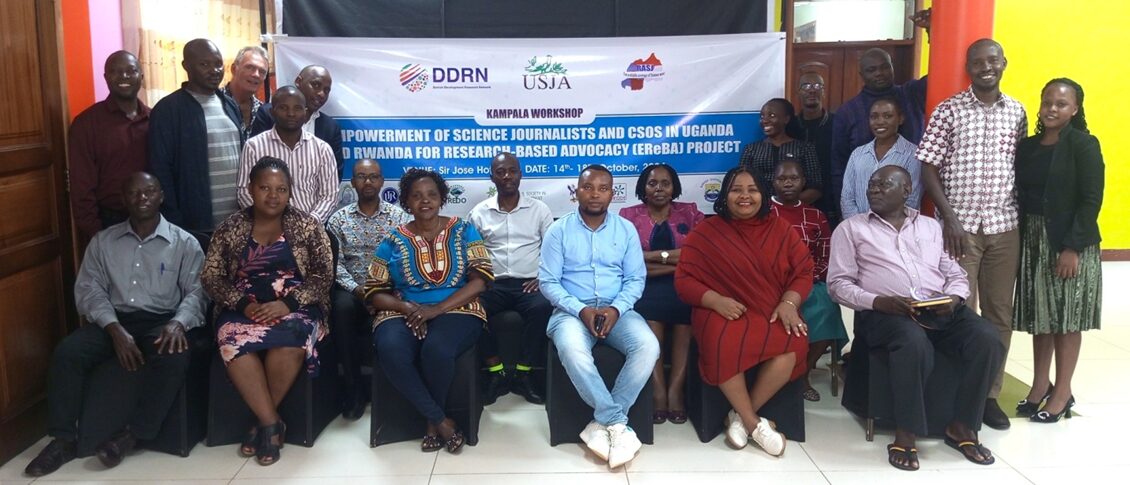
Fourteen journalists (6 from Rwanda and 8 from Uganda), five CSO staff (3 from Uganda and 2 from Rwanda), four researchers (3 from Uganda and 1 from Rwanda) all turned up at Ggaba in Kampala for the one-week training in October 2024. All the 14 journalists were able to develop synopses for researcher stories during the Kampala training. Out of the eight Ugandan journalists, three were able to successfully produce and publish their stories with media houses in Uganda within the given period of five months. These stories were also republished by DDRN. In Rwanda, while all the six had synopses, none was able to complete a story. Ugandan journalists actively participated in three follow-up online training sessions. Rwanda did not successfully organize an online training session. The factors that led to this lower-than-expected score include: Research stories require substantial financing. Some participating journalists reported challenges in completing their stories due to failure to secure financial resources from their media houses. For the case of Rwanda, where nothing was published and no online training was done, we noticed weaknesses in coordination on the part of our partner organization in Rwanda.
The participants learned: 1. To adjust the basic toolbox, 2. To deal with the stakeholders, 3. To reach the target groups, 4. How to prepare expert sources, 5. To influence the debate, 6. To implement the learned, 7. To plan for future activities.
Outcome 2: The advocacy work of two CSOs in Uganda and one CSO in Rwanda has been strengthened and the scope and volume of research findings being communicated have increased.
The CSO staff now apply new tools to strengthen their advocacy with evidence-based content, critically engaging with and utilizing information more effectively. Through collaboration and networking with the media and researchers, they, together with the researchers, have gained new platforms to share research findings and conduct more evidence-driven campaigns targeting key stakeholders.
”Participation in the EReBA initiative has been a major game-changer in my policy advocacy work. Previously, I had limited engagement with media colleagues, especially on environmental issues. Through EReBA, I am now connected with reporters and editors with whom I regularly share story ideas and publications,” Peter Wamboga-Mugirya, Science Foundation for Livelihoods and Development (SCIFODE).
Outcome 3: Networks have been established and cemented between science journalists, CSO staff, and university researchers.
Networking has been an ongoing process among participating researchers, science journalists, and CSOs. Journalists have used these connections to access information from researchers and CSOs to support their reporting. A WhatsApp group, created for EReBA in October 2024, continues to serve as a platform for members to exchange ideas and seek assistance — for instance, linking journalists to potential information sources.
The launch of the EReBA network and its accompanying online portal represents a major milestone for the project. There is now a need to further strengthen the network, beginning with operational support for the online portal. DDRN and USJA are seeking resources to make the portal fully functional as a platform for enhanced collaboration among the different groups.
Efforts will continue to attract additional science journalists, researchers, and CSOs — initially from Africa and Denmark — to join the network through the online portal. While that is the initial strategy, the Association of British Science Writers (ABSW) has already expressed interest in knowing more about the DDRN-USJA collaboration and approaches.
What are the most important lessons learned? What advice would you give yourselves if you were to implement the intervention again?
The launch of the EReBA network and its accompanying online portal represents a major milestone for the project. There is now a need to further strengthen the network, beginning with operational support for the online portal. DDRN and USJA are seeking resources to make the portal fully functional as a platform for enhanced collaboration among the different groups.
Efforts will continue to attract additional science journalists, researchers, and CSOs — initially from Africa and Denmark — to join the network through the online portal. While that is the initial strategy, the Association of British Science Writers (ABSW) has already expressed interest in knowing more about the DDRN-USJA collaboration and approaches.”
Response from Civil Society in Development (CISU):
“CISU has read the report which is approved with the following comments: It is an informative and well-written report that gives a good overview of the outcomes of the project. The report entails valuable reflections on the results, challenges, and learnings.
The report gives the impression that despite challenges, especially in relation to limited financial resources in media houses to support research-based reporting, the 3 outcomes were successfully achieved.
It is positive that the project supported the establishment of a network of science journalists, researchers, and civil society including an accompanying online portal. This appears to have successfully promoted cooperation among media, research institutions and civil society. It is positive how this collaboration has contributed to increased professionalism and quality and thus strengthened research-based articles and evidence-based advocacy.
It will be interesting to follow the work of the network and how the platform will be maintained and used for collaboration in the future.”
EReBA articles below – click on images to read
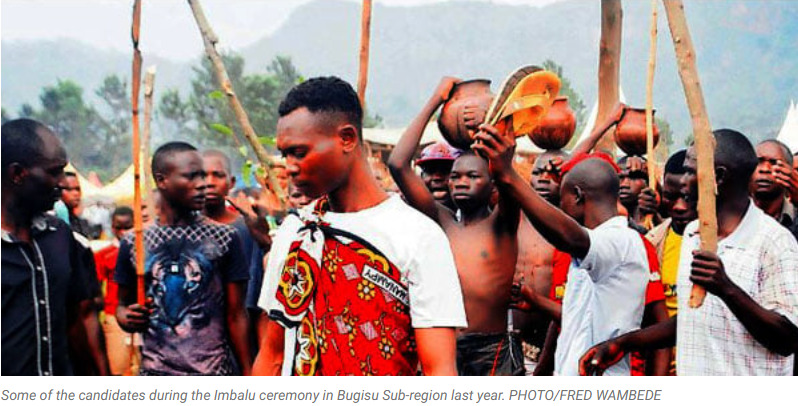
Bugisu turns to culture to prevent climate disasters
How dirty air is sending Ugandans to early graves