Most people take photos and videos everyday of their friends, pets or simply casual moments – but how can we use this everyday tool as a method for research and science communication? Especially in the context of Global South research there are relevant ethical implications.
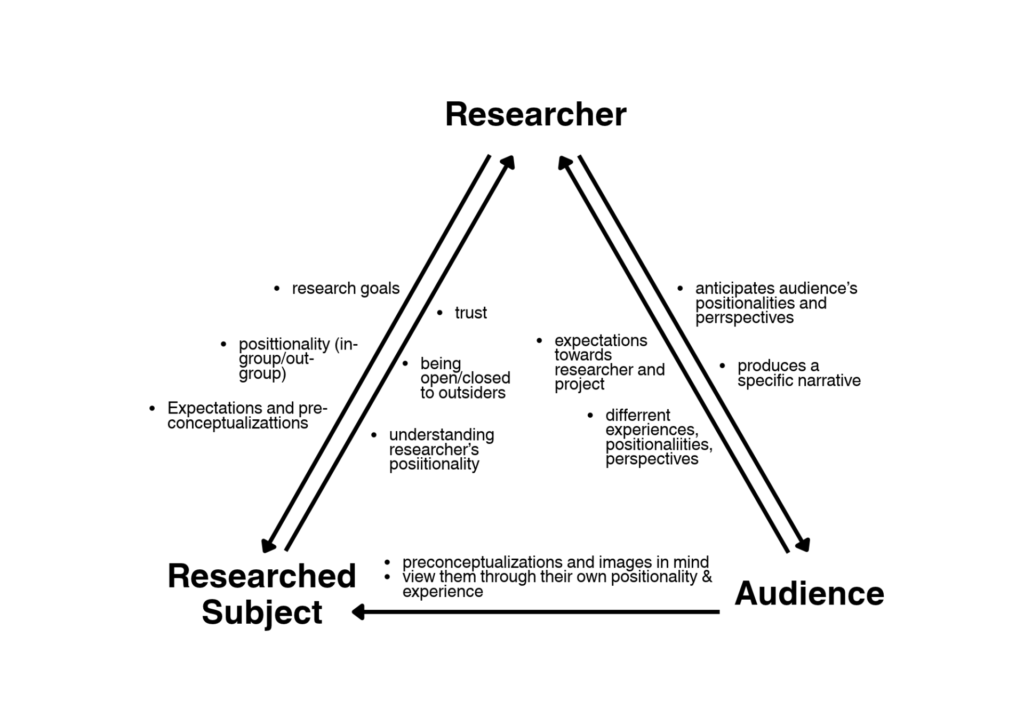
In visual research (VR), even more than other methods, it is crucial to understand the different positionalities of research subject, researcher and audience, and how they relate to one another. First, the researcher must understand their own perspective and how they can engage with the research subject, in regard to which results they can produce. In a second step, the audience and their perspective to interpret the materials must be considered. The goal of VR is to achieve genuine representation of research subjects, and to communicate valuable knowledge. Oftentimes the audience is not a closed and homogenous group, but more fluid, which must be considered.
Even though VR can be embedded within a broader methodology and supplement other methods, there is huge potential to use it as a stand-alone method. It conveys unique information visually in an accessible and relatable way, compared to conventional scientific papers. This gives VR great relevance for science communication to broader, non-academic audiences. There are a variety of presentation formats, including but not limited to prints, exhibitions, portfolios, multimodal websites or incorporated in videos. Essentially, the researcher can decide the format based on what communicates the most accurately, achieving high degrees of research subject representation and audience engagement.
Background
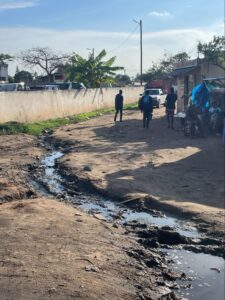
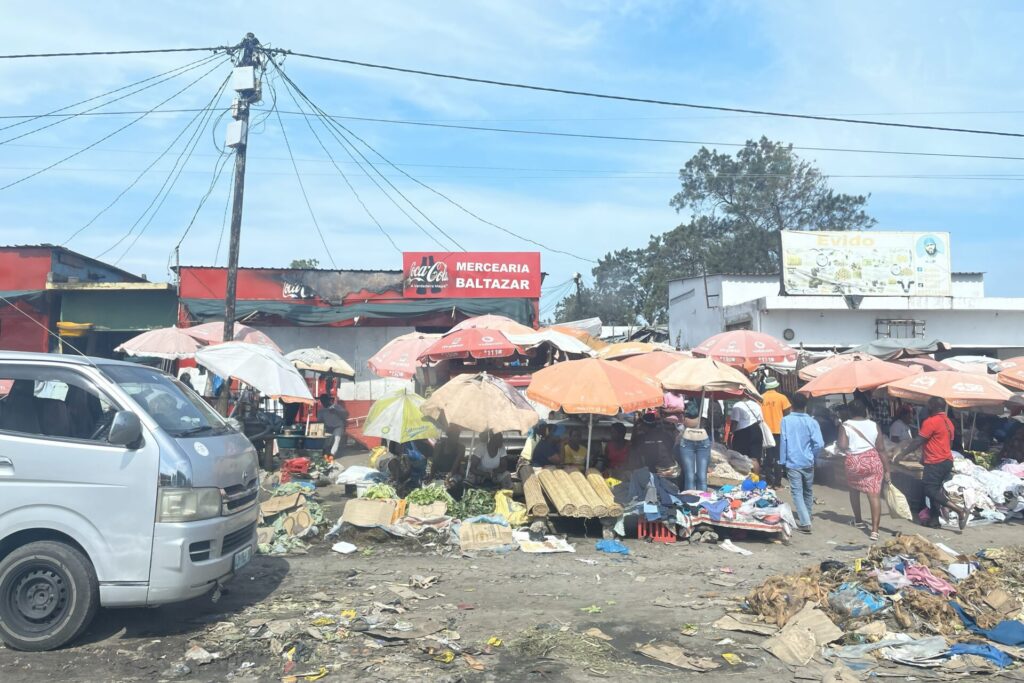
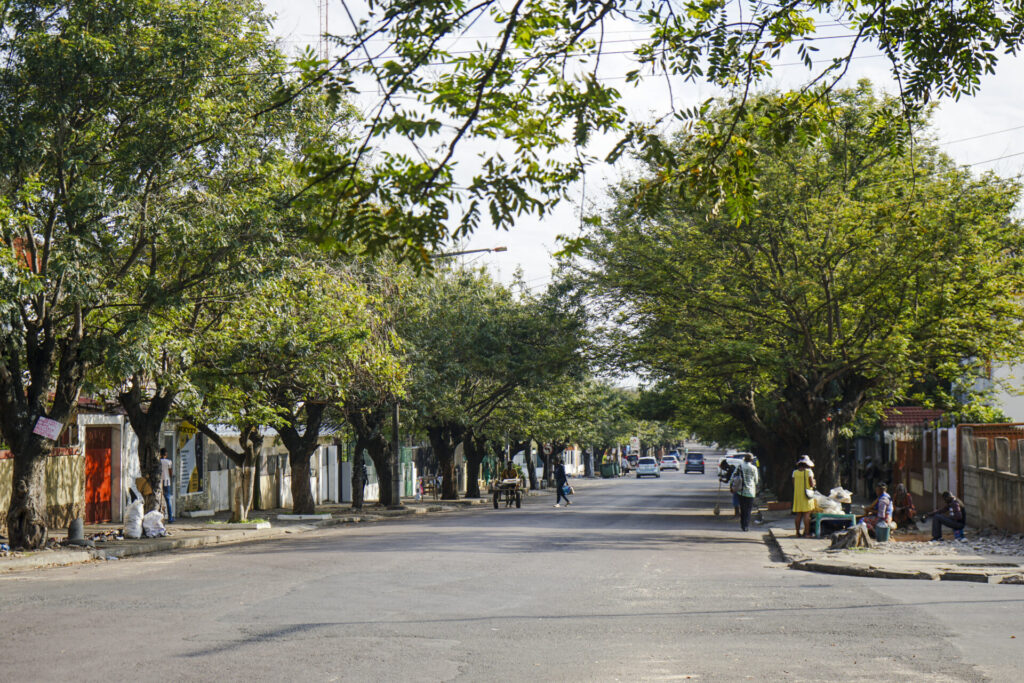
I collected my VR experiences as a white, European researcher during a four-week field study in Maputo, Mozambique. The results were produced for a European academic and non-academic audience in the form of a multimodal website. While audiovisual research encompasses photography, videography and sound, my experience focuses on photography.
My work entails two illustrative examples of using VR. One is a study using a mixed methodology of participant interviews and photography to illustrate mentioned aspects, by including the images in the final scientific article. A second study uses VR independently of another method, as an ethnographic research tool. The results are researcher-led insights on a community and context, interpreted through a specific lens and positionality.
The camera as an objective research tool?
Objectivity and generalizability are high quality standards upheld in most research contexts, since they increase credibility. VR challenges the often held assumption that objectivity makes research more relevant. At first glance, VR and using a camera seems purely objective – a moment is captured as it happens and can be experienced by outsiders at any later point. Can it though? Taking a closer look, perhaps the value of VR lies precisely within its subjectivity: The researcher, their research subject and their audience are interrelated and interdependent. Reality is subjective, and research results are both created and interpreted through an individual perspective by both the researcher and the audience.
The way in which research subjects are portrayed depends on the positionality of the researcher. This entails if they are part of the ingroup or have an outsider perspective, and as a result if there are underlying power dynamics that inform interactions. Additionally, it depends on the audience and how they conceptualize and perceive the subject. A fundamental condition for successful, ethical VR is that the researcher understands how they and their audience relate to the researched subject.
Does the researcher represent observations, or project their own notions?
In my research case, I was operating as a white person with a European passport and mobility rights, being from a financially wealthy and developed background. This impacts how I perceive the local people as my research subject and if I can sufficiently interact with and relate to the community in Maputo, to genuinely represent them in my research. Accessing a community depends on both how the people are interacting with the researcher and how the researcher encounters the people. It requires a constant reflection on how the subjects are conceptualized, and whether the researcher is open to dive into the community and be guided by new insights and experiences. The perspective of the researcher is not objective, but an idea that they have about the subject. The goal for the researcher is to achieve an internal process driven by honesty, open-mindedness, reflexiveness and flexibility about this idea. This is important since the researcher tells a specific narrative with their research, with direct impact on how the audience interprets the subject.
Are researchers biased towards seeing what they expect?
Every human has beliefs and certain images about other people. This is especially relevant in VR, as this human trait has the potential to reinforce and reproduce stereotypes. An important strategy is to counter them actively. When the researcher is collecting material in the field, they are easily drawn to see what they expect or already associate with the research subject. This is a subconscious influence and requires constant self-reflection to be avoided. The researcher must ask themselves: Why am I recording this? What is the relevance within the community and the research project?
Beyond the moment of data collection in the field, the researcher must keep in mind their specific audience. Similarly to the researcher, or even more, they have beliefs and certain biases towards other people. The researcher must reflect: Can the audience understand the image sufficiently? What might be their interpretation? Will this image reinforce stereotypes? This means that even a scene relevant for the research might have to be excluded, if the meaning is not accessible for the audience. This is important to avoid triggering biases, and to maintain responsible representation of research subjects.
Does an image speak for itself, or is additional context needed?
Based on the above discussed aspects and examples of representation and biases, it becomes evident that VR materials never speak for themselves, but are recorded in a specific context and discussed from a specific perspective. It can be difficult to find a balance between leaving room for interpretation, and allowing the audience to understand the materials through contextualization. Different interpretations are important to generate new knowledge, however it is essential to avoid misinterpretation or reinforce stereotypes by providing relevant context.
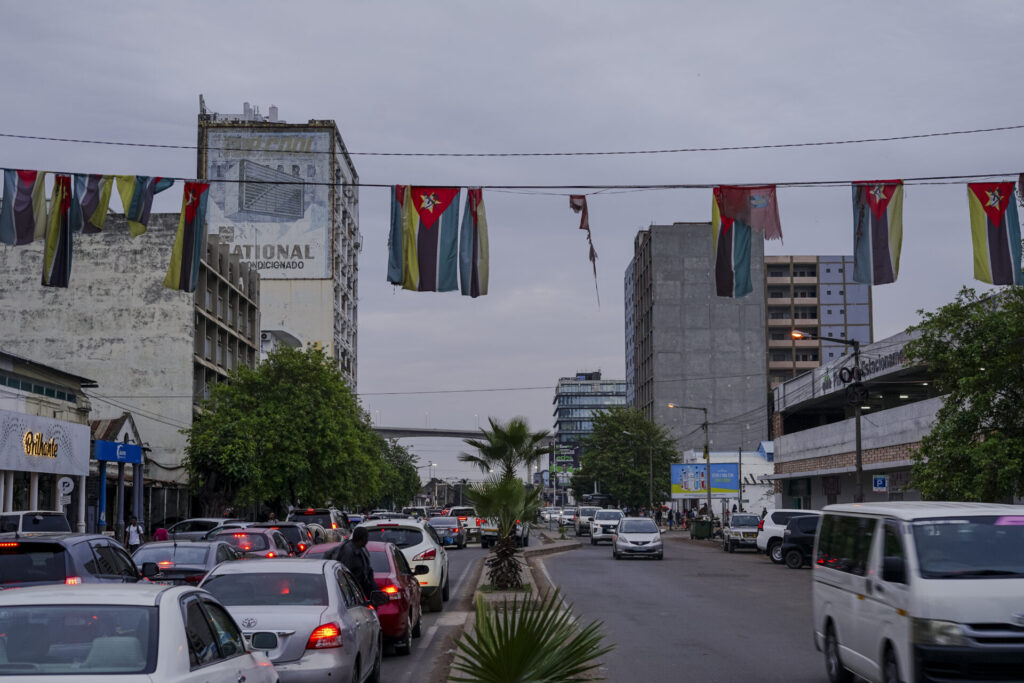
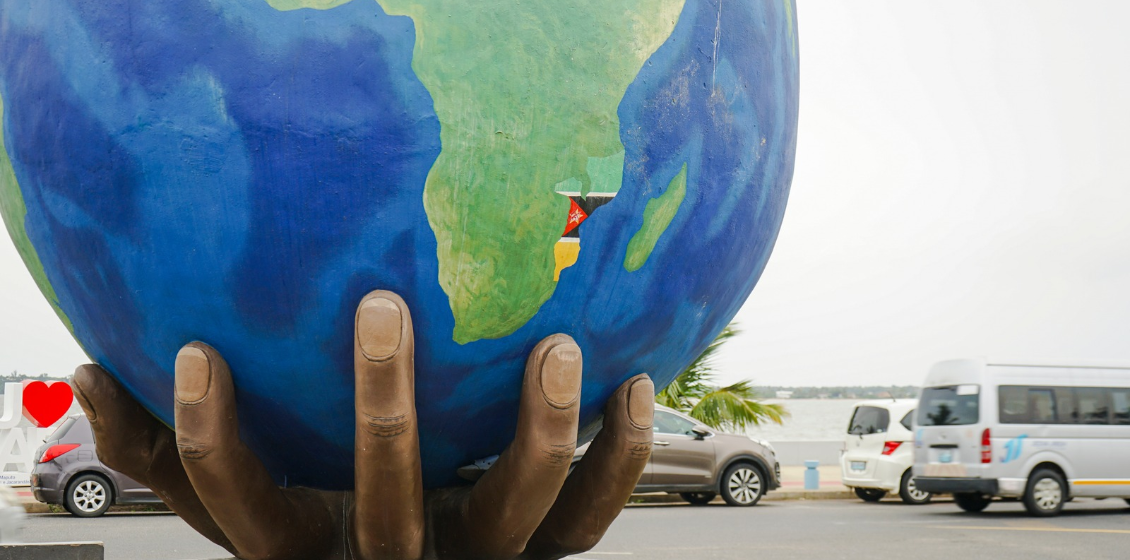
For instance, social interactions are hard to interpret for outstanders if there is no societal or cultural background knowledge. A misinterpretation by the audience can easily mean a failure to communicate a new perspective and the main point of the research. Even worse, stereotypes and pre-assumptions about the research subject can be reinforced. A concrete example can be found in my own research. The omnipresence of the Mozambican flag, featuring a weapon, can be interpreted as violent. However, with relevant context, it becomes clear that the societal understanding of this flag is to remember the bloody armed struggle for the country’s independence. The complex meaning of the flag remains hidden if not explicitly contextualized.
There are almost no limits to who can consume VR, and researchers can have a meaningful impact in communicating unique notions and perspectives. Even more, representative and unbiased visual results have the potential to counter common assumptions and stereotypes through an honest and reflexive approach in an increasingly visual world.
Luis Frank is BSc Global Studies, Maastricht University, the Netherlands, and a DDRN intern.