 by
by The rise of artificial intelligence (AI) has seen huge technological advancements across many different fields. In recent years, generative AI (GenAI) and large language models (LLMs) like ChatGPT, Grok, Claude and Google Gemini have risen in popularity, and seen significant investment in their development.
These GenAI and LLMs have the ability to generate images, videos and large amounts of text. GenAI and LLMs are trained to find patterns in massive amounts of input datasets. A user gives the AI a prompt, and it then generates a ‘new’ or ‘unique’ text, image, video, code or other output. GenAI and LLMs are also increasingly being used as search engines and to answer user questions.
There are many ongoing debates about using GenAI and LLMs. These debates are often centered on the environmental impact, use of copyrighted work and the loss of critical thinking skills. There are also debates surrounding the ethics of GenAI and LLMs. Ethical concerns include the use of finite resources, the exploitation of workers and data, and the potential to spread false information.
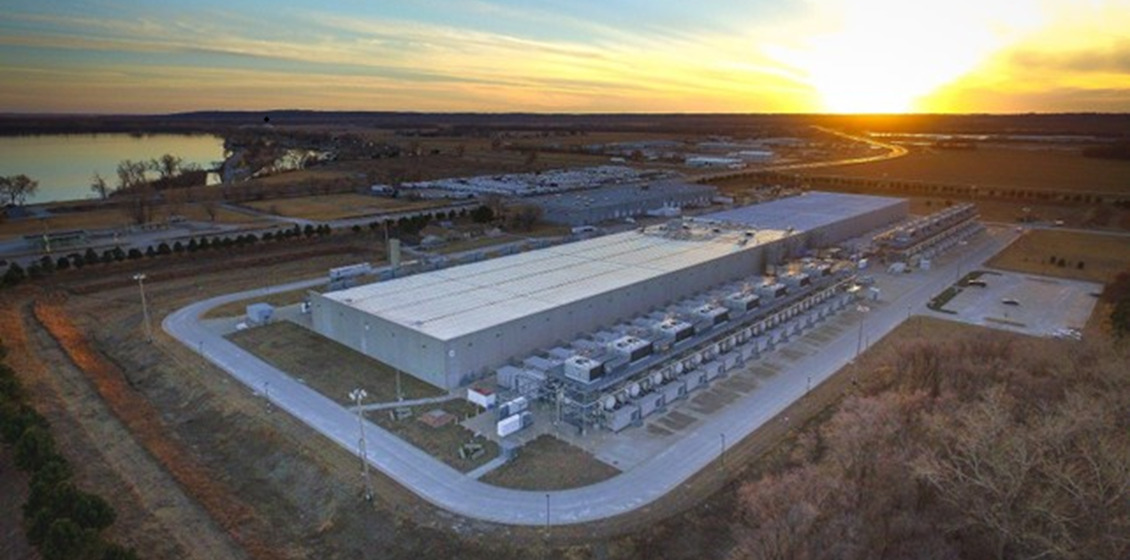
The environmental impact has become one of the most important conversations regarding GenAI. As users of GenAI increase, it means that more data centres must be built. Data centres contain servers, where the digital information is stored. These data centres require high amounts of energy and water to power them, and produce harmful pollutants as a byproduct. To train a single LLM, it can create the same amount of pollution as the lifecycle of 5 average petrol-powered cars.
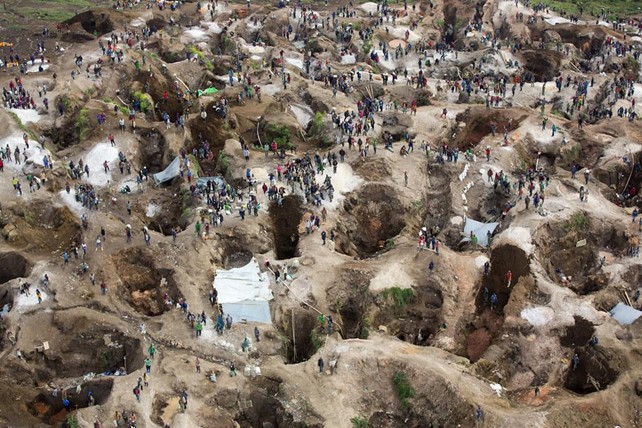
The growth of GenAI and LLMs mean that more resources and raw materials are needed to power servers and tech advancement. Coltan and cobalt are two minerals that are needed for batteries and computer chips. 15% of the global coltan supply is located in mines in the Democratic Republic of Congo. As a result of the increased demand, the eco-systems and environment in the surrounding areas have suffered major losses.
What implications does increased usage of GenAI and LLMs have for the global south?
Studies have shown that over 90% of global emissions are caused by the Global North. Yet, the Global South has seen an increase in climate-related catastrophes as a result of global warming and climate change. Generative AI and LLM use in the United States is predicted to use the same amount of energy as 22% of the average American households by 2028.
Other reports suggest that the amount of energy used by GenAI and LLMs will become a minimum of 40% of global energy usage by 2030. The new data centers being built to support the AI goals of tech giants such as Amazon, Google, X and Meta are mostly concentrated in the United States. Local communities are reporting water shortages and electrical shortages due to the demand that these data centers place on resources.
It’s short sighted to think that because many new data centers are being built in the global north, that there isn’t a knock-on effect for the global south. Data centers are still largely powered by fossil fuels, which then contribute towards the climate crisis. As they increase in size and number, it also means the resources that they need increase.
With GenAI usage having the potential for such a large knock-on effect for the global south, it makes you wonder why this isn’t something that is often discussed more across different media outlets. The largest focus when it comes to the environmental impact has been on issues such as water usage and harmful pollutants in local communities.
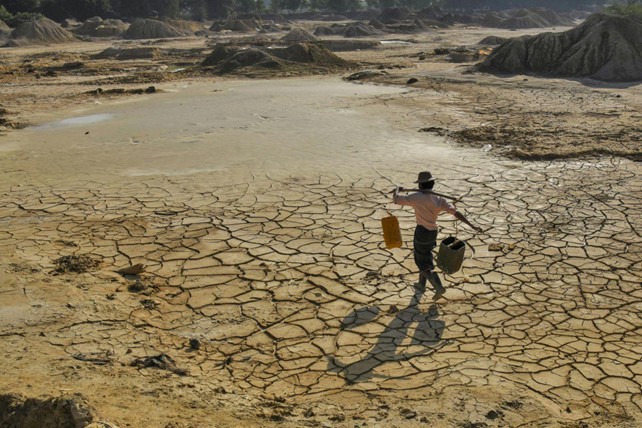
Since 2020, there have been higher amounts of climate-induced migration. In 2022, Somalia suffered its worst drought in 40 years. Around 43,000 people are predicted to have died, and the drought has been attributed to human-engineered climate change. We have not yet seen the full impact of the GenAI and LLM ‘boom’ yet in terms of climate impact.
The exclusion of the global south shows part of a much wider problem when it comes to representation and exploitation of the global south. The increase in natural disasters and extreme weather is now beginning to impact the global north. In 2024, Spain, Germany and France experienced extreme flooding. Droughts across Europe have worsened and are predicted to worsen as water scarcity increases. Unless more sustainable data centers and ways of powering them are discovered, GenAI will only continue to put more and more pressure on finite resources.
What are the main concerns surrounding water consumption?
Water has become one of the newer concerns when it comes to the increased use of GenAI. The Great Lakes of the United States are already shrinking as they are drained of water. 80% of data centers in the UK are located near London, even though this is one of the dryer parts of England. The response to water shortages and lack of access to clean water by the global north is then to import water from elsewhere.
Around 1.1 billion people globally do not have access to clean drinking water. Data centers require water to stop their servers overheating. The amount of water needed by these data centers has seen a prediction that 50% of the worlds population may struggle with water shortages due to their increased demands. Water is one of the most important resources for communities and the natural environment. Water scarcity can cause violence over control of water supplies, disease and malnutrition and displacement. Within the environment, water scarcity can disrupt eco-systems and cause mass animal death and displacement. A loss of ecosystems can see land become uninhabitable.
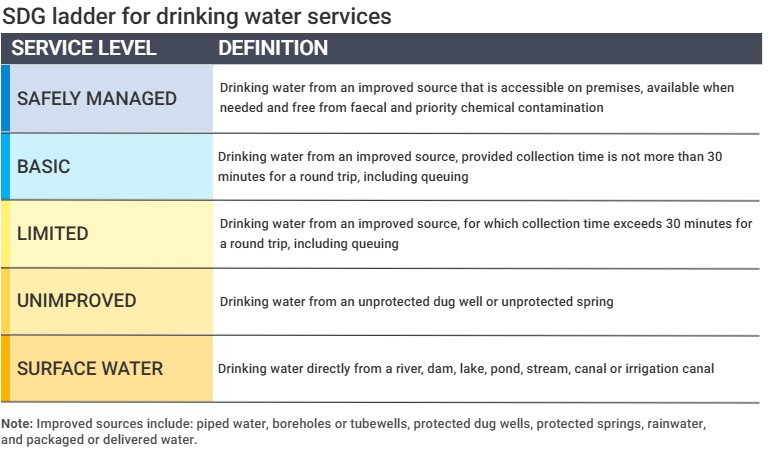
The existing data shows that the areas with the lowest access to safely managed clean water are Sub-Saharan Africa, Oceania (excluding Australia and New Zealand) and Eastern and South-Eastern Asia. As more data centers have been proposed in Sub-Saharan and central Africa, there is growing concern about what this means in terms of access to safely managed water.
There is a growing gap between access to clean resources in urban vs rural areas in countries such as Ethiopia, Kenya, Uganda and Mozambique. In 2021, it was reported that 5% of rural Ethiopians had access to safe water, compared to 39% of those living in urban areas. Kenya currently has the largest data center in eastern Africa, and there are proposals for more data centers around the capital. Nairobi has become the hub of the Kenyan digital economy and is currently expanding due to rapid growth.
Despite there being more investment into infrastructure in the cities, rural communities in the north of the country have been struggling with droughts and water scarcity. There is a growing concern that urban economic growth comes at the expense of the rural populations’ access to resources. In countries where there is already water scarcity, it raises the question of where the large amount of water needed for data centers will come from.
What other environmental impacts does generative AI have?
Generative AI and large language models require high power computers to be able to run the data centers. This means they need more advanced and more powerful computer chips. Cobalt and coltan are two of the natural minerals that are required to make these chips and as part of computer batteries.
15% of the world’s coltan and cobalt supplies are in the Democratic Republic of Congo. Many of these mines were shut several years ago, due to safety concerns. Some of these mines have since reopened, as areas fell under the control of rebels and rival forces to the Congolese government.
The mining process is highly damaging to the environment. As more tunnels are dug, it creates instability in the structure of the surface land. The increase in more extreme weather and climate disasters has also led to mine collapses due to flooding.
Cobalt and copper mines in Southern Congo also have large deposits of uranium. Some regions are now suffering higher levels of radiation. The mines are large polluters of the local landscape. Crushed rock and mining waste is polluting the local waterways and airways. Mines often produce other toxic chemicals and pollutants that contaminate and contribute to the destruction of local eco-systems.
Like water, there are only a finite number of these resources. Deals made between the Congolese government and trade partners like the United States mean that these natural resources are often being sold for huge profits. Workers are often exploited and left in unsafe conditions. As demand increases for raw materials, mining operations expand. Often these mines are illegal and unregulated.
To conclude
GenAI and LLMs are often seen as being problem solvers and technology the can help to beat climate change, but in its current form it’s contributing towards it. The global south is faced with growing environmental challenges because of global north overconsumption.
The global north’s exploitation of the resources of the global south for profit is not a new phenomenon, but the growing digital and tech economies that fund advancements in GenAI and LLMs follow the pattern of using the global south as a resource rather than viewing it as an equal.
Celia Rhodes has a MA Global History and International Relations, Erasmus University Rotterdam