by
by Approximately 1 billion people rely on remittances—money sent by migrants to family and friends back home—to support their livelihoods, according to the International Fund for Agricultural Development (IFAD). The total value of global remittances to low- and middle-income countries was $656 billion in 2023, more than foreign direct investment and official development assistance combined. Yet, even though many people depend on them, and although remittance flows have increased by 500% over the last 20 years, remittances remain a peripheral area of research within the broader field of migration studies.
Among other things, scholars have examined how remittances influence economic indicators such as growth and investment capacity. Moreover, it has been observed how remittance flows not only transmit money but ideas and norms between receiving- and sending-country communities—so-called “social remittances”, first articulated by American sociologist Peggy Levitt in a paper published in 1998. Remittances’ effect on institutions, and whether remittances spur democratisation or strengthen authoritarian regimes, is also heavily debated. What these distinct strands of scholarship have in common, however, is that they overwhelmingly focus on the impact of remittances on recipient countries, sometimes referred to as the migrants’ “home countries”, or on people living there.
Denisse Delgado, a migration specialist and Adjunct Professor at Georgetown University and American University, Washington, D.C., has sought to address the lack of focus on individuals in sending countries. In 2024, she successfully defended her PhD dissertation titled Remittance Behaviors Among Cuban Migrants in Miami and Madrid: Motivations, Practices and Experiences, which explores remittance attitudes and practices among Cuban migrants living in Madrid and Miami. Dr Delgado’s research comes at a time when debates around migration in the United States have held centre stage for some time, with previous Republican and Democratic governments both in favour of tightly controlled borders. Since Donald Trump’s re-election in 2024, such policies have been further entrenched and escalated.
While attending the 4th International Forum on Migration Statistics (IFMS) in Malmö, Sweden, Dr Delgado sat down with DDRN to discuss her research and how the Cuban case informs the wider remittance literature.
Highlighting the Cuban Diaspora in Madrid
On why she chose to study Cuban migrants, Dr Delgado points out that “there is very limited information on Cuban migration and even less about remittances, so there is a gap in the literature that I think is valuable to fill. The other aspect is that being someone who was born in Cuba, I personally feel motivated to explore how families connect while living in different countries and across large distances.”
Most scholarship on Cuban migration and its social and economic consequences focuses on the large Cuban community in the United States, which is estimated to number approximately 2 million people, including Cuban-born migrants and their descendants, according to the Centre for Demographic Studies (GEMI) at the University of Havana. Of these, some 900,000 live in Miami, Florida, the largest Cuban community outside Cuba. Consequently, Cubans in the US sent a majority of the $1.83 billion worth of remittances entering Cuba in 2023, as estimated by the Inter-American Dialogue, a think tank.
Remittances are the second-largest source of foreign currency income for the Cuban state, meaning they are crucial for the import of goods and products not available on the island. For example, Cuba imports 70%–80% of its food.
A major contribution of Dr Delgado’s dissertation is the introduction of the Cuban diaspora in Madrid as a case to study Cuban migration beyond Miami. Some of the significant differences between Cuban migrants in Miami and Madrid in Dr Delgado’s sample are that the median age is lower in Madrid, with a higher representation of mixed and Black individuals.
While median incomes for Cuban migrants are higher in Miami, although they have a higher cost of living, the employment rate is higher in Madrid. Dr Delgado argues that the latter difference can be attributed to the absence of language barriers and a younger demographic among migrants in Madrid, compared to a larger share of retirees in Miami. Still, individuals in both cities face challenges entering the labour market, with initial jobs often underpaid and lacking job security. There is also a slight overrepresentation of women in both cities, following global trends.
Migrants’ Remittance Behaviour in Miami and Madrid
As it pertains to migrants’ remittance-sending behaviour, migrants in Miami sent $2,615 on average per year, while those in Madrid remitted $1,604 annually. Such a difference reflects the higher median income in Miami, and both amounts fall within the range for a typical migrant worker globally, as estimated by the United Nations in 2019.
The vast majority of migrants were driven to send remittances due to a strong sense of responsibility to support their families, with mothers being the primary recipients of remittances from Miami and Madrid. On average, migrants in both cities have been sending remittances for seven years.
Because of the US trade embargo against Cuba, there is a “slightly higher reliance on informal [remittance-sending] mechanisms in Miami compared to Madrid, partly due to more limited access to formal channels such as bank accounts. Nonetheless, migrants in Miami still use parcel agencies, Western Union, and other OFAC-authorised providers, which are formal mechanisms. Overall, migrants in both Miami and Madrid combine both formal and informal mechanisms to send remittances,” Dr Delgado explained.
“Remittances are not gender neutral”
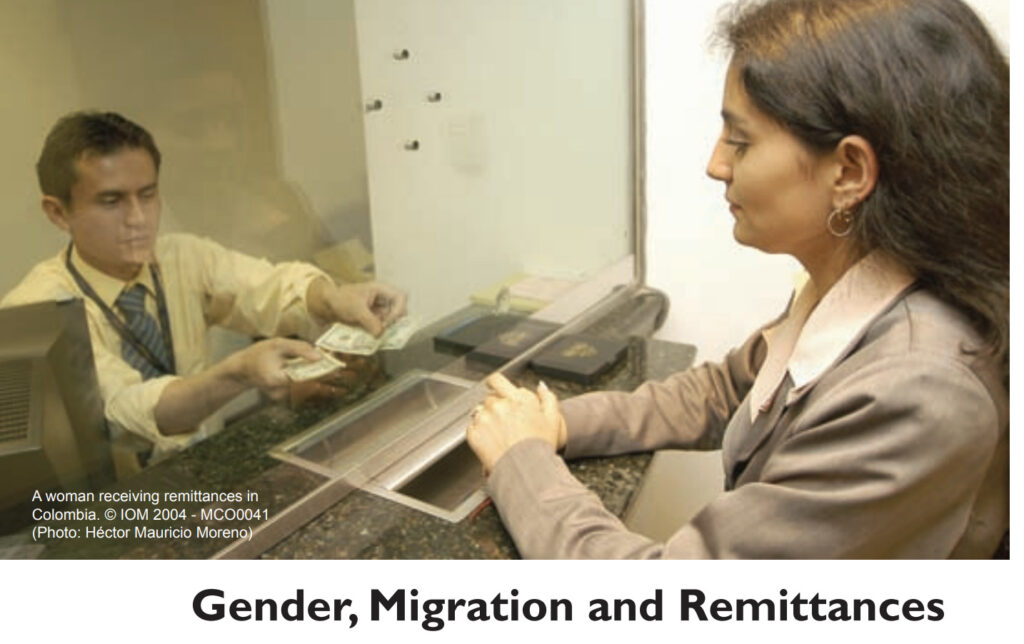
Her dissertation finds that female recipients are more likely to use remittances to fulfil essential needs, like buying food or medicine for their family. Men, on the other hand, spent remittances on non-essential expenses. Women in both Miami and Madrid also send a higher proportion of their income as remittances compared to men, despite earning lower wages on average. This gender disparity is echoed by the UN’s International Organization for Migration (IOM) and is arguably related to traditional gender roles and women’s perceived position as the family caregiver. Dr Delgado believes such gender dynamics are not sufficiently accounted for: “I would say that a big problem, especially with policies related to remittances, is thinking that all migrants and remittances are the same, but remittances are not gender neutral.”
She adds, “If women in Cuba are receiving remittances and mostly spending remittances on essential consumption, that means they are not doing much for [their own] development, such as education, savings and investments. But men, when they were sent a higher proportion of remittances, were investing in businesses. So it’s important to develop policies where women, for example, could also invest in businesses if trained on how they could use remittances for that.”
Cuba as the Canary in the Coal Mine for Increasing Transfer Costs
Although remittances play a crucial role for both the Cuban people and the state, the country is usually omitted from the wider remittance literature, perhaps due to a lack of official data. The Cuban government does not publish official remittance figures, leaving researchers to estimate.
Regardless, studying Cuba can bring valuable insights. For example, remittance flows to Cuba are, because of the US trade embargo limiting formal banking and trade with the island, more politicised than those to other countries. This, in turn, leads to increased use of informal remittance channels. These include relying on personal networks or unlicensed agents, such as so-called Money Mules, to deliver money in a way which bypasses official institutions. Dr Delgado found that the cost of sending remittances to Cuba is generally between around 8%–11%, shooting up to 40% during the COVID-19 pandemic.
The UN has identified the average cost of sending remittances globally at about 5%, with the intention of lowering it to 3%. However, “there have been some discussions, in the United States, for example, to start taxing remittances. And what I can see happening, just because I know the Cuban case and how the restrictions impact the remittance market there, is that those migrants living in the United States wanting to send remittances to their families are going to go through more informal mechanisms trying to avoid [the higher costs],” Dr Delgado said.
Adrian Ganic is a M.Sc., THE LONDON SCHOOL OF ECONOMICS AND POLITICAL SCIENCE and a DDRN CORRESPONDENT