 by
Fifteen years after the uprising that toppled Ben Ali, Tunisia’s streets are once again exposing the unresolved tensions of the revolution: a generation still confronting economic precarity, political exclusion and the widening gap between the promise of change and the reality.
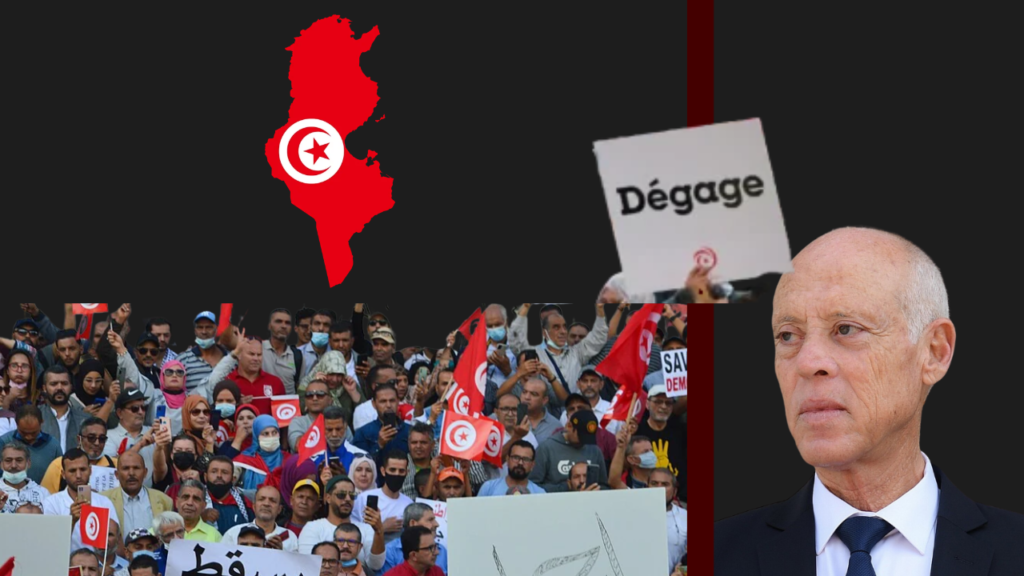
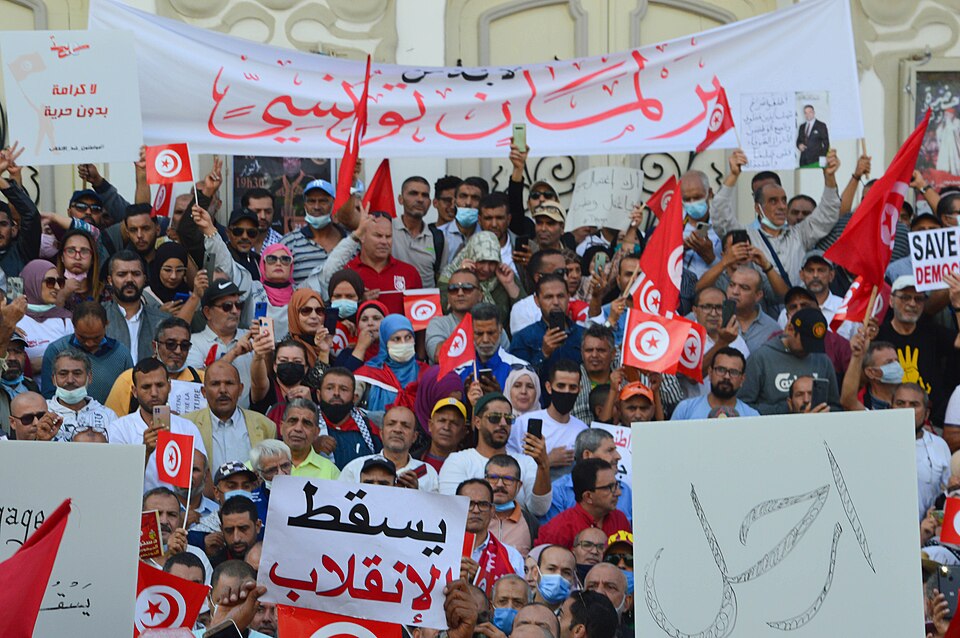
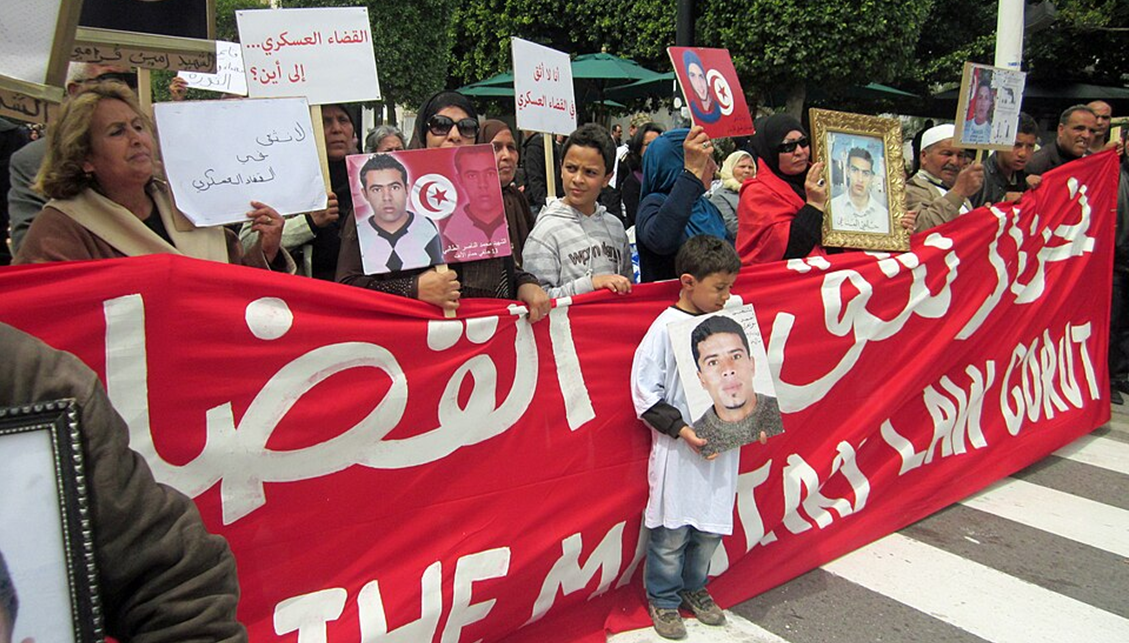
In October 2026, Tunisia’s streets have once again become a place where frustration is made visible. On 17 October, thousands gathered in Tunis for one of the largest demonstrations against President Kais Saied in years. Organised with the Tunisian General Labour Union (UGTT), opposition groups, and civil society organisations, the march brought together people protesting political repression and restrictions on democratic freedoms. A few days later, demonstrations and clashes with police broke out in several locations, including Ettadhamen, a suburb of Tunis, and towns in the Sfax region. The promises of a better life remained unfulfilled.
For young Tunisians, these protests are not simply a return to a familiar revolutionary moment. They take place in a country that has already experienced the overthrow of a president, a democratic transition and, more recently, the concentration of power under a new leader.
What are Tunisians protesting about?
Fifteen years after the 2011 Revolution, unemployment and rising living costs remain major sources of frustration. Shortages of essential goods, water, and electricity, along with declining public services, have further affected everyday life. In October 2026, unemployed university graduates organised a march from Menzel Bouzaiane towards Tunis, demanding employment opportunities and the implementation of public-sector recruitment promises.
Anti-Black discrimination has also become increasingly connected to state migration policies. In 2026, Amnesty International documented continued arrests and collective expulsions of Black African migrants by Tunisian security forces, including the expulsion of a Guinean asylum seeker’s husband to Libya following his arrest in January. Meanwhile, prominent Black Tunisian anti-racism activist Saadia Mosbah was sentenced to eight years in prison in March 2026. These cases illustrate how the treatment of Black communities extends beyond individual acts of racism to include state security practices and restrictions on organisations defending their rights.
Since July 2021, when Saied suspended parliament and assumed extraordinary powers, Tunisia has experienced significant political changes. The 2022 Constitution strengthened presidential authority, while opposition politicians, journalists and activists have faced increasing restrictions and arrests. In October 2026, thousands protested in Tunis, demanding political freedoms and the release of detained opponents, reviving the 2011 revolutionary slogan: “The people want the fall of the regime.”
All these create a ‘pool of potential’ that creates unrest that can lead people to the streets. And then one trigger finds people prepared to protest.
The October protests were triggered by several deaths that raised concerns about police accountability and failing public services. In Jebiniana, 24-year-old Aoun Salhi died following a police pursuit, prompting residents to demand an investigation. In Ettadhamen, protests followed the death of a young man in police custody, although the circumstances remain disputed. Meanwhile, students in Sfax protested after a fellow student died following a cardiac emergency, raising concerns about delayed ambulance services and inadequate medical facilities. Local reporting by Nawaat and statements by Tunisian activists linked the unrest to wider frustrations over state accountability.
The unfinished promises of 2011
Tunisia’s revolution began in December 2010, fuelled by unemployment, corruption, regional inequality and political repression. The self-immolation of Mohamed Bouazizi, a young street vendor in Sidi Bouzid, triggered nationwide protests. On 14 January 2011, President Zine El Abidine Ben Ali fled after 23 years in power. The uprising became the starting point of the Arab Spring.
Young people were central to the protests, demanding employment, freedom and dignity. Yet the economic promises of the revolution remained largely unfulfilled. The World Bank’s 2014 report, The Unfinished Revolution, identified persistent unemployment, regional disparities and limited economic opportunities as major obstacles to Tunisia’s development. What does it mean for the generation that took to the streets in 2011 to witness Tunisia’s return to increasingly authoritarian practices? Perhaps the real achievement of that generation was not simply the political change it secured, but the belief it passed on to those who followed: that protest matters, that change is possible, even if its results are not always visible within one’s own generation. It created a society more willing to question authority, demand accountability and hold elected leaders responsible for their promises. The revolution may not have delivered everything people hoped for, but it changed what citizens felt entitled to demand from their state and from those who govern them.
Resistance beyond the plaza
In Beyond the Plaza, Kateryna Malaia and Nathan Mark Hutson offer a useful way of thinking about the relationship between everyday life and visible protest. Their introduction begins with a paradox: public demonstrations may be most visible in prominent squares and on major streets, but the conditions that sustain them often develop elsewhere. Resistance emerges through ordinary spaces, neighbourhood relationships and everyday experiences of injustice long before it becomes a public spectacle. The plaza, in this account, is not the beginning of political discontent. It is where something that has been developing becomes visible.
A graduate unable to find work, a family struggling to make ends meet or a community facing water shortages during a heatwave may experience different problems, but these grievances can contribute to a wider dissatisfaction with the state. A particular incident, such as a death involving police or a failure of public services, can bring these frustrations into collective view.
This is particularly relevant to young people. Alcinda Honwana’s concept of waithood describes the prolonged uncertainty experienced by young people who cannot access the economic independence and social conditions traditionally associated with adulthood. In Tunisia, this helps explain the frustration of a generation that has pursued education but continues to face limited employment opportunities and uncertain futures.
Protest, however, is only one response to these conditions. Some young people organise, others engage in everyday forms of resistance, while others withdraw or consider migration. As Honwana argues, young people are not simply waiting for their circumstances to change; they actively negotiate and challenge the conditions shaping their lives.
Tunisia and the global wave of youth uprisings
Across the world, a new generation is taking to the streets, demanding political accountability, economic opportunities and a future in which their voices matter. From Africa to South Asia and Europe, young people are challenging governments and institutions they see as failing to deliver on their promises. Their struggles differ, but Tunisia offers an important lesson: a revolution should not be measured only by what it achieves in the moment, but also by what it leaves behind for the generations that follow.
Tunisia’s 2011 Revolution brought down a long-standing president and opened the way for democratic freedoms. Yet many of the demands that brought people into the streets remain unresolved. Looking back, this does not mean that the revolution failed. It means that political change is not a finished event. Removing a leader does not automatically guarantee economic justice or lasting democracy. These require continued public pressure and accountability.
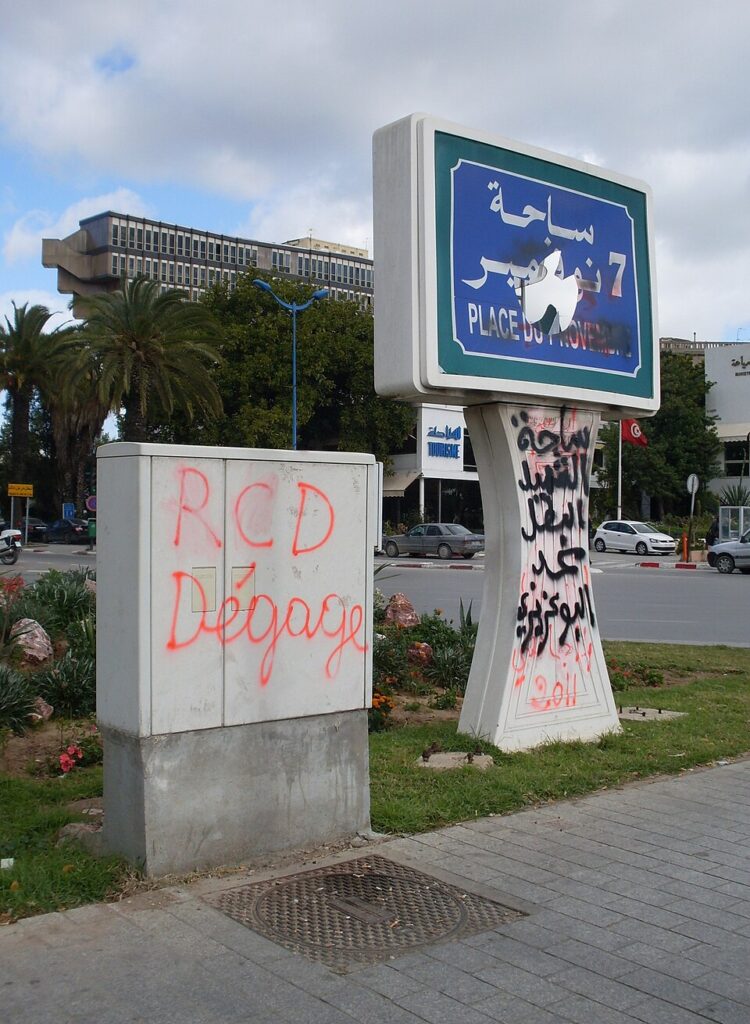
Perhaps the most important legacy of that generation was the belief it passed on: that people can challenge those in power and that collective action can make a difference. If one presidency can fall, then so can another. Every generation should recognise and defend the gains made before it but also understand that these gains are never guaranteed. Perhaps this is what Tunisia’s experience can teach a new generation of protesters: the victory is not only in what one demonstration achieves, but in leaving behind a society that understands the power of the ‘streets’ and the ability to say ‘dégage!’ (get out), a slogan that was central during the Tunisian revolution.
A revolution is not a moment in history, but an ongoing struggle to make political change meaningful in people’s everyday lives.
Evangelia Karakaxa is a MSc student at Centre of African Studies, Faculty of Theology, the University of Copenhagen, and a DDRN Intern.