 by
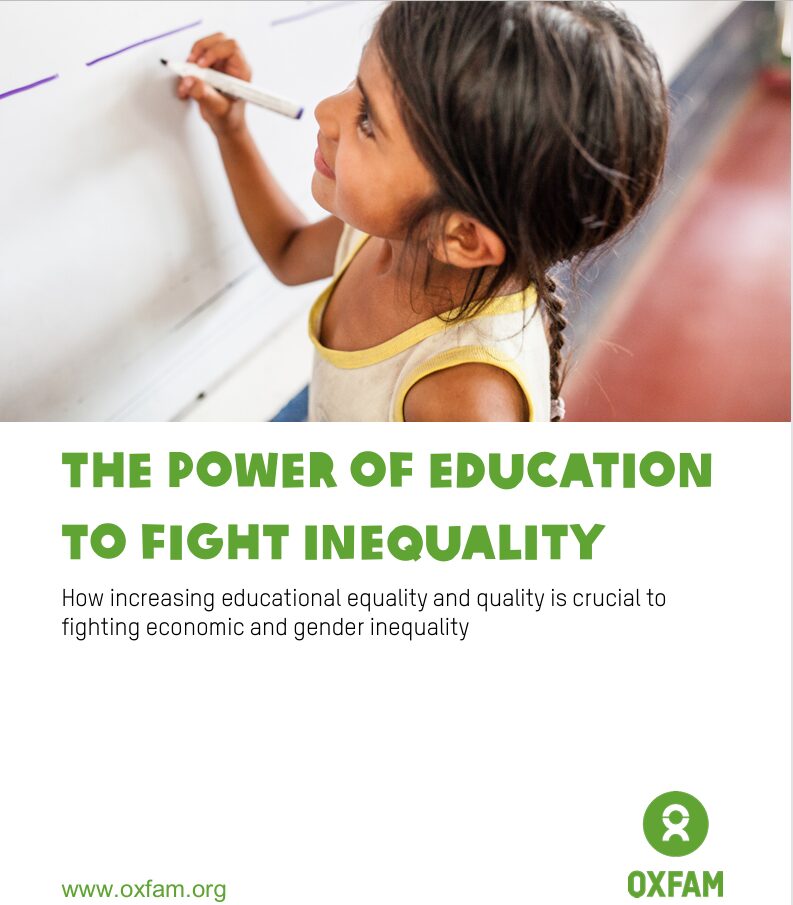
by “In a poor rural area of Pakistan, girls are three times as likely as poor boys to have never attended school. In India, the median number of years of education girls from the poorest families receive is zero, compared to 9.1 years for girls from the richest families.” (Oxfam, 2019)
According to the World Bank, nearly 700 million people worldwide live in poverty, yet its impacts are not evenly distributed. Data from UN Women shows that almost 10% of women and girls live in extreme poverty, representing around 22 million more women than men globally. These disparities illustrate how economic inequality often intersects with other forms of exclusion –including gender, age, ethnicity, and disability– exacerbating vulnerabilities, particularly during crises.
Yearly gender-related Official Development Assistance (ODA) to countries in the Global South has doubled over the past decade, reaching nearly $52 billion in 2022. Despite this progress, global gender equality remains more than 250 years away at the current rate of change. Halfway to the 2030 deadline, only two of the 14 indicators under Sustainable Development Goal 5 (SDG 5) are currently on track.
These figures reflect structural barriers that girls and women continue to face worldwide. In education, gender discrimination, restrictive social norms, early marriage, domestic responsibilities, and lack of adequate sanitation facilities all contribute to pushing girls out of school and limiting their opportunities.
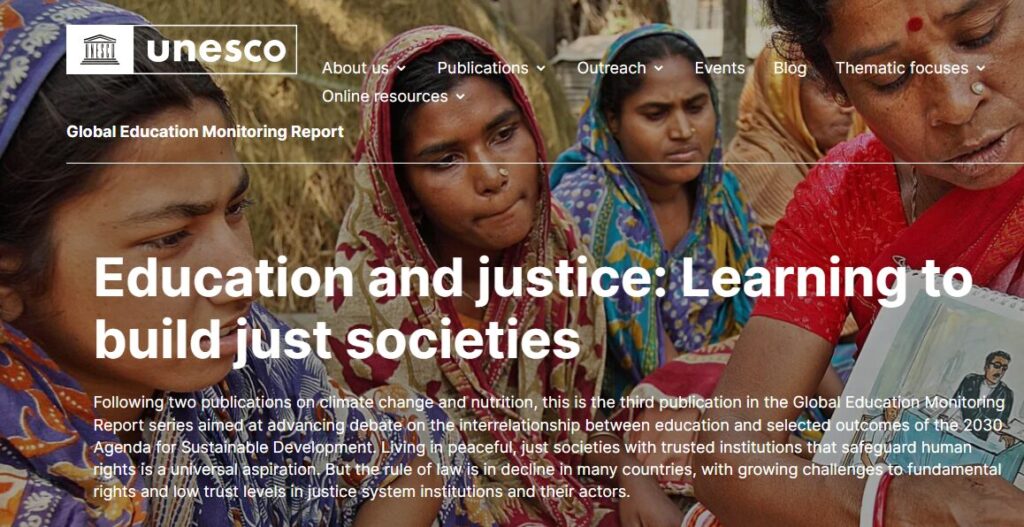
Education plays a critical role in addressing these inequalities. Evidence shows that supporting women through education, financial empowerment, and community-based initiatives has transformative effects not only for individuals, but also for families and entire communities. Education helps tackle disparities in wages, poverty, reproductive autonomy, and political participation, while also significantly improving health outcomes for women and children.
Educating girls transforms not only their own lives, but also those of their communities and future generations. Girls who stay in school are less likely to marry young, more likely to be healthy and economically productive, and better able to participate in decision-making processes. Women with secondary education earn, on average, twice as much as those with no formal education.
The more educated women are, the greater control they tend to have over their lives, particularly regarding marriage and family planning. For instance, if all girls in sub-Saharan Africa and South Asia completed secondary education, child marriage rates would drop by 64%. UNESCO estimates that universal primary education for women would reduce maternal deaths by 66% and child deaths by 15%.
Perhaps most importantly, education can challenge harmful social norms and reinforce the idea that girls and boys are equal. It acts both as a liberating force for individuals and a powerful social equaliser across societies.
Ultimately, gender equality is not only about fairness; it is also about building stronger, more resilient societies and supporting sustainable peace. In the Democratic Republic of Congo (DRC), for example, lasting peace will only be possible when women are recognised as agents of stability, accountability, and recovery. Without their participation, peace processes remain incomplete and fragile.
Inequality is not inevitable. It is the result of political choices and can be reduced through deliberate, sustained action. Ensuring education and gender equality is therefore a shared global responsibility that requires long-term commitment.
This is where organizations like Street Child operate: at the intersection between rights and reality, turning commitments into tangible change for children and their families.
How Does Street Child Integrate a Gender Approach?
Street Child works in over 20 of the world’s most fragile contexts, affected by conflict, displacement, crisis, and extreme poverty across Africa, Afghanistan, Nepal and Ukraine.
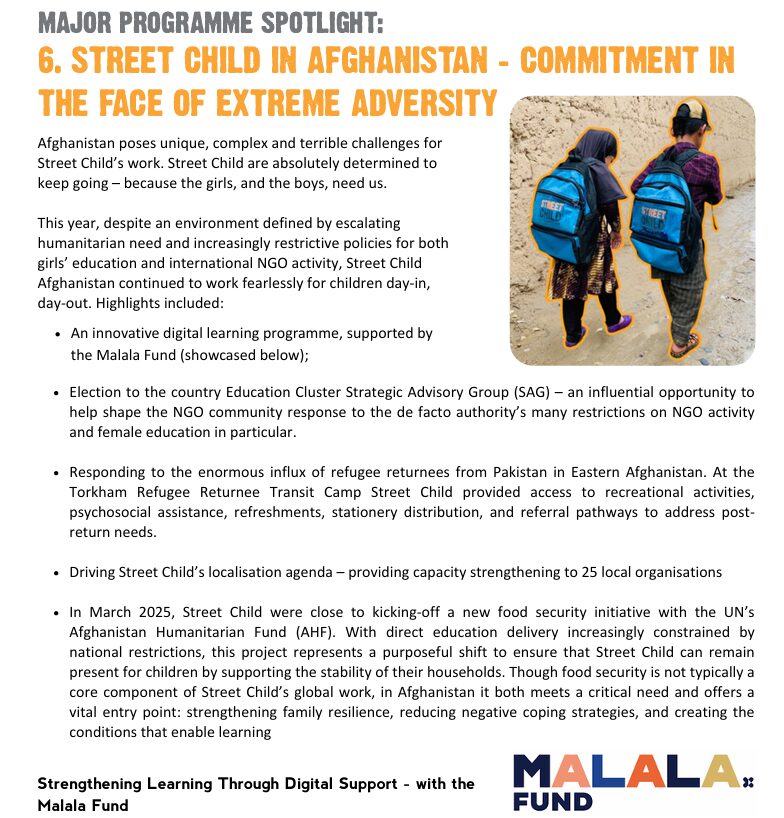
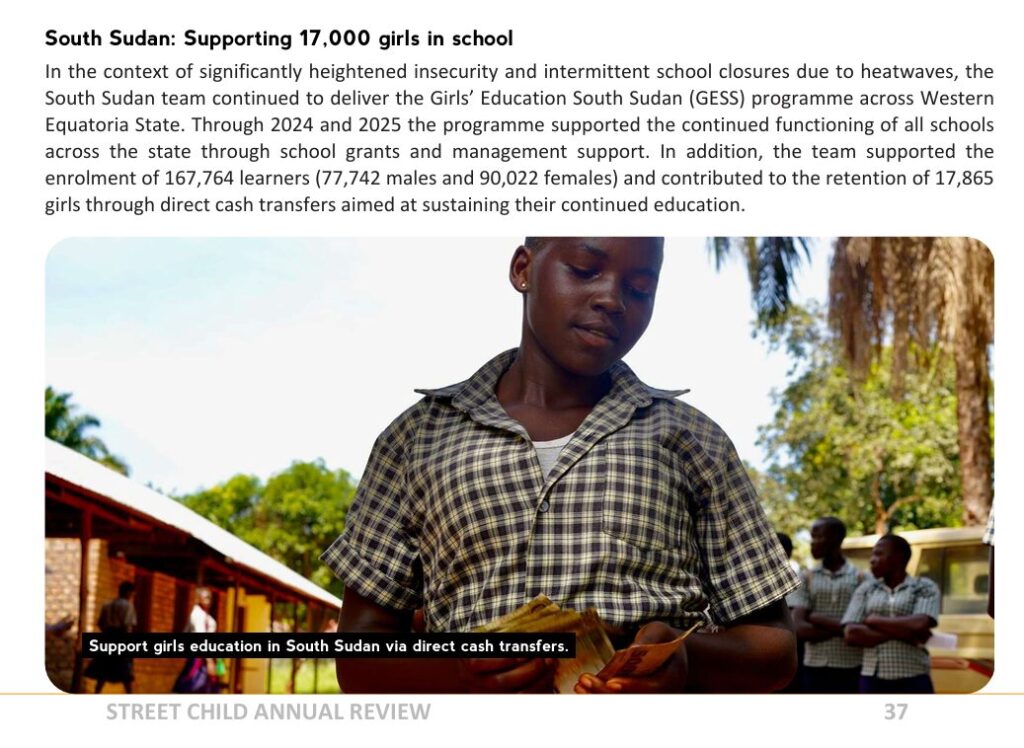
In these settings, women and girls face entrenched inequality. In Afghanistan, for example, girls are unable to attend school beyond grade six. In South Sudan and the Democratic Republic of Congo, shortages of female teachers and safe learning environments continue to limit access to education.
Street Child supports girls to enrol and remain in school, promotes safe learning environments, trains female teachers, advocates for the value of education, and supports caregivers —most of whom are women— to strengthen their incomes so they can afford to send their children, especially girls, to school.
At the heart of this work are two key programmes: the award-winning Family Business for Education (FBE) model and the She Leads programme. Both reflect a shared commitment to addressing gender inequality at its roots.
While FBE focuses on strengthening families through the economic empowerment of caregivers to ensure children remain in school, She Leads works directly with adolescent girls, equipping them with the skills, confidence, and support systems needed to become leaders in their own lives and communities.
Together, these approaches reflect a shared vision: dignity is built not only by addressing immediate needs, but by transforming the deeper structures, especially gender norms, that limit opportunities. One works from the household outward; the other from the individual girl upward.
Family Business for Education (FBE): Empowering Caregivers, Protecting Education
The Family Business for Education model is grounded in a simple but powerful idea: children stay in school when their families are economically and socially stable.
The model works with entire families, focusing particularly on caregivers, around 80% of whom are women. This is a deliberate strategy to address gender inequality at the household level, where it most directly affects children’s education.
Through FBE, caregivers receive financial support to start small businesses and training in business planning, savings and financial management. Beyond income generation, the process also strengthens confidence, dignity and agency.
As women gain economic independence, they are better able to make decisions within the household, invest in their children’s futures and prioritise education, especially for girls.
FBE also includes positive parenting sessions that encourage reflection on family dynamics, gender roles, and the value of education, helping to shift deeply rooted social norms within households.
The impact of this approach is clear. Thousands of families have achieved greater stability, children have remained in education, and women have strengthened their roles as economic actors and decision-makers. What begins as economic support often evolves into broader changes in relationships, expectations and opportunities.
To date, Street Child has supported more than 54,000 families, with 90% of supported businesses surviving for at least one year and 86% of children remaining in school for two years after support ends.
While FBE strengthens the environment around the child, it is equally important to invest directly in girls themselves, ensuring they not only stay in school, but also develop the confidence and skills needed to shape their own futures.
She Leads: Building Leadership, Confidence and Agency
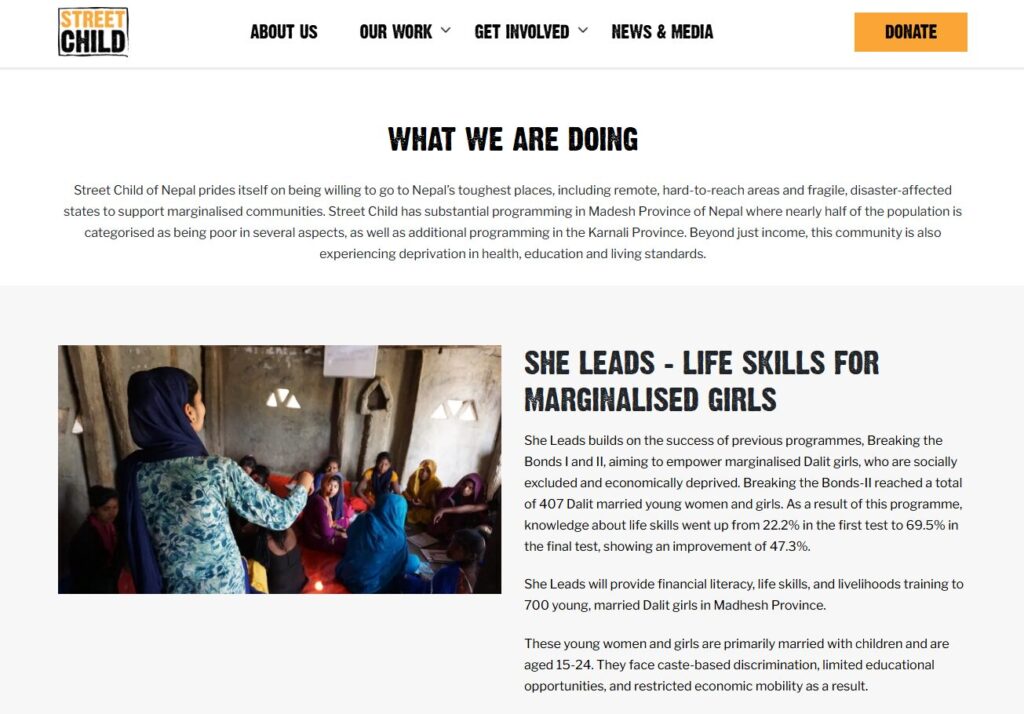
The She Leads programme works directly with girls themselves, building agency, leadership, and opportunity from the individual upward. In rural Nepal, for example, Dalit girls often face both caste-based discrimination and gender-based barriers that severely limit their access to education, leadership opportunities, and economic participation.
The programme adopts a holistic approach to empowerment, combining life skills, financial education, leadership training, and mentorship. It equips girls with both practical tools and the confidence to use them effectively. Skills such as communication, negotiation, and decision-making are central to enabling girls to challenge the limitations placed upon them.
At the same time, She Leads recognises that empowering girls in isolation is not enough. Social norms must also shift. For this reason, the programme actively engages families and community leaders, creating dialogue around girls’ education, leadership, and rights, and helping to build environments where girls’ ambitions are supported rather than constrained.
Mentorship plays a key role, connecting girls with female role models from their own communities who provide guidance, inspiration, and tangible examples of what is possible. In addition, small grants allow participants to start income-generating activities, reinforcing financial independence and translating skills into real opportunities.
Through this integrated approach, She Leads does more than build skills; it nurtures agency, voice, and leadership, enabling girls not only to imagine different futures, but to actively create them.
Together, FBE and She Leads demonstrate that advancing human dignity requires action at multiple levels: within families, within individuals, and within communities. By combining economic empowerment with a strong gender lens, these approaches help break cycles of inequality and create the conditions for lasting, meaningful change.
They also show that education is not only an outcome of development, but one of its most powerful drivers, shaping opportunities far beyond the classroom and across generations.
However, these efforts cannot stand alone. Sustaining and scaling this progress requires renewed and sustained commitment from the international community – including support for organisations like Street Child, and investment in advocacy, research and knowledge actors such as think tanks like DDRN, which help keep education and gender equality at the centre of the global development agenda.
At a time when global inequality is deepening and progress towards gender equality remains far too slow, international cooperation is more important than ever. Development assistance, when strategically directed towards education and gender equality, remains one of the most powerful tools to turn commitments into concrete change.
Ultimately, education must remain at the heart of the global response to inequality. It is not only a moral imperative, but a practical pathway towards more equal, stable, and resilient societies.
Daniela Padilla has a M.Sc. International and Securiy Politics, Catholic University of Lille/ESPOL, France, and is a DDRN Intern